The Department of Expenditure has made electric vehicles (EVs) the default and preferred choice when central government ministries and departments replace or condemn existing internal-combustion-engine (ICE) staff cars. Its 10 Nov 2026 office memorandum sets a Net Dealer Price (NDP) ceiling of ₹20 lakh for an EV and ₹10 lakh for a petrol, diesel or hybrid car, with the revised instructions taking immediate effect.
Key takeaways
- The rule applies to staff-car procurement by ministries and departments of the Government of India; it is not a retail subsidy for private buyers.
- The NDP ceiling is ₹20 lakh for an electric vehicle and ₹10 lakh for an ICE vehicle, including petrol, diesel and hybrid cars.
- When an existing ICE staff car is replaced or condemned, an EV is now the default procurement choice.
- A department seeking an ICE vehicle must justify why an EV is not practical and obtain the approvals specified in the memorandum.
- The existing requirement to hire EVs continues, while hiring an ICE vehicle also requires a justified exception.
What the Finance Ministry changed
The Department of Expenditure memorandum, issued under the Ministry of Finance on 10 Nov 2026, partly modifies the earlier instructions governing the procurement and hiring of staff cars by central ministries and departments. It says the change is intended to promote electric mobility, reduce dependence on fossil fuels and account for prevailing vehicle prices and lifecycle costs.
The most visible change is the procurement preference. When a ministry or department condemns or replaces an existing ICE staff car, it is ordinarily expected to procure an EV. The wording makes electric vehicles the default and preferred choice, but it does not create an absolute ban on petrol, diesel or hybrid cars.
| Procurement or hiring point | What the memorandum says |
|---|---|
| EV staff-car procurement | NDP ceiling of ₹20 lakh; EVs are the default and preferred choice when existing ICE staff cars are replaced or condemned. |
| Petrol, diesel and hybrid procurement | NDP ceiling of ₹10 lakh; a justified exception is required when a department says an EV is not practical. |
| Hiring vehicles | The 1 Sep 2022 instructions mandating the hiring of EVs continue; hiring an ICE vehicle needs a case-by-case relaxation. |
The NDP figures are procurement ceilings for the central government staff-car rules. They should not be read as an ex-showroom price cut, a consumer discount or a new purchase limit for individuals buying an EV for personal use.
Who is covered, and who is not
The scope is limited to ministries and departments of the Government of India. A state government, public-sector undertaking, municipal body or private fleet operator would need to follow its own applicable procurement instructions unless a separate order extends a similar preference to it.
The rule also operates when an existing staff car is condemned or replaced; it is not a direction for every government vehicle to be replaced immediately. The memorandum leaves the other terms and conditions governing staff-car entitlement, procurement and hiring unchanged. It also says procurement will continue to follow the General Financial Rules, 2017, as amended from time to time.
How an ICE exception will work
A ministry or department that considers EV procurement or deployment impractical must submit a properly justified proposal to the Department of Expenditure for relaxation. The proposal may be referred only with the approval of the Secretary of the concerned administrative ministry or department and the concurrence of its Financial Adviser.
The same approval route applies when a department wants to hire an ICE vehicle instead of an EV. This means the policy is a preference backed by an exception process, rather than a blanket prohibition. The practical reason for an exception could relate to the vehicle’s duty cycle, charging access or operational requirements, but the department must establish that case through the prescribed process.
Why the change matters for India’s EV market
The immediate market effect is likely to be a stronger institutional demand signal. The ₹20 lakh EV ceiling gives central departments more procurement headroom than the separate ₹10 lakh ceiling for ICE cars, which could widen the set of electric models that fit the staff-car budget. That is an inference about the likely market effect, not a promise of a specific number of purchases or a sales guarantee for any manufacturer.
For EV makers and fleet suppliers, government procurement can also test questions that matter to private and commercial users: vehicle uptime, service coverage, charging at the base location and predictable operating costs. A staff-car fleet typically follows repeat routes and returns to a known office or depot, so its charging plan may be easier to design than an open-ended public-road network. The results will depend on how departments write tenders and evaluate the full operating cycle, not just the vehicle’s purchase price.
What fleet managers and drivers can watch
The memorandum sets the policy direction, but it does not name eligible models or guarantee charging infrastructure. The useful follow-up checks are therefore operational:
- Route and duty cycle: match the vehicle’s expected daily distance and duty hours with a realistic charging window and reserve.
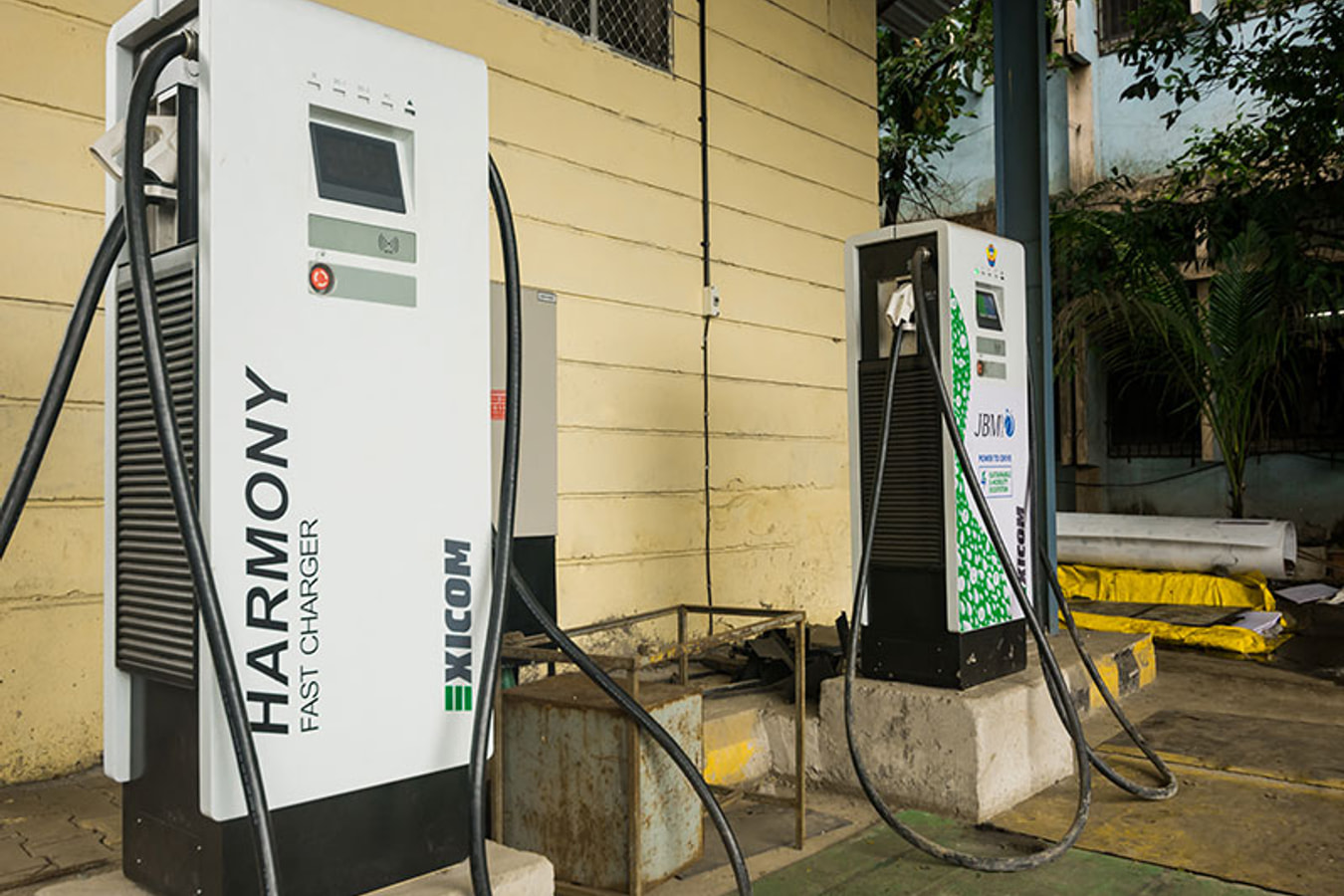
- Charging access: confirm whether the office, depot or regular parking location has compatible equipment and a backup arrangement. FuelPrice’s state-wise EV charging directory can help with an initial location check, while operators should verify live availability and access rules.
- Procurement terms: read the tender for warranty, battery support, roadside assistance, service locations and uptime obligations rather than relying only on the NDP ceiling.
- Whole-life cost: compare electricity, maintenance, charging equipment and downtime with the conventional-fuel baseline. The fuel-cost calculator can estimate the petrol or diesel portion of a comparable route, but it does not replace a fleet-level electricity and maintenance calculation.
- Trip planning: for vehicles that travel outside their normal duty area, use the road-trip planner to review distance, stops and alternate routes before deployment.
What the rule does not change for private buyers
Private car and two-wheeler buyers do not receive a ₹20 lakh EV purchase entitlement from this memorandum. It does not reduce retail GST, registration charges or insurance premiums, and it does not require an individual to choose an EV. Its direct audience is the central government procurement system.
For other fleet operators, the policy is still relevant as a signal to monitor. If state departments, public-sector organisations or large private fleets adopt similar tender preferences, demand for affordable electric cars and dependable charging could broaden. That outcome is not part of the current memorandum and should not be treated as confirmed.
What changes now
The revised instructions took effect immediately on 10 Nov 2026. Central ministries and departments will now need to apply the EV-first procurement preference when replacing or condemning ICE staff cars, while seeking a documented relaxation where an EV is not practical. The existing EV-hiring requirement remains in force, and all other staff-car conditions continue unless separately amended.
The next useful signals will be government tenders showing how the ₹20 lakh NDP ceiling is applied, the number of EV replacements actually ordered, and the charging and service conditions attached to those contracts. Those details will show whether the rule changes fleet operations in practice, not just the wording of procurement policy.
The reader takeaway is straightforward: this is a confirmed central-government procurement change, not a retail EV subsidy. It places electric vehicles first in the replacement process, sets a higher NDP ceiling for them, and keeps a documented exception route for cases where an EV cannot meet the department’s operational needs.
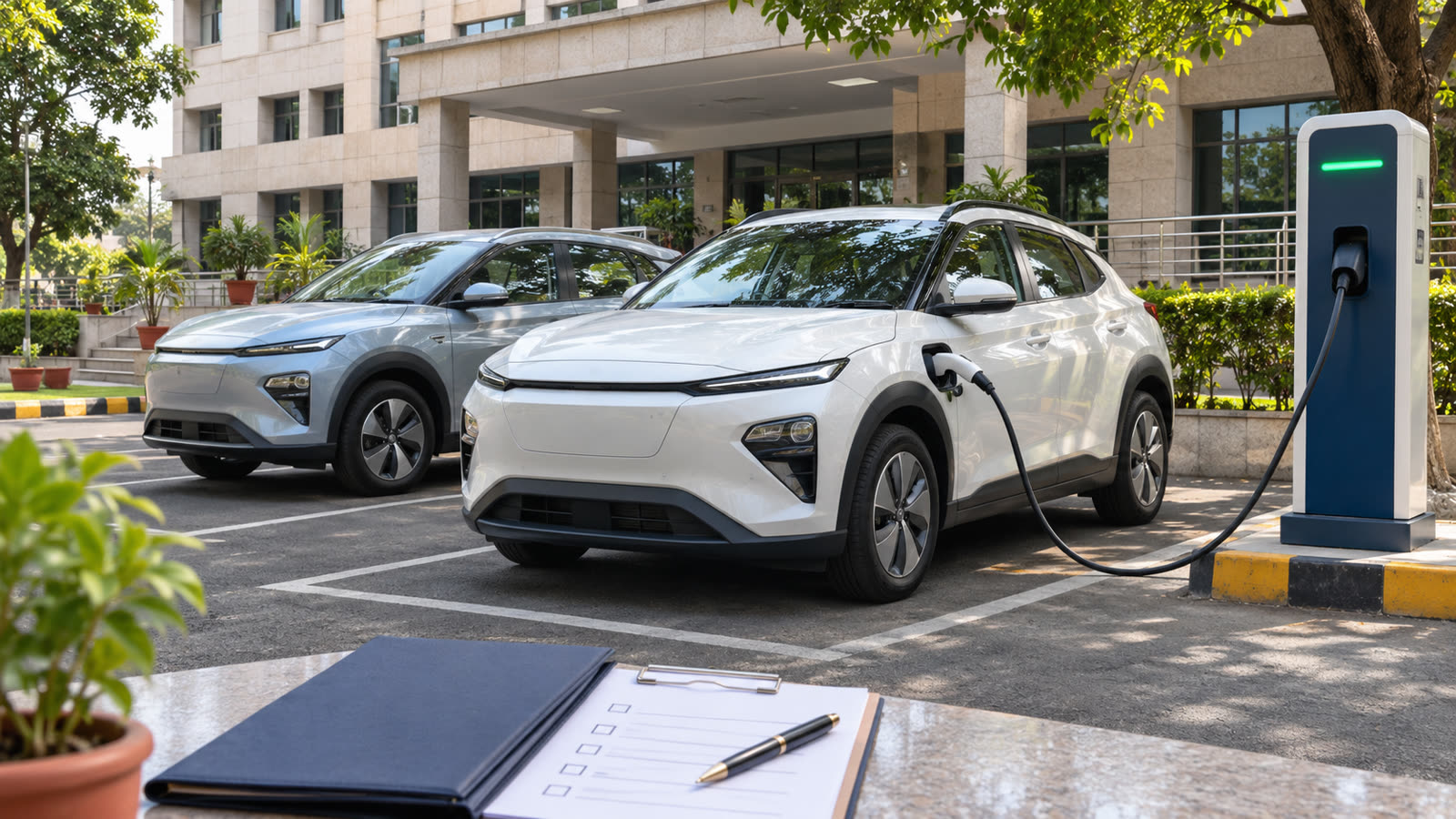
Representative image: unbranded electric staff cars at an institutional charging point. Credit: FuelPrice editorial illustration; not an official government photograph.
Sources
- Department of Expenditure, Ministry of Finance — Office Memorandum F. No. 16(17)/E.Coord/2025, procurement and hiring of staff cars — 10 Nov 2026
- Business Standard — Finance Ministry makes EVs default choice for govt staff car purchases — 11 Nov 2026
- Moneycontrol — Finance Ministry makes EVs default choice for govt staff cars, sets Rs 20 lakh procurement ceiling — 11 Nov 2026