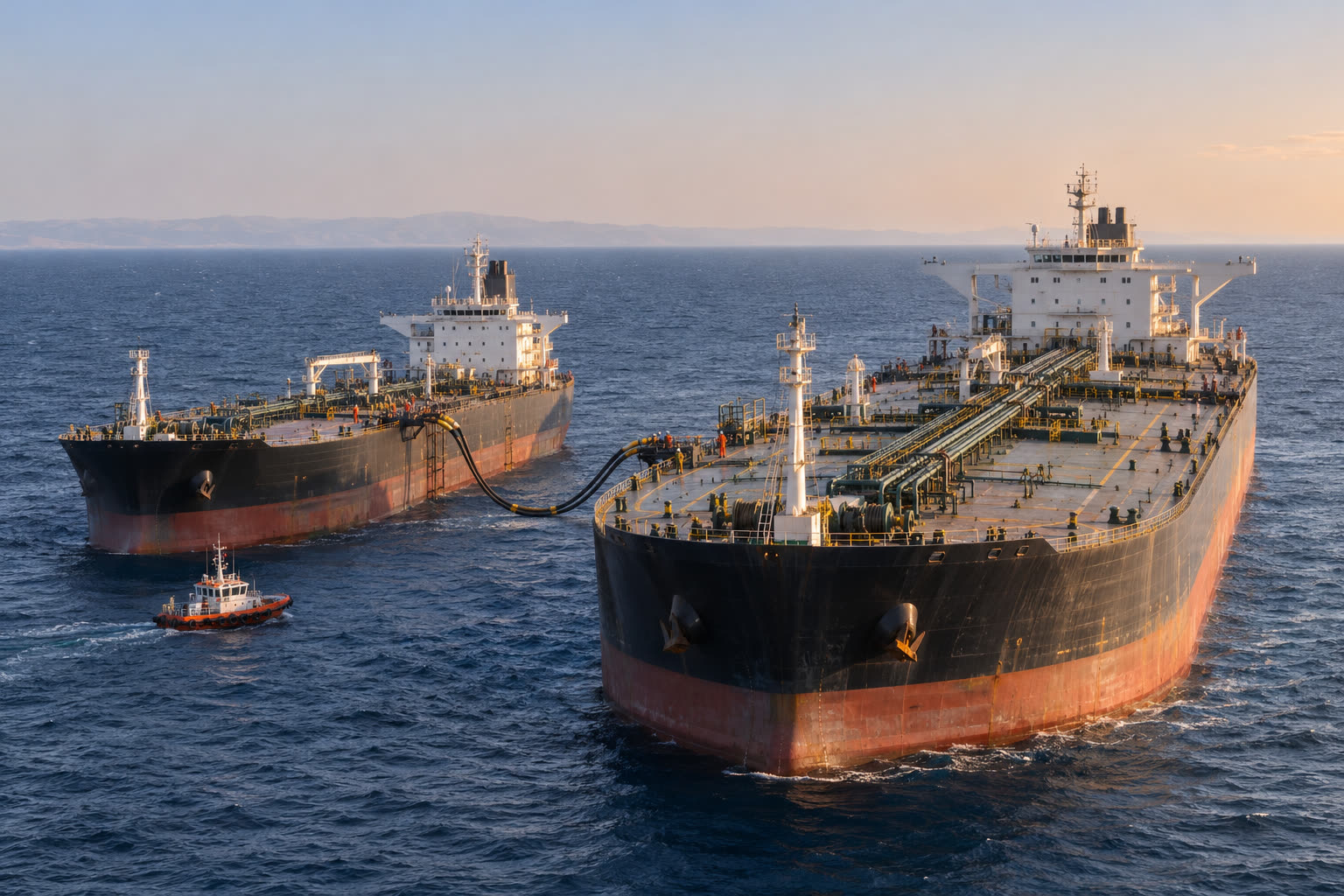
India’s Gulf crude freight rose to about US$7.51 per barrel in October 2026 from US$1.57 per barrel in late February, a 377% increase and nearly five times the earlier level, according to Drewry Maritime Research data reported by ThePrint and corroborated by recent shipping reports. The increase matters because it raises the cost of getting imported crude to Indian refineries.
This is an upstream logistics cost, not a retail petrol or diesel price notification. It can pressure refiners’ landed crude costs, but the eventual effect on a pump price depends on crude benchmarks, the rupee, refining economics, taxes, margins and oil-marketing company decisions.
Key takeaways
- Freight from Fujairah in the UAE to India’s west coast reached US$7.51 per barrel in October 2026, up from US$1.57 in late February, according to Drewry data cited by ThePrint.
- Ship-to-ship transfers in the Gulf of Oman, higher war-risk exposure and fewer available tankers are making established crude routes more expensive.
- Freight for Russian crude from Primorsk and Ust-Luga to India’s west coast was reported at about US$25–30 or more per barrel in October 2026, against roughly US$8–12 before the conflict.
- The reports describe a higher supply-chain cost, not an automatic petrol or diesel price hike for Indian motorists.
The number behind the headline
The latest reports point to a sharp change in the economics of transporting crude to India. The figures below are route-level freight estimates, not the price of crude itself and not a per-litre retail fuel cost.
| Route or measure | Earlier level | Latest reported level | What it shows |
|---|---|---|---|
| Fujairah to India’s west coast | US$1.57 per barrel, late February 2026 | US$7.51 per barrel, October 2026 | 377% rise; nearly five times higher |
| Fujairah to India’s west coast | US$4.76 per barrel, September 2026 | US$7.51 per barrel, October 2026 | Nearly doubled in one month |
| Primorsk and Ust-Luga to India’s west coast | About US$8–12 per barrel before the conflict | About US$25–30 or more per barrel, October 2026 | Nearly three times higher |
Source: Drewry Maritime Research data and analyst comments reported by ThePrint on 9 Nov 2026, with the route figures also reported by India Shipping News and India Seatrade News on 10–11 Nov 2026.
Why ship-to-ship transfers are being used
A normal crude movement involves a tanker loading at the supplier’s port and sailing towards the destination. In a ship-to-ship, or STS, arrangement, a shuttle tanker carries the cargo through a difficult section and transfers it to another vessel waiting in safer waters. The Indian Express described this Gulf arrangement as a way for suppliers to move crude through the Strait of Hormuz while transferring much of the voyage risk before the second tanker continues towards Asia.
That workaround keeps barrels moving, but it adds another handling step and can leave vessels waiting for a transfer window. ThePrint attributed the higher freight to the STS network, disruption around established corridors, fewer ships willing to enter high-risk waters and longer diversions. War-risk insurance is an additional cost on top of the headline freight rate.
For India, the result is that a nearby Gulf cargo is no longer automatically the lowest-cost cargo after transport and risk are included. Atlantic Basin, Russian and other alternative supplies may help diversify the basket, but longer voyages and tighter tanker availability can raise their delivered cost too.
Why India’s delivered crude cost matters
India’s refiners are dealing with the freight shock while buying large volumes. Kpler estimates cited by ThePrint put India’s crude imports at about 5.6 million barrels per day in October 2026, described as a record monthly level. Russian arrivals were estimated at 1.97 million barrels per day, about 35% of the total, although that was below the 2.82 million barrels per day reported for July 2026.
Business Standard reported on 31 Oct 2026 that freight and insurance together accounted for about one-quarter of the cargo cost of a fully loaded very large crude carrier, compared with less than 5% before the conflict, citing refinery traders. That comparison shows why shipping is no longer a small line item in a refiner’s sourcing decision. A refinery may still buy a cargo if the crude discount compensates for the higher transport cost, but the margin is less predictable.
What it means for motorists, fleets and fuel prices
The Petroleum Planning & Analysis Cell says import-parity pricing includes the free-on-board crude price, ocean freight, insurance, customs duty and port dues. Its FAQ also says petrol and diesel prices are market-determined and are decided by public-sector oil-marketing companies in line with international prices and other market conditions. That means freight is part of the upstream price chain, but a freight report alone cannot be converted into a rupees-per-litre pump increase. That conclusion is an inference from the official pricing framework, not a reported OMC decision.
For private motorists, the useful check is the dated price in the city where the vehicle is refuelled, rather than the dollar-per-barrel freight figure. The live fuel-price pages can be used to monitor petrol and diesel rates as any confirmed retail change appears.
For truck, bus and delivery operators, the exposure is more direct because fuel is a recurring operating cost. A route budget should use the current local diesel price, expected kilometres, vehicle efficiency, load and tolls; the fuel cost calculator can turn those inputs into a trip estimate. The road-trip planner is also useful when a higher fuel assumption needs to be compared with another route.
FuelPrice’s earlier report on IndianOil’s plan to buy crude-oil and LPG carriers noted the freight pressure. That earlier development helps explain why refiners are looking at shipping capacity as well as crude suppliers, but it does not itself announce a change in pump prices.
What to watch next
The near-term watch point is whether commercial shipping through the Strait of Hormuz normalises. Drewry told ThePrint that a normalisation in 2027 could ease freight as vessels return to Gulf trades and war-risk premiums decline; that is an expectation, not a confirmed timetable.
Until then, the important indicators are tanker availability, the cost of war-risk cover, the size of ship-to-ship queues, India’s crude sourcing mix and any formal retail-price communication from oil-marketing companies. A fall in the freight component would not automatically lower pump prices, just as a rise does not automatically produce a same-day increase.
Reader takeaway
The nearly fivefold rise in one Gulf-to-India freight route is a real cost shock for the crude supply chain, but it is not a standalone forecast of the next petrol or diesel price. Drivers should track confirmed local fuel prices; fleets should update trip and monthly operating-cost estimates when their fuel assumptions change.
Sources
- ThePrint — “West Asia crisis hits India’s Gulf oil shipping edge, tanker freight costs up 5x. All eyes on Hormuz” — 9 Nov 2026
- India Shipping News — “West Asia crisis drives India’s crude oil shipping costs up nearly fivefold; Strait of Hormuz remains in focus” — 11 Nov 2026
- India Seatrade News — “West Asia Conflict Pushes Crude Oil Shipping Costs to Nearly Five Times February Levels” — 10 Nov 2026
- Business Standard — “India heads for record crude imports in October as refiners secure supplies” — 31 Oct 2026
- The Indian Express — “Ship-to-ship transfers boost India’s West Asian oil imports, Russian flows see supply pressure” — 3 Oct 2026
- Petroleum Planning & Analysis Cell — “FAQs: Import Parity Price and pricing of petrol and diesel” — accessed 11 Nov 2026