India may need at least 25,000 additional direct-current (DC) fast chargers over the next three years as electric cars, buses and trucks expand, Exicom Tele-Systems CEO Anant Nahata said on 11 Nov 2026. The estimate is not a government rollout target or a confirmed installation order, but it highlights a practical question for Indian EV buyers: how many compatible, working fast chargers are actually available on their route.
The estimate was reported by The Economic Times from a PTI interaction with Nahata. It assumes 60–80% annual growth in electric passenger-vehicle sales and also counts the charging demand created by electric buses and trucks. For drivers, the useful takeaway is not that 25,000 chargers are guaranteed to arrive, but that charging access will remain an important part of the ownership and route-planning decision.
Key takeaways
- Exicom’s CEO estimates India may need at least 25,000 more DC fast chargers in the next three years.
- The estimate is an industry view, not a notified government target, budget commitment or confirmed construction schedule.
- Official and industry counts currently use different dates and definitions, so station totals should not be added together.
- EV users need to check connector compatibility, charging power, live availability and backup options for the route they actually drive.
What Exicom’s estimate says
Nahata linked the projected requirement to the expected rise in electric-car sales and to new electric bus and truck deployments. The PTI report said the estimate assumes 60–80% annual growth in the passenger-vehicle segment. It also said government schemes could bring 10,000–15,000 more electric buses, creating a requirement for 2,000–3,000 DC chargers for that segment alone.
That makes the charging question wider than private cars. Buses need predictable depot charging, while trucks may need high-power charging on freight corridors and at logistics hubs. A public station count can therefore look healthy while a driver still struggles to find a suitable high-power charger at the right time and location.
Why India’s charger counts need context
Two recent figures illustrate why readers should check the date and definition behind a network number. A 21 Jul 2026 Press Information Bureau release from the Ministry of Heavy Industries, citing the Bharat Heavy Electricals Limited portal, reported 52,718 public EV charging stations, including 16,561 stations equipped with fast charging for cars. The 11 Nov 2026 PTI report carried by The Economic Times cited a different snapshot of over 29,000 stations and around 8,000 fast-charging stations.
These figures conflict on the surface, but they are not necessarily measuring the same thing. They come from different dates and may distinguish between stations, charging points and car-compatible DC equipment differently. The 52,718 and 16,561 figures should therefore be read with their July date and official definition; they should not be combined with the PTI figures to create a larger national total.
| Source and date | Reported network view | What it means |
|---|---|---|
| Ministry of Heavy Industries via PIB, 21 Jul 2026 | 52,718 public stations; 16,561 with fast charging for cars | Official snapshot based on the BHEL portal |
| PTI/The Economic Times, 11 Nov 2026 | Over 29,000 stations; around 8,000 fast DC stations | Industry interview snapshot quoted with Exicom’s estimate |
Autocar Professional has also reported that utilisation of India’s charging network remains low, which adds another layer to the availability question. A charger that exists on a map may still be occupied, offline, incompatible with a particular vehicle or difficult to access after operating hours.
What EV drivers should check now
Before a long trip, an EV driver should check the actual corridor rather than rely on a national station headline. The EV charging directory can help identify stations by state, but the operator’s own status information should be checked for live availability and temporary outages.
- Vehicle compatibility: confirm that the charger supports the car’s connector and the charging standard accepted by the vehicle.
- Charging power: a fast charger’s advertised output is not the same as the vehicle’s maximum intake. Charging time depends on the car, battery state, temperature and the charger’s available power.
- Route spacing: keep a backup stop in mind where the corridor has few alternatives. A route with more stations is not automatically a route with more usable chargers.
- Trip timing: commercial hubs and highway stops may be busier during peak travel hours. Build a realistic buffer into the plan rather than treating the charging stop as a fixed-duration fuel break.
For a planned intercity journey, the road-trip planner can be used to review distance and stop planning before leaving. Drivers comparing an EV with a petrol or diesel vehicle can also use the fuel-cost calculator to estimate the conventional-fuel part of a route, while keeping charging tariffs and vehicle efficiency as separate inputs.
What the government support means
The Ministry of Heavy Industries’ July release said ₹2,000 crore had been allocated under the PM E-DRIVE scheme for public charging infrastructure, alongside ₹912.50 crore under FAME-II. The same release said setting up EV charging stations is an unlicensed activity under the applicable framework, allowing private entities to participate subject to the Ministry of Power’s charging-infrastructure guidelines.
Those measures can support network growth, but they do not guarantee that every funded or announced charger will be live on a particular highway. The next useful signals will be commissioned sites, operating uptime, compatible high-power equipment and whether charging operators can improve utilisation enough to sustain the network.
The reader takeaway
Exicom’s 25,000-charger estimate is best read as a warning about the scale of infrastructure needed if EV sales and electric bus and truck deployments accelerate. It does not promise a specific number of new chargers or establish a new rule for EV owners. For a buyer or fleet operator, the practical check is narrower: map the routes you use, confirm the chargers those vehicles can use, and keep a backup plan for gaps or outages.
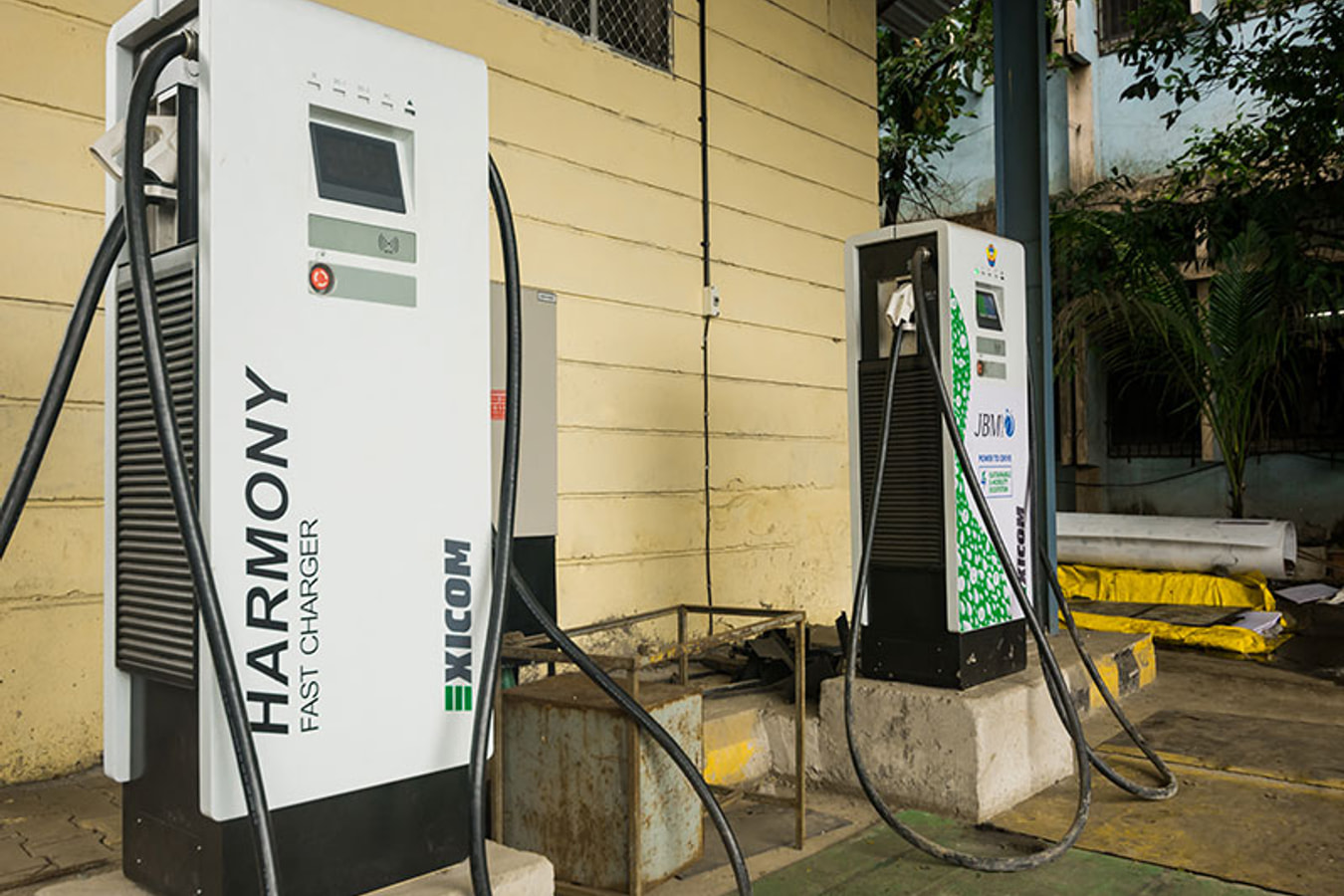
Representative image: Exicom Harmony fast chargers. Credit: Autocar Professional.
Sources
- The Economic Times — “India will need additional 25,000 EV fast chargers in next 3 years: Exicom CEO” — 11 Nov 2026
- Press Information Bureau, Ministry of Heavy Industries — “Charging Stations for Electric Vehicles (EVs)” — 21 Jul 2026
- Autocar Professional — “India’s EV charging network surpasses 29,000 stations, but utilisation remains low” — 1 Sep 2026
- Exicom Tele-Systems — Investor Relations and management information — accessed 11 Nov 2026
- Autocar Professional — “EV charger manufacturer Exicom Tele Systems’ IPO on 27 February” — 2024 (image reference)