At the PM E-DRIVE industry dialogue held at ICAT, Manesar, on 25 Sep 2026, Force Motors presented a Traveller-based electric ambulance, according to NDTV Auto. The appearance puts electric emergency vehicles into a scheme bucket that the government has assigned ₹500 crore and a maximum support count of 3,811 vehicles, but it is not a retail launch or a published buyer price.
Key takeaways
- Force Motors presented a Traveller-based electric ambulance for Type C and Type D emergency-care applications, according to NDTV Auto's report of the company presentation.
- The official PM E-DRIVE portal lists e-ambulances as an eligible category, with a maximum support count of 3,811 vehicles and total fund support of ₹500 crore.
- The 25 Sep event confirms an industry-policy discussion and product showcase; it does not by itself confirm nationwide deliveries, a retail price or a consumer discount.
- For ambulance operators, charging uptime, usable range with medical equipment, maintenance support and procurement rules matter as much as the vehicle's claimed specifications.
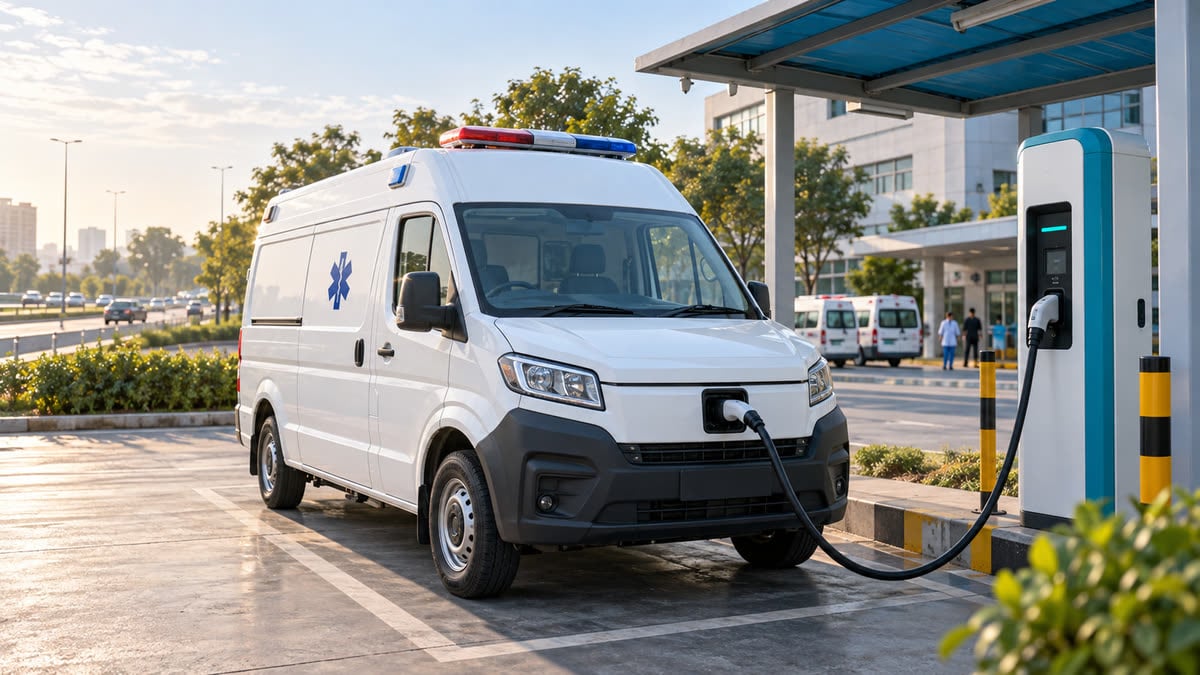
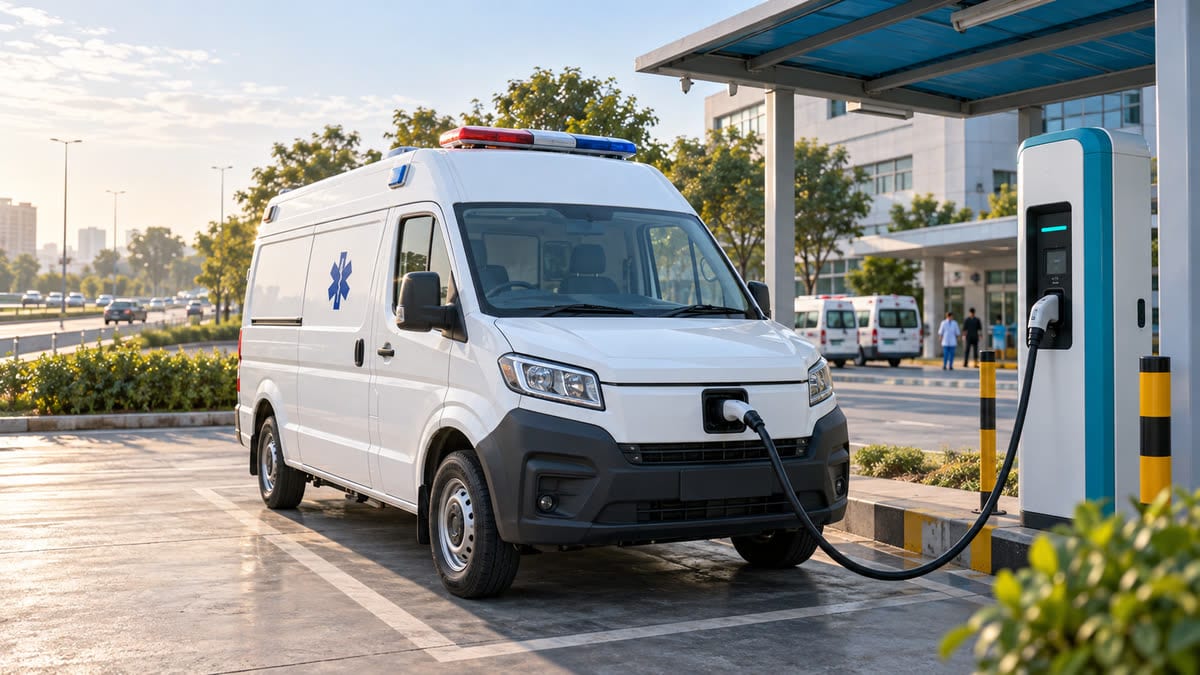 FuelPrice editorial illustration (AI-generated); it is not an official Force Motors product image.
What Force Motors showcased
The Ministry of Heavy Industries' official photo record confirms that the PM E-DRIVE: Dialogue with the Industry was held at the International Centre for Automotive Technology in Manesar on 25 Sep 2026. The event brought policymakers, testing and certification stakeholders and vehicle companies together around the next phase of electric mobility.
NDTV Auto reported that Force Motors used the event to present a Traveller-based electric ambulance in Type C and Type D configurations. In ambulance terminology, those categories are associated with basic and advanced life-support roles, so the presentation is more significant than a passenger-van concept: it points to a commercial vehicle being prepared for high-use emergency work. The company-reported specifications remain claims from its presentation, not independent FuelPrice testing.
There is an important limit to what has been confirmed. The available event record and coverage describe a showcase, not a consumer launch. No retail price, public booking window, delivery timetable or state procurement order was announced in the material reviewed for this report. That means ambulance owners, hospitals and fleet operators should treat the vehicle as a product entering the policy and procurement conversation, rather than as a model that is already available everywhere.
What the PM E-DRIVE allocation means
The official PM E-DRIVE scheme page, checked on 26 Sep 2026, lists e-ambulances separately from electric two-wheelers, three-wheelers, buses and trucks. Its scheme table gives e-ambulances a maximum support count of 3,811 vehicles and total fund support of ₹500 crore. NDTV's report of the Manesar event cites the same scheme-level figures.
These are allocation figures for the scheme, not a fixed cash discount that every ambulance buyer can claim. The actual benefit for a particular vehicle will depend on the applicable operating guidelines, vehicle eligibility, certification, procurement route and the way a buyer or public agency participates. Until those details are reflected in a tender, approval or official buyer communication, the allocation should be read as a policy envelope rather than a final on-road price reduction.
The distinction matters because an electric ambulance is a specialised commercial vehicle. Its economics depend on much more than the cost of electricity versus diesel. A fleet may need dedicated charging at a hospital or depot, backup arrangements for long-distance dispatches, trained technicians and a clear plan for vehicles that are unavailable while charging or being serviced.
Why ambulance duty is a tougher EV test
Private EV drivers can often plan a charging stop around a predictable daily route. An ambulance cannot always do that. Dispatches may be short and frequent, or long and unplanned; cabin cooling and medical equipment can add continuous electrical load; and response vehicles may need to remain ready even when a charger is occupied or a grid connection is interrupted.
That is why buyers and public-health agencies will need to compare usable operating range under loaded conditions, charging time at the intended site, battery and motor warranty terms, emergency-equipment compatibility, service coverage and roadside support. They will also need to check whether the vehicle's certification and body configuration match the ambulance category specified in the procurement document. These are checks for procurement and operations teams, not a recommendation to buy any particular model.
For a diesel ambulance fleet comparing route expenses, the fuel cost calculator can establish a baseline for fuel-led running costs before a vehicle is compared with an electric alternative. That baseline is useful because an EV's lower energy cost does not remove the need to account for charging infrastructure, downtime and replacement planning.
Charging access is another practical constraint. Operators planning electric emergency fleets can use FuelPrice's state-wise EV station directory to identify the public charging network around a proposed route, while still checking whether those stations can accept the vehicle and remain available during emergency operations.
What changes now for drivers and operators
For ordinary drivers, the showcase does not create a new road rule, fuel-price change or nationwide subsidy at the charging point. For hospitals, municipalities and fleet operators, however, it signals that e-ambulances are moving from demonstration discussions towards a funded policy category. The next meaningful evidence will be official model approvals, procurement notices, deployment orders and operating data from real ambulance duty.
Road dispatch planning will also need to account for the same toll and corridor costs as any other commercial vehicle. Where an ambulance operator is modelling a route, the toll-charge calculator can help separate toll exposure from energy and staffing costs; emergency-service exemptions or local operating rules should still be verified with the relevant authority.
Reader takeaway
The verified development is a Force Motors product showcase at a 25 Sep PM E-DRIVE industry event, backed by an official scheme allocation for up to 3,811 e-ambulances and ₹500 crore in fund support. It is not yet proof of a retail rollout or a guaranteed saving. The useful question for operators is whether the vehicle can deliver reliable, charged and certified emergency service across their actual routes; that answer will come from approvals, tenders and field performance, not from a presentation alone.
Sources
- NDTV Auto: Force Motors Steps Up E-Ambulance Push Under PM E-DRIVE With 235-Km EV Traveller — 25 Sep 2026
- Ministry of Heavy Industries: PM E-DRIVE scheme portal — accessed 26 Sep 2026
- Press Information Bureau: PM E-DRIVE: Dialogue with the Industry photo record — 25 Sep 2026
- Force Motors: Investors and Annual Report FY 2025-26 — 2026