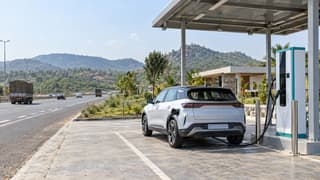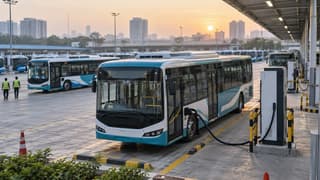
India has notified the Gas Cylinder (Third Amendment) Rules, 2026, creating a formal framework for CNG and compressed biogas (CBG) mobile refuelling units (MRUs). The rules took effect on 23 Sep 2026 when the notification was published in the Official Gazette, but they do not create a public roadside or doorstep CNG service; they limit MRU dispensing to approved industrial, transport and testing applications.
Key takeaways
- The notification is G.S.R. 831(E), issued on 21 Sep 2026 and published in the Official Gazette on 23 Sep 2026.
- A CNG MRU must be owned by an authorised city gas distribution company; a CBG MRU must be owned by a Form E&F licensee.
- Approved uses include specified mines, ports, Indian Railways locomotives, ships or boats, testing laboratories and exceptional heavy-equipment cases.
- Public retail dispensing on roads, in residential areas, commercial parking areas, basements or other unapproved places is barred.
- Units need approved equipment, emergency shut-down systems, trained supervision, safety clearances and site-specific emergency plans.
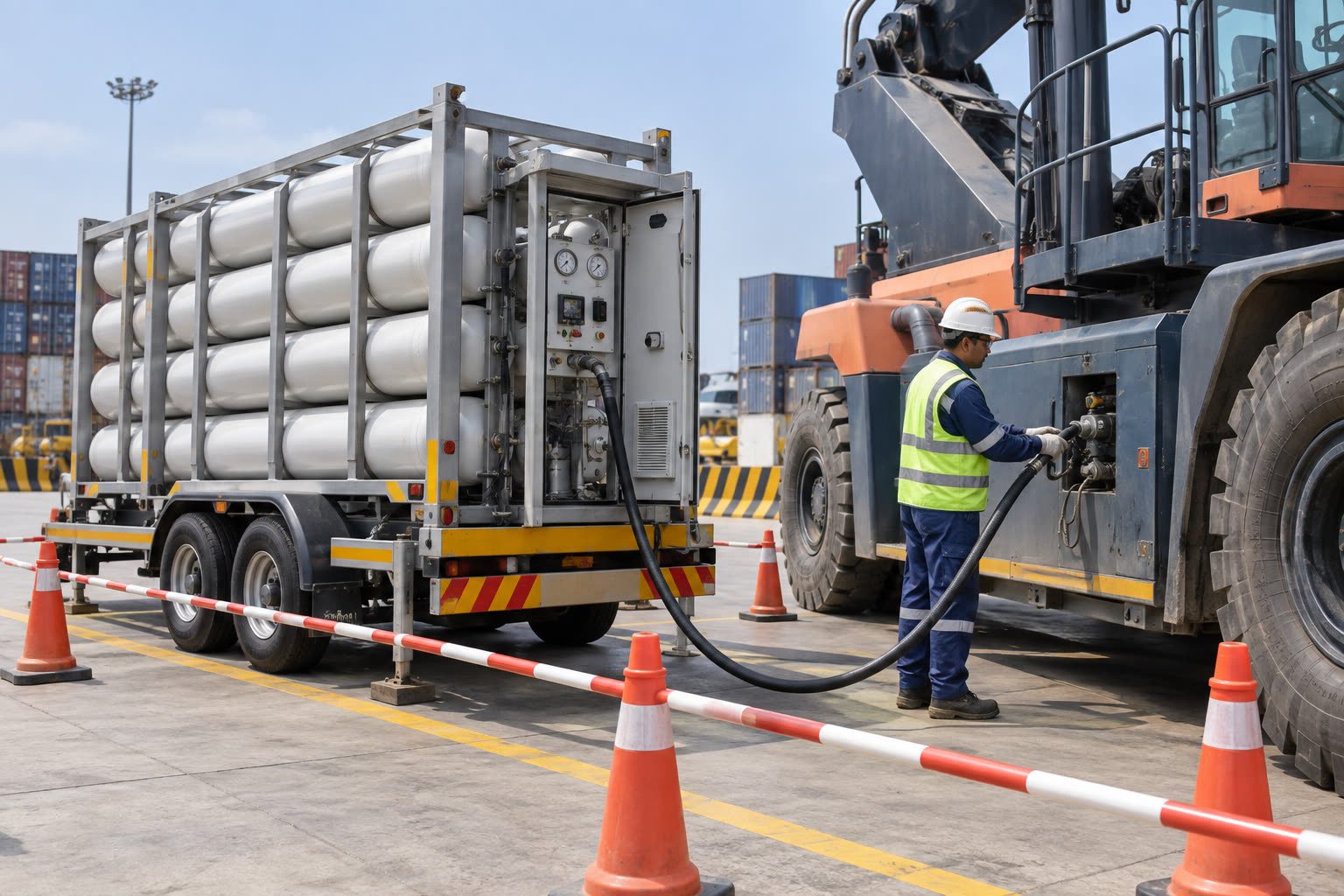
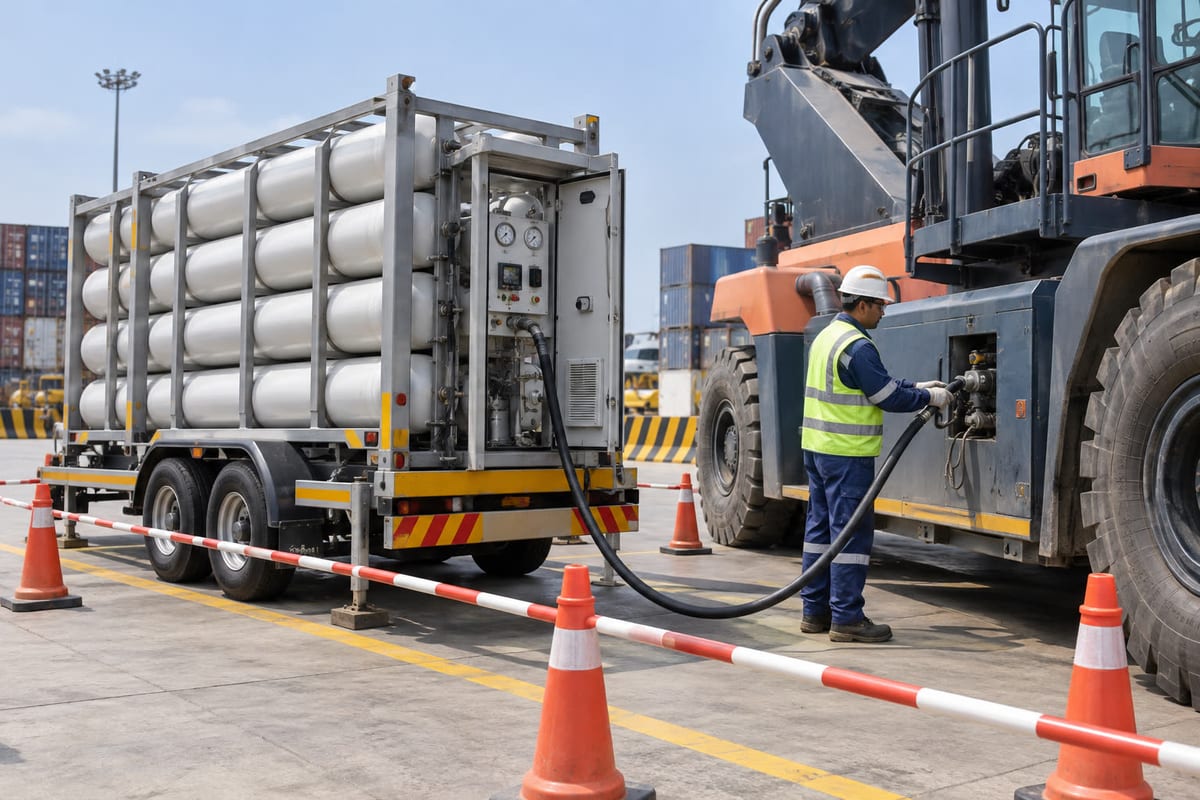 FuelPrice original editorial illustration of a controlled mobile CNG/CBG refuelling operation; not an official government or operator photograph.
Why the new CNG/CBG rules matter
A mobile refuelling unit is a storage and dispensing assembly mounted on a vehicle, trailer, skid or another mobile platform. The new rules do not treat it as a roving public fuel pump. Instead, they define who may own the unit, where it can be filled, which vehicles or equipment it may serve and what safety controls must be in place.
That distinction matters for India’s CNG and CBG expansion. A mobile unit can be useful where a large machine, locomotive, boat or industrial vehicle cannot be taken to a conventional station. But allowing unapproved units to dispense compressed gas in residential or public settings would create a different safety and enforcement problem. The notification therefore creates a controlled route for specialist users without opening a general mobile-refuelling market.
Who can own and operate a mobile unit
The ownership rule is central. A CNG MRU must belong to a city gas distribution company authorised for the relevant geographical area. A CBG MRU must belong to a licensee operating under Form E&F. In both cases, the complete assembly needs approval from the Chief Controller, including the storage cascade, dispensing system, piping, hoses, pressure-regulating devices, safety fittings, emergency shut-down system, layout, operating procedure and emergency response arrangement.
The unit must also be connected to the licensed premises that fill or charge it. The rules require filling or charging at a designated area of a CNG mother station or a licensed CNG/CBG filling premises, with the MRU and its details reflected in the approved layout and licence. This is not permission for an operator to fill a trailer at an informal location and then move it wherever demand appears.
Where the rules allow CNG or CBG dispensing
The permitted applications are narrower than ordinary road transport. The rules cover non-transport vehicles operating within mines covered by the Mines Act or within notified ports, Indian Railways locomotives, and approved ships or boats operating on inland or seaborne waterways. They also cover engines under test at testing laboratories authorised by the Central Government and the Chief Controller.
The Chief Controller may permit refuelling of heavy equipment, machinery or other heavy vehicles that cannot be brought to a fuel station. That is an exceptional permission, subject to additional safeguards, site inspection, risk assessment and conditions recorded by the authority. It should not be read as a blanket approval for construction fleets, private buses or delivery vehicles to use mobile CNG on demand.
The rules also say that an MRU cannot be used for public retail dispensing on public roads, in residential areas, commercial parking areas, basements, enclosed premises or any other place that has not been specifically approved. In practical terms, this means a private CNG car owner should not assume that an app-based or doorstep gas service is now authorised by this notification.
The notification does not set a new retail CNG tariff. Motorists can continue to check current state-wise rates through FuelPrice’s CNG price directory. The applicable price at a normal station remains a separate issue from the safety framework for specialist mobile units.
Safety controls operators must meet
The rules prescribe a fail-safe, manually operated emergency shut-down system that can be operated from at least two accessible locations. It must be able to isolate the storage cascade and dispensing lines, shut off the gas supply sources and stop dispensing immediately when activated. The system must also be tested periodically according to the manufacturer’s procedure.
Minimum separation from buildings and boundaries depends on the total water capacity of the storage cascade. The required distance is 4 metres for capacity up to 4,500 litres and 5 metres for capacity above 4,500 litres. The Chief Controller can require greater distances from roads, ignition sources, overhead electrical lines, drains, basements, hazardous storage or other vulnerable locations. An MRU above 10,000 litres of total water capacity needs specific permission before it can be used.
The cylinder cascade must follow IS-7285, ISO-9809, ISO-11119 or another code accepted by the Chief Controller. Its maximum allowable working pressure is capped at 250 bar gauge unless a different pressure is specifically approved. Hoses and couplings must be suitable for CNG or CBG service, electrically continuous and tested for leaks and pressure; their minimum burst pressure must be at least four times the maximum operating pressure and they must include breakaway or quick shut-off protection.
The dispensing area must be physically protected with barriers and warning signs in English, Hindi and the local language. Smoking, open flames, mobile phone use, hot work, unauthorised electrical equipment and public access are prohibited in the area. Refuelling must be supervised by an authorised and trained responsible person, and the operator must check the hoses, couplings, valves, dispenser and receiving fuel system for leaks before dispensing starts.
What CNG fleets and drivers should check
For fleet and industrial operators
- Confirm that the MRU owner is the authorised CGD company or Form E&F licensee required by the rules.
- Ask for the Chief Controller approval covering the complete assembly, site layout and emergency response arrangements.
- Verify that the intended vehicle or equipment appears on the approved list maintained at the site.
- Check that the dispensing area has the required clearance, barriers, trained supervision, leak checks and emergency access.
- Keep the site-specific emergency plan, mock-drill records, pressure readings, maintenance details and incident records available for inspection.
For private CNG motorists
There is no immediate change to a normal CNG car’s refuelling routine, pump access or fuel price because of these rules. The direct users are specialist operators and the companies responsible for approved industrial or transport applications. For a regular trip, a driver can still estimate running cost with the fuel-cost calculator and compare today’s retail rates on the live fuel prices page.
What changes now and what to watch
The confirmed change is regulatory: CNG and CBG mobile refuelling is now governed by a defined ownership, approval and safety framework. The rules do not announce a nationwide network of mobile pumps, a CNG price cut, a new subsidy or a change to the eligibility of privately owned CNG cars.
The next practical developments will be implementation details from city gas distributors, CBG licensees, site authorities and the Chief Controller. Operators may need to update layouts, vehicle lists, emergency plans, training records and inspection routines before using an MRU. For drivers, the useful takeaway is simpler: a mobile gas unit seen at a mine, port, rail facility or testing site is part of a controlled approval system, not evidence that public roadside CNG dispensing is now permitted.