Tata Power has commissioned its first 240 kW DC EV charging station in Andhra Pradesh at Sri Varsha Grand on the Bengaluru–Chittoor–Tirupati/Chennai corridor, according to a report published on 25 Sep 2026. For EV users, the station adds a high-capacity charging option on a road used for Bengaluru–Chennai journeys and Tirupati trips, although the practical charging time will still depend on the vehicle, battery condition and live bay availability.
Key takeaways
- The reported station is at Sri Varsha Grand on the Bengaluru–Chittoor–Tirupati/Chennai highway corridor.
- It is described as a 240 kW DC ultra-fast facility with CCS-2 connectors for compatible EVs.
- The stop has access to dining, restrooms and parking, which can make a charging break more practical on a long journey.
- Drivers should check the vehicle’s supported DC input, live charger status and tariff before planning the trip around the new site.
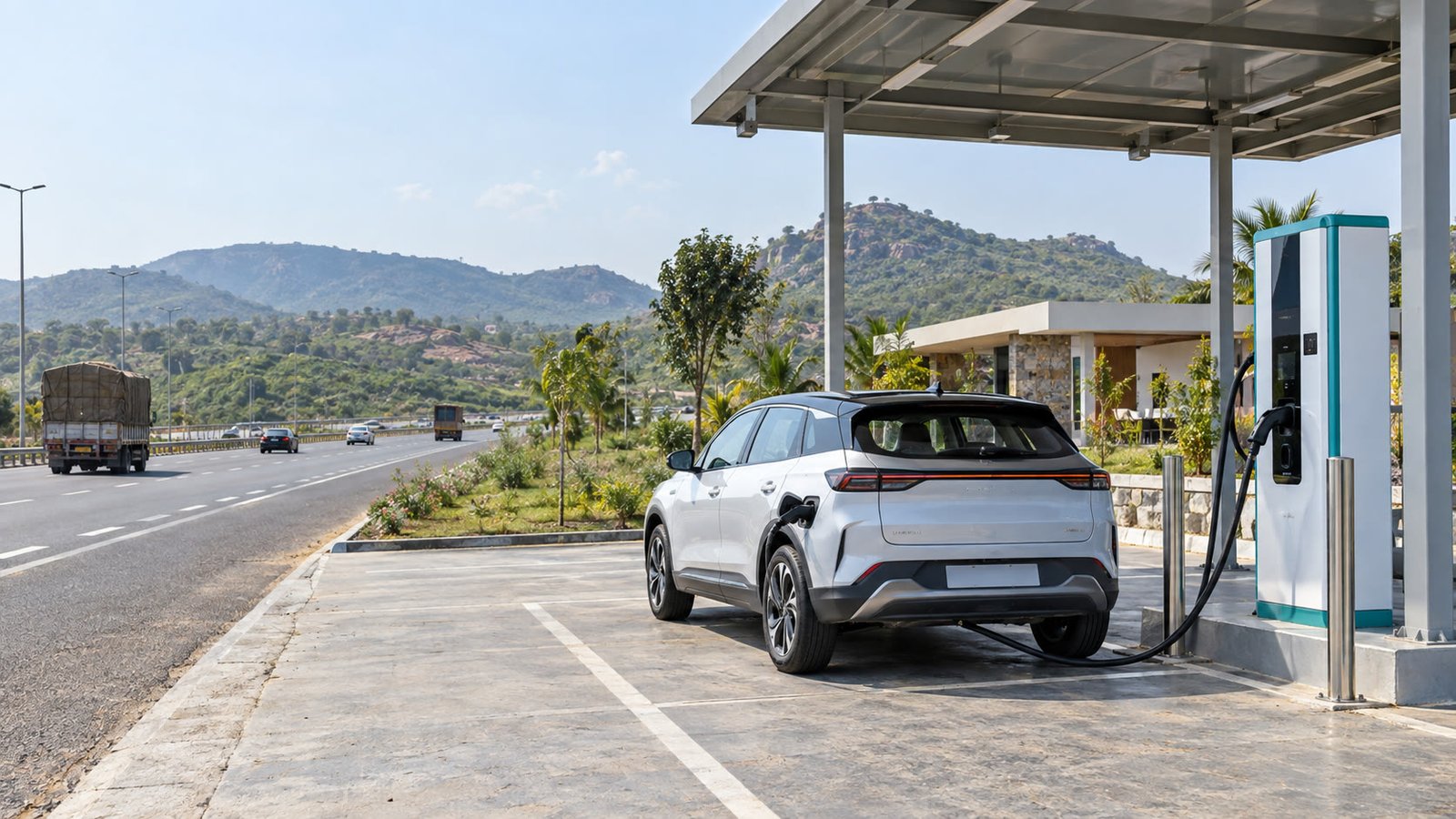
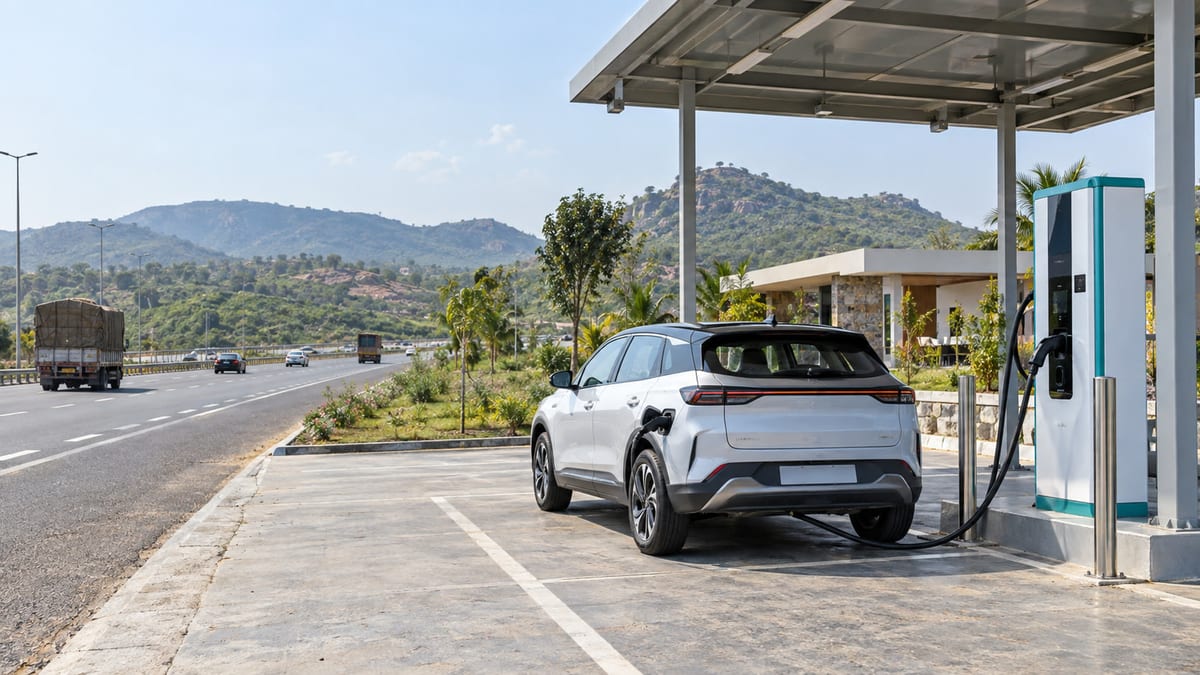 Editorial illustration of a highway EV charging stop on the Bengaluru–Chittoor–Tirupati corridor. Credit: FuelPrice.
What has changed on the corridor
Deccan Chronicle reported on 25 Sep that Tata Power had commissioned its first 240 kW DC ultra-fast charging station in Andhra Pradesh at Sri Varsha Grand. The site is positioned on the Bengaluru–Chittoor–Tirupati/Chennai route, so it is relevant to private EV owners travelling between Bengaluru and Chennai as well as people heading to Tirupati.
The report says the station uses CCS-2 connectors and is located at a stop with dining, restroom and parking facilities. It also says EV users can locate the station, check availability and start a charging session through the Tata Power EZ Charge app or an RFID card. A current EV-charging directory separately lists Hotel Sri Varsha Grand under Tata Power’s fast-charging locations in Chittoor, giving drivers another place to cross-check the listing before departure.
Tata Power’s official 10 Sep release provides wider context for the announcement. It lists a co-branded fast-charging hub in Andhra Pradesh on the Bengaluru–Tirupati connection and describes the company’s broader move to place higher-capacity charging destinations on highway corridors. That wider strategy matters because a new stop is most useful when it fits into a sequence of dependable charging options rather than being treated as a standalone promise.
Why the new charger matters to EV travellers
Long-distance EV planning is shaped by both range and charging access. A new high-capacity site gives drivers an additional planned stop and may make the corridor easier to use for private cars, commercial operators and fleet vehicles. The location’s food, washroom and parking facilities also mean that charging can be combined with a normal break instead of requiring a separate detour.
The 240 kW figure is the station’s stated capacity; it is not a guarantee that every connected vehicle will charge at 240 kW. The car’s maximum DC input, battery state of charge, battery temperature, charging curve and any sharing of power at the site can affect the actual rate. In practical terms, an EV owner should use the site rating to identify a potentially faster stop, then check the vehicle manual and live station information for a more realistic plan.
For nearby alternatives and state-wise charging access, browse FuelPrice’s EV station directory before leaving.
For a longer intercity journey, the road-trip planner can help compare the route, distance and planned stops before the vehicle is connected.
Drivers comparing an EV with a petrol or diesel car can estimate the conventional vehicle’s running cost using the fuel-cost calculator.
Toll outgo is separate from charging cost, so check the route’s expected payment in the toll-charge calculator as part of the same trip budget.
What EV users should check before relying on it
- Connector compatibility: The report identifies a CCS-2 connection. Confirm that the vehicle’s inlet and charging protocol match before treating the site as a required stop.
- Vehicle charging limit: Compare the car’s maximum DC acceptance with the site’s stated capacity. A higher-rated charger can still deliver only the rate the vehicle is designed to accept.
- Live status: Check the operator’s app close to departure. A charger that is listed on a map may be occupied, temporarily unavailable or operating below its normal rate.
- Price and payment: The report does not state a customer tariff or guaranteed charging time. Confirm the current price, payment method and any session rules in the app before starting the trip.
- Backup planning: Keep an alternative stop in mind for the return leg or for delays caused by traffic, weather, load or a busy charging bay.
What changes now—and what does not
For EV users on this South India corridor, the reported commissioning adds another charging choice at a location already suited to a travel break. It does not change toll rules, route restrictions or the need to plan for the vehicle’s real-world range. It also does not mean that every EV can complete a Bengaluru–Chennai or Bengaluru–Tirupati trip with the same number or duration of stops.
For fleet operators, the site may be worth checking against vehicle duty cycles and turnaround plans. For private owners, its value will depend on the car’s range, passenger or luggage load, departure point and the live condition of the charger on the day of travel. That makes the station a useful new option, not a substitute for checking the complete route.
Reader takeaway
Tata Power’s reported Chittoor-corridor station is a concrete addition to India’s intercity EV network, especially for drivers who need a break between Bengaluru, Chittoor, Tirupati and Chennai. Before relying on it, verify the location and live status, confirm the car’s CCS-2 compatibility and DC charging limit, and budget the trip using the route, fuel and toll tools above. The available report gives the station capacity and facilities but not a guaranteed charging time or tariff, so those two details should be checked close to departure.
Sources
- Deccan Chronicle — Tata Power Commissions Ultra-Fast EV Charging Station in AP — 25 Sep 2026
- VoltRoute — EV charging stations in Chittoor — accessed 26 Sep 2026
- Tata Power — Tata Power and Tata Passenger Electric Mobility Ltd Expand Fast-Charging Footprint Across 10 locations in India, Clock 70,000+ Charging Sessions — 10 Sep 2026