Union Road Transport and Highways Minister Nitin Gadkari has urged state governments to adopt the Motor Vehicle Aggregator Guidelines, 2025 and allow private, non-transport motorcycles to carry passengers through app-based platforms. The call could widen options for bike-taxi drivers and short-distance commuters, but it does not legalise private bike taxis across India: each state still has to approve and regulate the service.
Key takeaways
- The Centre’s guidelines dated 1 Jul 2025 let a state permit aggregation of private, non-transport motorcycles for passenger journeys under Section 67(3) of the Motor Vehicles Act, 1988.
- Gadkari made the fresh appeal at the RIDE – Moving India Forward event in New Delhi on 18 Nov 2026 and said he had contacted state transport commissioners.
- Rajasthan has fully implemented the framework, while Haryana and Uttar Pradesh have taken partial steps, according to reports by The New Indian Express and ETGovernment.
- The 1 Jul 2025 guidelines provide for at least 80% of the applicable fare for a driver using their own motorcycle, along with minimum health and term insurance cover.
- No nationwide start date has been announced. The next practical step is a notification, licence process or other approval from the relevant state transport authority.
What Gadkari asked states to do
Gadkari’s message was delivered at a policy and industry event organised with app-based mobility and delivery companies, drivers and platform workers. In its release dated 18 Nov 2026, the Press Information Bureau said the minister called for wider state adoption of the Motor Vehicle Aggregator framework to support employment, last-mile connectivity and passenger services.
Reports carried by The New Indian Express and ETGovernment, citing PTI, added a more specific operational detail: Gadkari said he had spoken to state transport commissioners and asked them to permit all non-transport, privately registered motorcycles to carry passengers through aggregator platforms. He also said he had written to state governments. That is a request for state action, not a central order that automatically changes the legal status of a bike taxi in every state.
What the 2025 guidelines actually permit
The Ministry of Road Transport and Highways issued the revised guidelines on 1 Jul 2025 under the framework of Section 93 of the Motor Vehicles Act, 1988. The accompanying MoRTH letter says state governments may adopt the guidelines and may add provisions of their own. The framework replaced the 2020 guidelines to account for bike-sharing, electric vehicles and app-based auto-rickshaw services.
Clause 23 is the relevant provision for private bikes. It says a state may allow an aggregator to use non-transport motorcycles for passenger journeys as shared mobility, and may exercise its powers under Section 67(3) to permit those journeys. A state may also set fees for the authorisations it issues on a daily, weekly or fortnightly basis. Drivers and vehicles onboarded under this clause still have to meet the compliance requirements in the guidelines.
That state-by-state design is the most important part of the story. A private motorcycle owner cannot rely on the central document alone to start carrying paid passengers. The local transport authority must decide whether and how the service is allowed, including any state-specific licence, authorisation, fare or vehicle conditions.
What could change for private motorcycle owners
If a state adopts the provision, owners of eligible private motorcycles could have another route to join an aggregator platform. The opportunity is conditional: onboarding, documents, vehicle checks and the state’s own permissions still matter. It should not be read as a promise of a particular income or approval.
Under the 1 Jul 2025 framework, a driver using a vehicle supplied by the driver must receive at least 80% of the applicable fare, including the costs included in the driver fare; the remaining amount may be retained by the aggregator. Where the motor vehicle is owned by the aggregator, the guideline sets a different minimum driver share of 60%. The state’s notified fare and the contract between driver and aggregator remain relevant to the actual settlement.
Driver welfare is also part of the 1 Jul 2025 framework. An aggregator is required to ensure health insurance of at least ₹5 lakh and term insurance of at least ₹10 lakh for each onboarded driver, subject to the Social Security Code provisions mentioned in the guidelines. The guidelines also say an aggregator cannot prohibit a driver from working with multiple aggregators.
Before onboarding, the 1 Jul 2025 framework requires an induction programme of at least 40 hours. The course covers app use, applicable rules, careful and fuel-efficient driving, vehicle maintenance, route familiarisation and passenger-facing conduct. It also includes at least 6 hours of first-responder training for emergencies and road accidents. For vehicle owners assessing the running-cost side of any platform work, the fuel cost calculator can help separate fuel spending from the fare received.
What passengers should look for
For commuters, wider state adoption could mean more short-distance travel choices, particularly in congested areas. It does not guarantee that every app-based motorcycle ride will be cheaper, faster or available in every city. The guidelines leave states with an important role in deciding what is permitted and how the service is supervised.
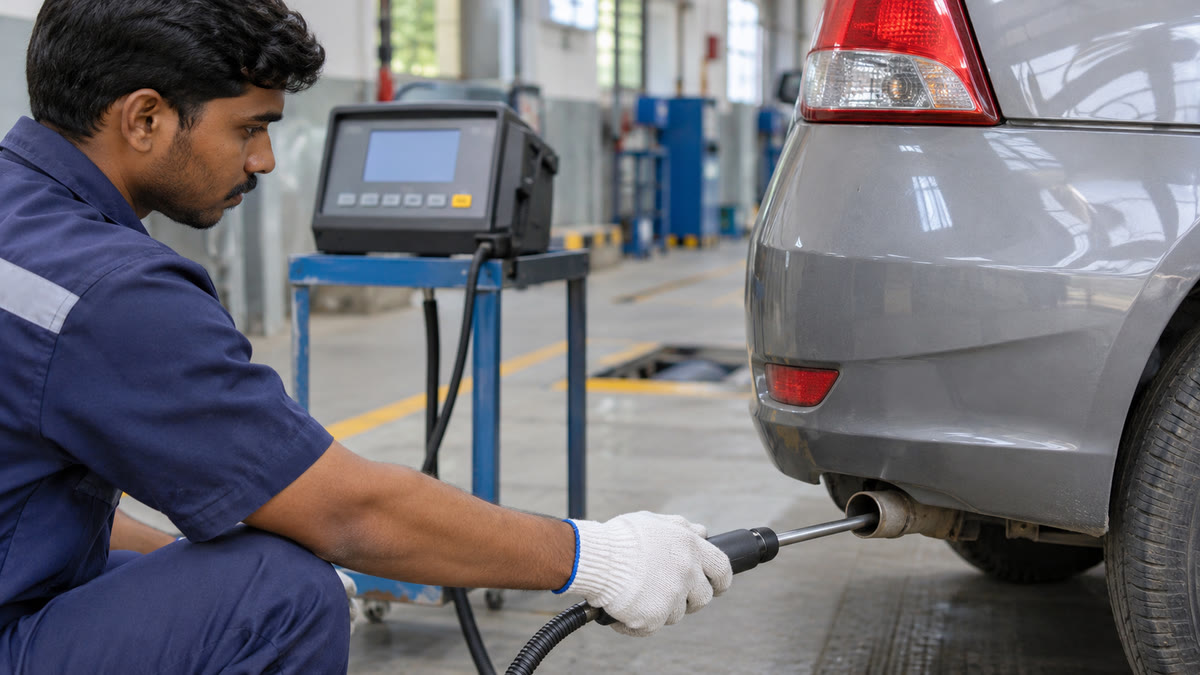
The safety provisions are designed to make the service more traceable. The 1 Jul 2025 framework requires a valid registration, third-party insurance and pollution-under-control certificate for onboarded vehicles, along with other applicable documents. It also requires the aggregator to maintain driver records and provide app-based safety features such as driver identification, live journey-location sharing and a 24x7 control room and call centre.
For a passenger, the useful checks are therefore practical: confirm that the ride is shown inside the official app, check the driver and vehicle details displayed before starting, use the app’s location-sharing or emergency features where available, and keep the booking record if a fare or safety complaint needs to be raised. The RC, insurance, PUC and FASTag document checklist explains the basic vehicle records that also matter to owners.
Fare limits and what is not changing yet
Clause 17 of the 1 Jul 2025 guidelines provides a fare framework rather than a single national bike-taxi price. The state-notified fare is the base reference; an aggregator may charge up to two times the base fare under the dynamic-pricing provision and may price no lower than 50% below that base fare. Actual fares, taxes, tolls, platform terms and state permissions still determine what a passenger pays on a particular trip.
There is also no new nationwide deadline in Gadkari’s 18 Nov 2026 appeal. The MoRTH guideline letter was issued on 1 Jul 2025, and the fresh development is the minister’s renewed request for states to implement it. The reported Rajasthan, Haryana and Uttar Pradesh positions show why checking the state transport department matters before assuming that a service is legal locally.
What to watch next
The next material developments would be state notifications, aggregator licences, permitted vehicle categories, safety requirements and fare orders. A state may adopt the central framework with additional provisions, so the final operating conditions can differ from the baseline in the MoRTH document.
For now, the reader takeaway is straightforward: the Centre has opened a policy route for private motorcycles to become app-based passenger vehicles, but state approval remains the gate. Drivers should verify the local notification and onboarding terms; passengers should look for authorised services and the safety details shown in the app. EV owners considering platform work can also check the state-wise EV charging directory when planning operating routes.
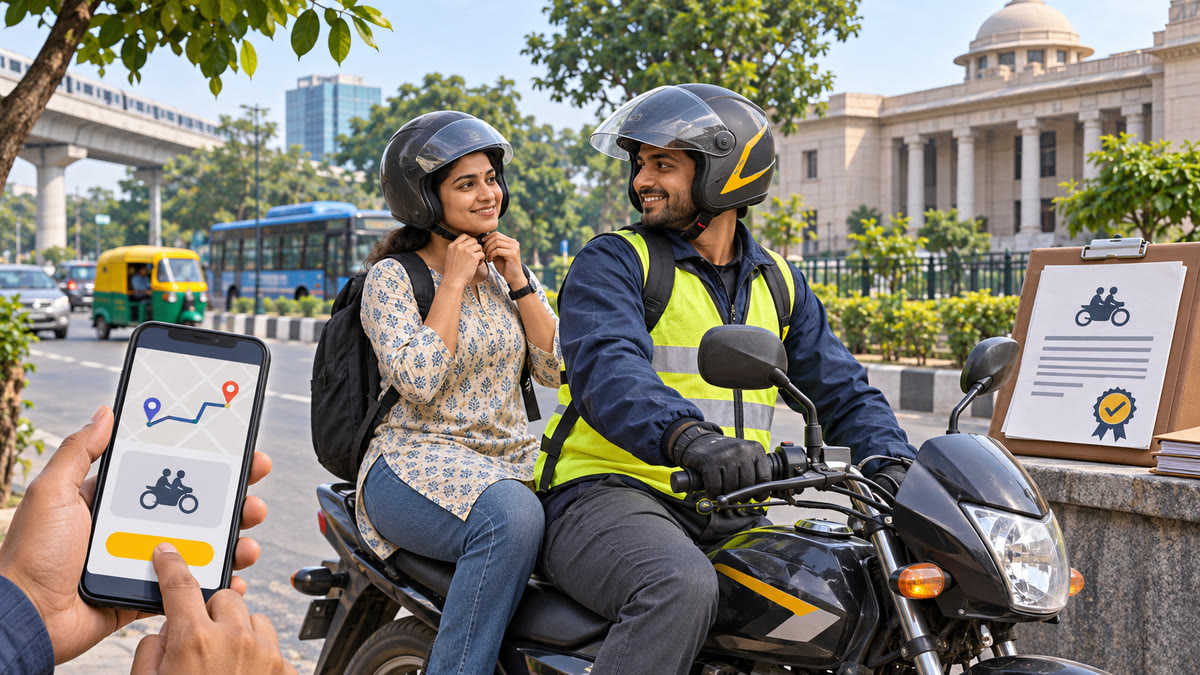
Illustration: AI-generated representative scene of an app-based motorcycle passenger ride; it is not an official photograph or a depiction of a specific company or government programme.
Sources
- Press Information Bureau — Union Minister Shri Nitin Gadkari highlights role of app-based platforms in employment generation and inclusive mobility — 18 Nov 2026
- MoRTH — Motor Vehicle Aggregator Guidelines, 2025 — 1 Jul 2025
- The New Indian Express — Gadkari presses states to legalise app-based rides on private motorcycles under 2025 rules — 18 Nov 2026
- ETGovernment — Nitin Gadkari calls for adoption of 2025 guidelines to allow private bikes for rides — 19 Nov 2026