Ghaziabad has opened the first public EV charging station in a rollout planned to place 100 charging points across 20 locations. Ghaziabad Nagar Nigam is providing land while Statiq and GLIDA develop and operate the facilities under a public-private partnership (PPP) model, giving electric-car users a larger planned network in the National Capital Region.
The development matters most to EV owners who cannot charge at home, daily commuters who need a top-up during the day and drivers planning trips through Ghaziabad. It expands access, but it does not yet provide a published tariff, connector list or live-availability guarantee for every proposed location.
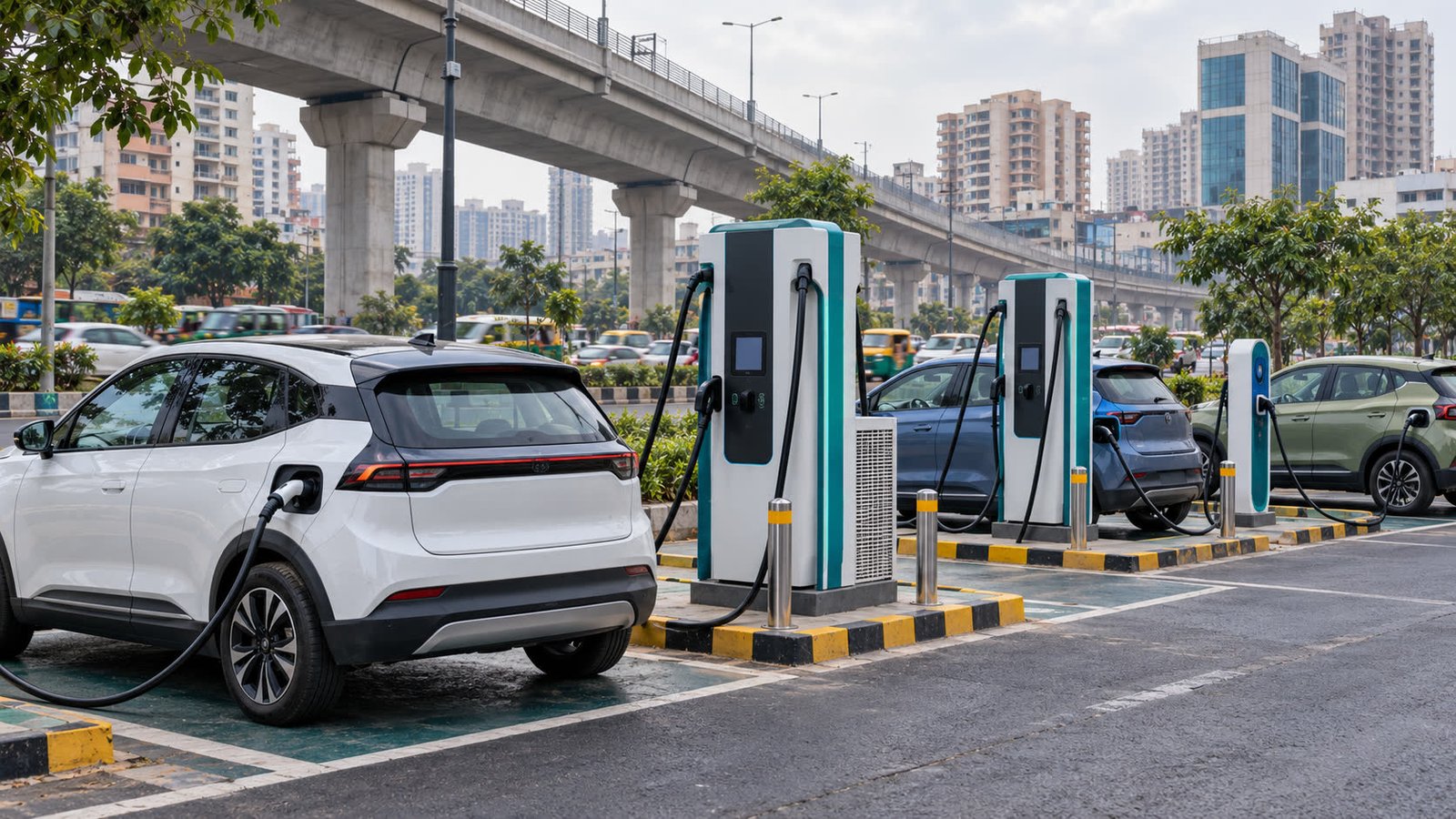
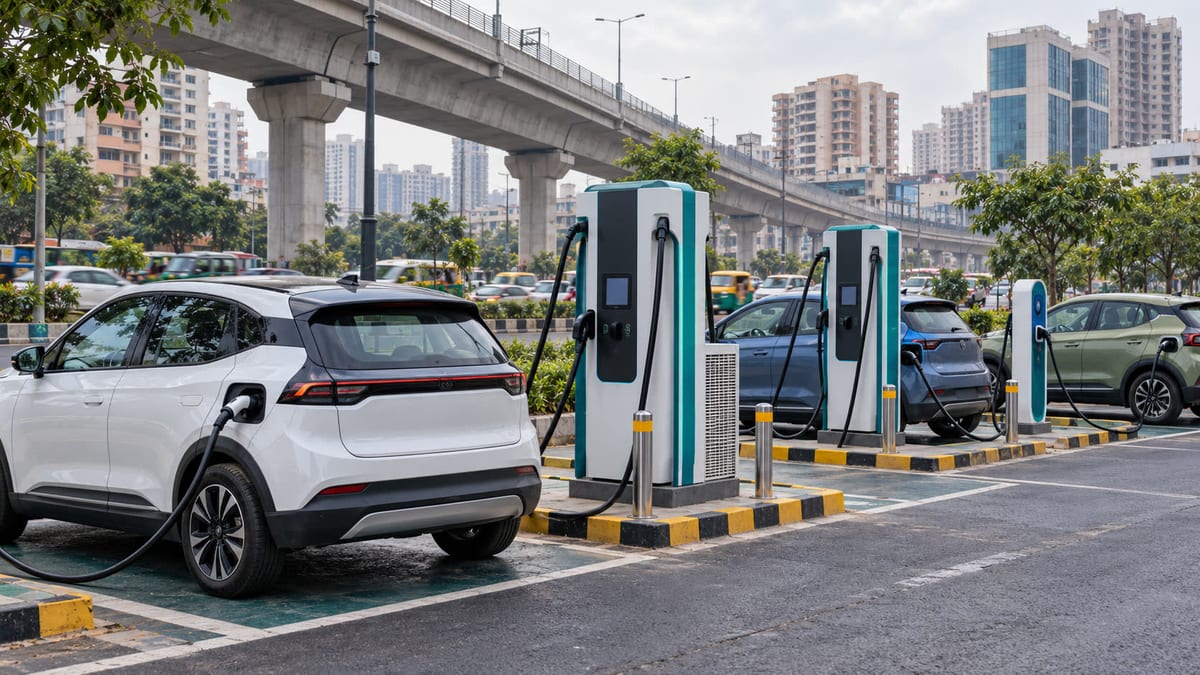 AI-generated illustrative image of public EV charging infrastructure in Ghaziabad; it is not a photograph of the inaugurated site.
Key takeaways
- The first public station has been inaugurated as part of a planned 20-location network.
- The first phase covers 100 public charging points, according to reports published on 28 Sep 2026 and 30 Sep 2026.
- Ghaziabad Nagar Nigam is providing land; private partners are responsible for developing and operating the facilities.
- Charging has been described as available at a nominal cost, but the reports do not state a single rupee tariff for the network.
What Ghaziabad has started
ETAuto reported on 28 Sep 2026 that Statiq, GLIDA and Ghaziabad Nagar Nigam had inaugurated the first station in the planned rollout. The report said the first phase would cover 100 public charging points across 20 locations. Autoguide India, in a report dated 30 Sep 2026, carried the same rollout details and described the first station as the beginning of the wider city network.
Amar Ujala’s local report also described charging work at multiple municipal locations, including Rajendra Nagar, and said the programme was being implemented through corporate social responsibility (CSR) support with Statiq and GLIDA as the operating partners. That local account helps establish that this is not only a future policy target: charging points have already begun to come online at selected sites.
The programme is therefore best understood as a phased access expansion. The number of planned points is useful for judging the intended scale, but it should not be read as 100 chargers being available at the same time. Each site will need to be confirmed as live before it can be relied on for a trip.
Why the rollout matters to EV users
Public charging is particularly important in a dense NCR city, where many apartment residents may not have a dedicated parking bay or permission to install a home charger. A network spread across municipal parking and other public locations can reduce the need to make a separate detour for a top-up. It can also give commuters a practical option between home and work, although the time saved will depend on queue length, charger power and whether the required connector is available.
For a planned drive, readers can use FuelPrice’s EV station directory to identify charging options and then verify the station’s current status in the relevant operator app. GLIDA says its app can show availability, connector type and pricing, while its guidance also points users to the Statiq app for locating GLIDA chargers. The rollout reports do not say that every new Ghaziabad point will use the same connector or operating hours.
The network may also help drivers compare an EV route with a petrol or diesel alternative. The fuel-cost calculator can provide a baseline for the conventional-fuel leg of that comparison, while the road-trip planner can help map a longer journey around charging stops. These tools do not replace a live check of charger availability.
How the public-private model works
Under the arrangement described by ETAuto and Autoguide India, the municipal corporation contributes land and the private partners build and run the charging facilities. This division can allow the city to make public space available while leaving equipment, software, payments and day-to-day operations to specialist charging companies.
For users, the operating partner matters because the app, payment method, customer support and maintenance process may differ from one network to another. The public announcement refers to a nominal cost, but it does not publish a single citywide price. EV owners should therefore treat the tariff shown in the app or at the charger as the current figure for that connector and session, rather than assuming that all 20 locations will charge identically.
What to check before leaving
- Live status: confirm that the selected point is online and available, not merely listed as part of the planned network.
- Connector compatibility: check whether the point supports the connector used by the vehicle. GLIDA’s guidance lists CCS, Type 2 and DC001 among the connector filters on its network.
- Tariff and payment: review the current per-session or per-unit charge and the payment method before starting the trip.
- Backup stop: keep another charging option in the route plan, especially for a longer NCR journey or a return trip.
What happens next
The useful next milestone is not another broad target but a location-by-location update showing which of the 20 sites are live, their connector mix, charging power, operating hours and current tariff. Until that information is published and reflected in live station tools, the rollout should be treated as a growing network rather than a guarantee that a charger will be available wherever a driver needs one.
For Ghaziabad’s EV users, the immediate takeaway is clear: public charging access is expanding, and the first station is already part of a larger municipal plan. The practical benefit will depend on the quality of execution at each site, so route planning and a live availability check remain important even after the full rollout is announced.
Sources
- ETAuto — “Statiq, GLIDA, Ghaziabad civic body inaugurate first EV charging station under 20-location rollout” (28 Sep 2026)
- Autoguide India — “Statiq, GLIDA, Ghaziabad Nagar Nigam inaugurate first of 20 EV Charging Stations” (30 Sep 2026)
- Amar Ujala — “100 EV charging stations, 15 points started” (26 Sep 2026)
- GLIDA — “Charging Hub Across Nation” (accessed 1 Oct 2026)