India is revisiting its ₹10,000-crore aviation turbine fuel (ATF) price-stabilisation scheme after no airline opted into the original mechanism, according to reports on 6 Oct 2026. The development matters because jet-fuel costs can feed into airfares, cargo economics and route decisions, although it does not change the petrol or diesel price paid by road users.
Key takeaways
- Civil Aviation Minister K. Ram Mohan Naidu told Mint on 6 Oct that the government is discussing how the ATF mechanism could be reworked with airlines and oil marketing companies (OMCs).
- NDTV Profit separately reported that the ₹10,000-crore fund may be redesigned after no airline showed interest in the existing scheme.
- The June Cabinet design provided interest-free advances to OMCs so participating scheduled airlines could receive ATF at a predetermined price for domestic and international operations.
- The official arrangement could run for up to 36 months, but the reports do not identify a final replacement design or a date for one.
- There is no reported change here to road-fuel rates, tolls or FASTag deductions.
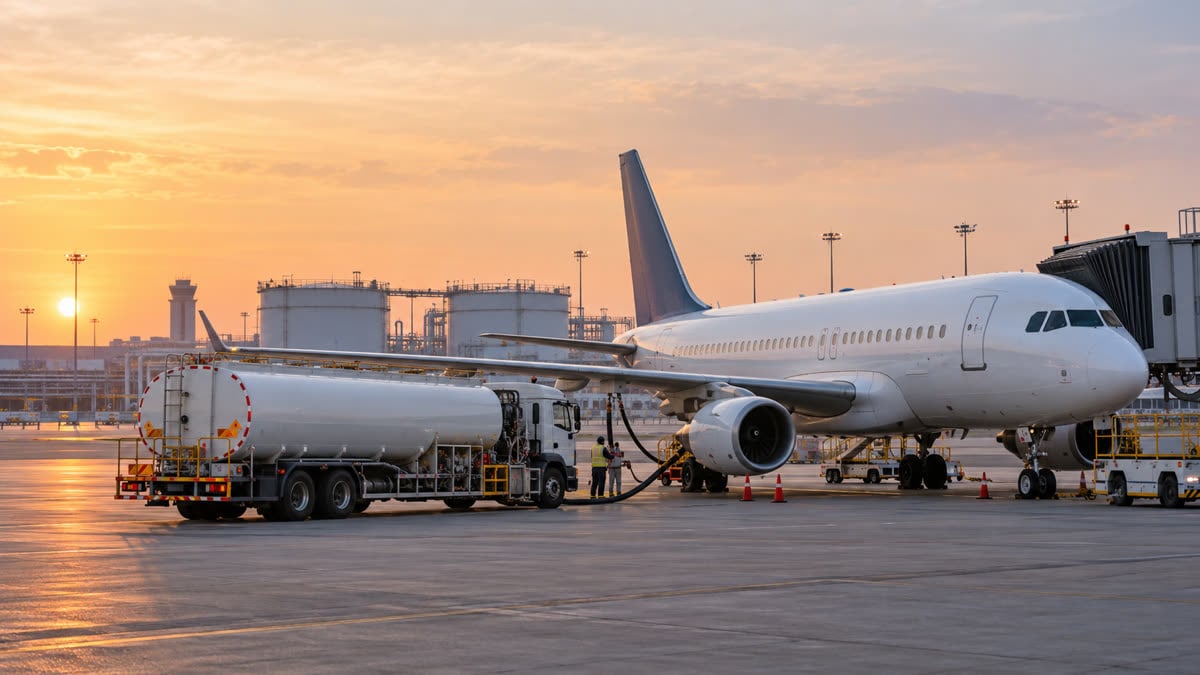
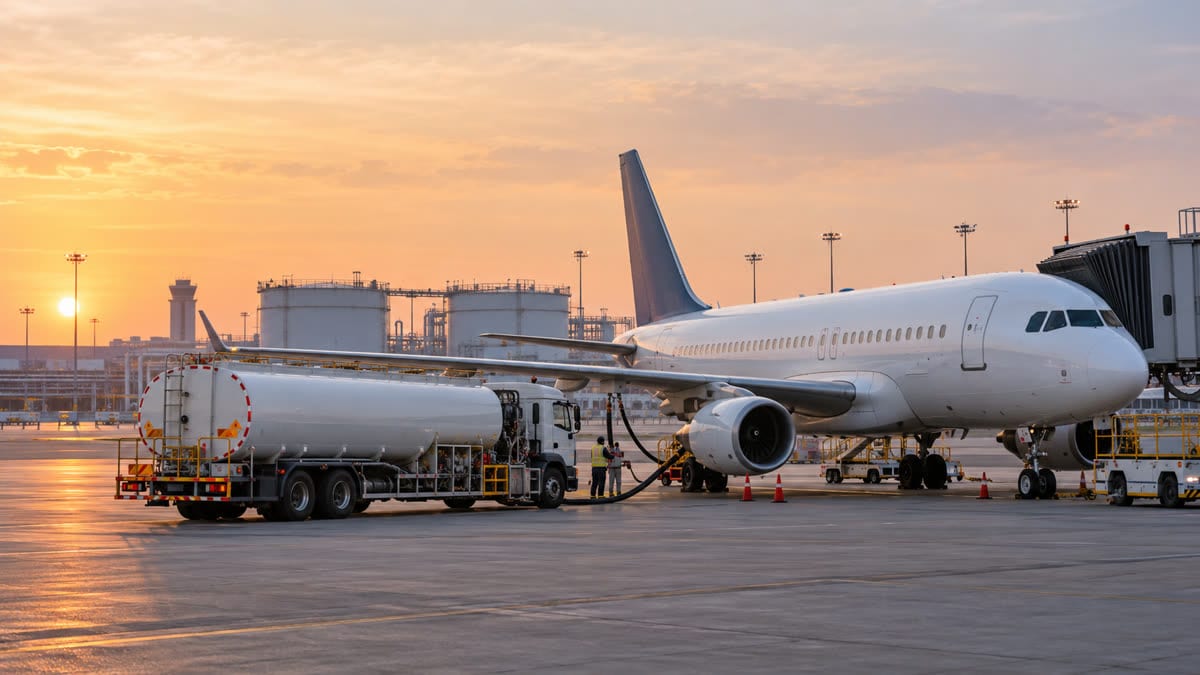 Illustrative image: a generic passenger aircraft is refuelled at an airport apron; it is not a photograph of a specific airline. Credit: FuelPrice illustration.
What changed on 6 Oct
Mint reported that fresh work is under way on the stabilisation mechanism. The report quoted Naidu as saying the government is revisiting the scheme and is in talks with airlines and OMCs about the burden created by the West Asia crisis and higher ATF costs.
NDTV Profit, citing government sources, also reported that the fund could be reworked because no airline had shown interest after the recent ATF increase. It said discussions with airlines and OMCs were expected, but no details of a revised design were immediately available. The Civil Aviation Ministry had not publicly announced a new structure in that report.
That distinction is important for passengers: this is a reported review, not a confirmed new fare subsidy or a promise that tickets will become cheaper. Any change would need fresh terms and airline participation before it could affect fuel procurement.
What the original ATF fund offered
The Prime Minister’s Office said the Union Cabinet approved the scheme in June 2026 with one-time budgetary support of up to ₹10,000 crore for OMCs. The support was structured as an interest-free advance to compensate OMCs when international import-parity ATF prices exceeded the benchmark set under the mechanism.
The official design was available to willing scheduled Indian carriers for both domestic and international operations. Participating airlines would enter into an agreement with OMCs and buy ATF at a predetermined price, giving them more certainty during a sharp price spike. The PMO said the arrangement could continue for 36 months, subject to annual review or until the advance was recovered and settled.
This is different from a direct payment to passengers. The government’s stated objective was to reduce the pass-through of fuel shocks and protect air connectivity, while OMCs would later return the differential when international ATF prices moderated. It was an aviation-fuel support mechanism, not a revision to retail petrol or diesel prices. Drivers checking current road-fuel prices should therefore treat this as a separate policy issue.
Why airlines did not use it
Fixed pricing can work both ways
The same fixed-price feature that protects a carrier when the market rises can become unattractive when market-linked prices fall. Mint reported that an airline accepting the scheme would still have to buy at the predetermined rate even if the prevailing market price later moved below it. That creates a trade-off: the carrier exchanges some downside flexibility for protection against a sudden increase.
Long commitments add another constraint
The PMO’s original release required participating airlines to procure ATF from OMCs for up to three years, subject to the scheme’s review and recovery terms. Mint said this longer commitment, alongside the fixed price, reduced the incentive to sign up when fuel prices were less threatening. NDTV Profit reported that the airline federation was instead asking for a cost-plus pricing approach for domestic ATF, along with changes to taxes and airport charges.
Those requests are still proposals attributed to the airline body, not government decisions. A redesigned fund could change the balance between price protection, flexibility and the cost borne by OMCs, but the government has not yet published those terms.
What it could mean for passengers and cargo
ATF is a major airline operating cost, so a sustained increase can appear in fuel surcharges, ticket pricing or the economics of marginal routes. Mint reported that airlines had already been pressing for relief and that the Federation of Indian Airlines had warned of pressure on routes it considered unsustainable. That does not mean every fare will rise or fall by the same amount: the result depends on the airline, route, taxes, aircraft utilisation and other operating costs.
For air travellers, the practical point is to wait for an official scheme design and check the fare breakdown rather than assume that a ₹10,000-crore headline will lower a booking price. For air-cargo users, higher jet-fuel costs can also affect freight rates and the viability of time-sensitive connections. For a road alternative, a reader can compare route distance and fuel use with the fuel cost calculator and road-trip planner; those tools do not predict airfares, but they can put a ground-trip option on the same cost sheet.
What to watch next
- An official notification or ministry statement setting out any revised benchmark, eligibility or recovery terms.
- Whether any airline signs a fresh agreement with an OMC, and whether participation covers domestic operations, international operations or both.
- Monthly ATF price revisions and airline disclosures on fuel surcharges, because those are more immediate signals for a passenger’s booking cost.
- Any route or frequency changes attributed to fuel costs, especially where airlines already describe operations as financially difficult.
Reader takeaway
As of 7 Oct 2026, the ₹10,000-crore ATF stabilisation framework remains the June-approved scheme, while its reported reworking is still under discussion. The key next event is not the size of the corpus but whether the revised terms give airlines enough flexibility to participate without turning the support into a costlier fixed-price commitment.
Sources
- Mint, “Centre revisits ATF price stabilisation fund amid rising costs” — 6 Oct 2026.
- NDTV Profit, “Govt May Rework Rs 10,000 Crore ATF Price Stabilisation Fund As Airlines Show No Interest: Sources” — 6 Oct 2026.
- Prime Minister’s Office, “Cabinet approves Price Stabilization Fund for Scheduled Indian Airlines towards ATF pricing” — 3 Jun 2026.