The Times of India and DT Next reported on 10–11 Nov 2026 that Tamil Nadu transport authorities imposed ₹26.27 lakh in fines on 1,826 private/omni buses during the Deepavali rush, with 17 buses impounded. For passengers, the practical point is that fare overcharging, safety lapses and unpaid road tax were checked together, so the booking receipt and the bus’s operating details matter alongside the ticket price.
The enforcement figures are reported, not a new statewide fare order. The action follows a 30 Oct 2026 Tamil Nadu Transport Department warning that overcharging could lead to seizure or permit action, and gives intercity passengers a reason to retain proof of the fare and boarding details.
Key takeaways
- The two reports put the total fines at ₹26.27 lakh for 1,826 buses during the Deepavali enforcement drive.
- Seventeen buses were impounded after inspections across Tamil Nadu.
- Authorities also collected ₹70.81 lakh in pending road-tax dues from private bus operators.
- More than 70 teams of regional transport officers and motor vehicle inspectors checked operations in Chennai, Madurai, Coimbatore and near major toll plazas.
- The reported violations included excess fares, safety-related lapses and non-payment of road tax; the reports did not announce a new statewide fare table.
What the Tamil Nadu checks found
The Times of India and DT Next carried the same core enforcement figures, while using slightly different labels for the vehicles: private buses in the first report and omni buses in the second. Both accounts said the Tamil Nadu Transport Department booked 1,826 buses for violations during the Deepavali travel period.
The violation list matters because it was wider than ticket pricing. The reports mention passengers being charged above prescribed fares, safety-related non-compliance and unpaid road tax. The inspections were conducted by teams made up of regional transport officers and motor vehicle inspectors, with checks reported in Chennai, Madurai, Coimbatore and locations near toll plazas.
The department also impounded 17 buses. That is an enforcement action against identified vehicles, not a finding that every private bus operating in the state was unsafe. Likewise, the reported ₹70.81 lakh collection relates to pending road-tax dues from operators; it is not a new tax rate or an extra charge imposed on passengers.
Why this matters to passengers
During a festival rush, a passenger may see several prices for a similar intercity route across booking apps, operator sites and agents. A fine for overcharging does not by itself tell a passenger what the permitted fare for a particular route should be, and the reports do not say that every fare paid by every passenger was improper. They do show that fare complaints were being checked alongside vehicle and tax compliance.
The reports also do not announce automatic refunds or compensation for individual passengers. A passenger who believes the amount charged did not match the booking record will need the ticket, payment proof and route details to establish what was advertised and what was paid. Keeping that record is useful even when the issue is not ultimately treated as an enforcement violation.
For a journey involving a large terminal or a highway connection, the route can affect the total cost and travel time. Passengers planning an onward road leg can compare the toll component with the toll-charge calculator.
For the wider journey, the road-trip planner can help compare distance and timing assumptions.
What passengers should check on the next booking
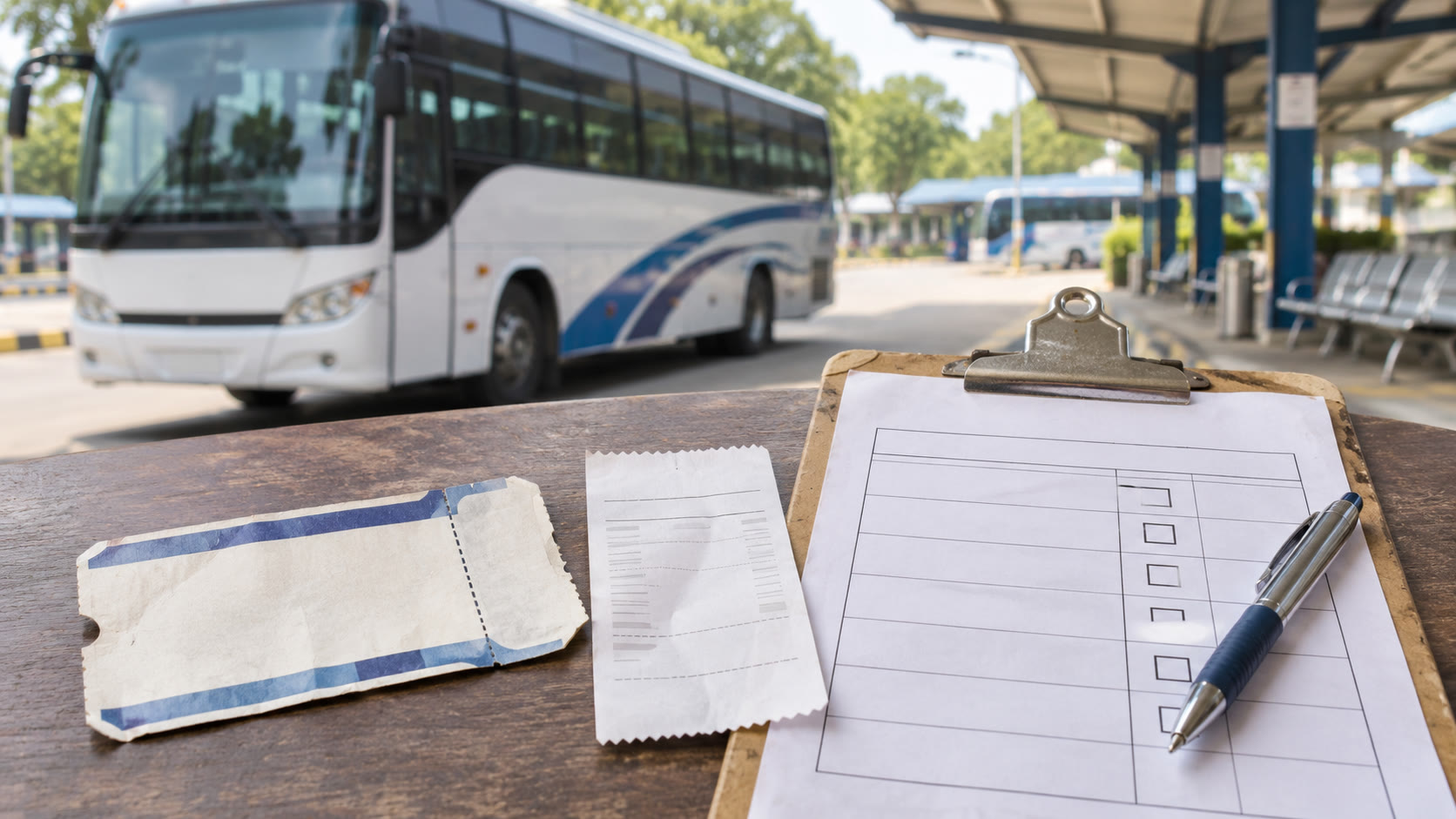
- Keep the fare record. Save the booking page, e-ticket, payment confirmation and the final amount charged. Note the route, travel date, boarding time and operator name so the documents can be matched later.
- Confirm the boarding point. The Transport Department’s 30 Oct 2026 release instructed omni buses to enter the Kilambakkam bus terminus and board passengers only from designated bays, rather than stopping at an unauthorised roadside location. For other terminals, the useful check is whether the boarding point shown in the booking confirmation matches the operator’s instructions.
- Record the vehicle details. Note the bus number and retain the operator or platform contact shown on the ticket. That makes a fare, permit or safety complaint more specific than a route name alone.
- Keep evidence of a mismatch. If the displayed fare, payment amount and ticket differ, retain screenshots and receipts. The official warning said complaints about overcharging could lead to seizure or permit action, but it did not promise a particular outcome for every complaint.
- Check before the trip starts. Reconfirm the departure terminal and any route change with the booking platform, especially when a bus is connecting with a toll road or a long-distance transfer.
What operators and fleet managers should watch
For operators, the reported action puts three compliance questions in the same frame: fare collection, vehicle safety and road-tax status. A bus can be commercially active and still face disruption if its tax dues, permit records or inspection documents are not in order. The ₹70.81 lakh recovery figure is a signal that tax arrears were part of the enforcement exercise, not evidence of a new tax demand applicable to every operator.
Fleet managers comparing intercity routes should separate the passenger fare from the operator’s own running cost. The fuel-cost calculator can be used for a route-level fuel estimate with the vehicle’s own mileage and fuel-price assumptions; it does not replace the operator’s records for tolls, staff, maintenance or tax payments.
What to watch next
The next useful update would be a route- or operator-level breakdown of the reported cases, any complaint outcomes and further inspection notices. The available reports do not identify all 1,826 buses, provide a per-bus fine schedule or announce a general fare revision for Tamil Nadu.
For now, the reader takeaway is specific: Tamil Nadu’s Deepavali enforcement drive reportedly penalised a large number of private/omni buses for a mix of fare, safety and tax violations. Passengers should treat the fine figure as evidence of an enforcement action, not as a blanket statement about every bus or a guarantee of a refund, and should keep the fare and boarding records needed to check their own journey.
Sources
- Directorate of Information and Public Relations, Tamil Nadu — “Transport Department press release on preventing excess fares and regulating omni-bus traffic during Deepavali”, Press Release No. 946, 30 Oct 2026
- The Times of India — “₹26.27 lakh fine imposed on 1,826 pvt buses in TN during Diwali”, 11 Nov 2026
- DT Next — “Tamil Nadu: 1,826 omni buses fined Rs 26.27 lakh for violations during Deepavali”, 10 Nov 2026