India Auto Industry Faces Gas Supply Pressure as War Risks Hit Supply Chains

Automakers and component makers in India are bracing for production disruption as conflict-related gas shortages begin affecting operations.

India Auto Industry Faces Gas Supply Pressure as War Risks Hit Supply Chains

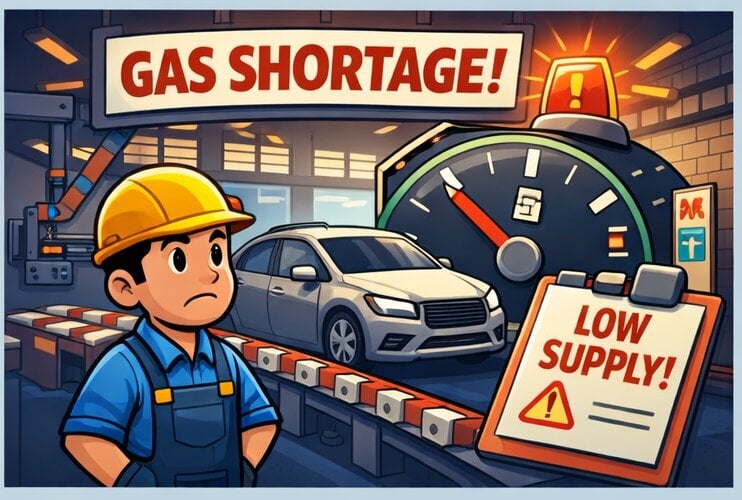
India's automobile industry is facing a new risk from the Middle East conflict: gas shortages that could affect production lines and parts manufacturing. Reuters reported that automakers and suppliers are already seeing tighter gas availability, and some component makers have begun warning that buffer stocks may not last long if conditions do not improve.

The concern is serious because India's car market is already running with strong demand and relatively lean inventories. If fuel and gas supply constraints continue, assembly-line disruptions could slow production at a time when the industry is trying to sustain record sales momentum. Companies linked to major manufacturers such as Maruti Suzuki, Tata Motors and Mahindra are among those watching the situation closely.

In simple terms, the war is no longer just an oil-price story. It is also becoming a supply-chain story for India's auto sector.
Related Fuel News

More updates you might want to read next.

India's ATF Fund And 10% Jet Fuel Hike: What It Means For Air Fares

India has approved a Rs 10,000 crore ATF Price Stabilisation Fund, but domestic jet fuel has also been raised by 10% under a new three-year pricing regime. FuelPrice explains what that combination means for airlines, fares, route economics and mobility costs for passengers.

Noida Airport Opens With Road-Heavy Access: Why EV Bus Rollout Still Matters

Noida International Airport has begun commercial operations, but launch-week access is still largely road-led for NCR travellers. FuelPrice explains what the cab-heavy ground reality, official EV taxi options, and the 45 electric plus 3 hydrogen bus rollout mean for travel cost, congestion and cleaner airport mobility.