Battery manufacturing, access to critical minerals and technology partnerships were the central EV themes at the Renewable Energy India (REI) Expo and The Battery Show India in Greater Noida on 23 October 2026, according to reports from ETAuto and Autocar Professional. For Indian EV buyers and fleet operators, the development is a supply-chain signal rather than an immediate subsidy, price cut, range increase or new charging rule.
Key takeaways
- REI Expo discussions focused on batteries, lithium, cobalt, rare earths, research and industrial technology partnerships.
- Australia, Germany and Scotland were among the international partners highlighted in discussions around minerals, engineering and battery research.
- No new investment or binding agreement involving an individual Indian EV maker was announced in the reports reviewed.
- The government’s existing ACC battery PLI scheme has a ₹18,100 crore outlay and a 50 GWh domestic manufacturing target.
- Any benefit for vehicle prices, range or charging availability will depend on plants being commissioned and supply chains scaling, not on the expo discussions alone.
What happened at REI Expo 2026
The three-day REI Expo and The Battery Show India ran from 22 to 24 October 2026 at India Expo Mart in Greater Noida. The official event page lists energy storage, EV solutions and charging infrastructure among the areas covered.
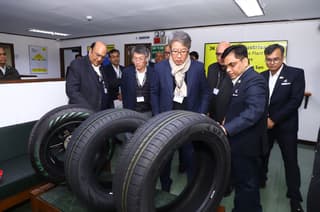
On 23 October, industry leaders and officials discussed how India can combine domestic manufacturing capability with overseas mineral resources, engineering expertise and battery technology. ETAuto reported that an Australian delegation highlighted cooperation around minerals and engineering, while discussions involving German and Scottish participants covered battery research, power electronics, advanced engineering and industrial automation.
Autocar Professional reported that the conversations included lithium, cobalt and rare earth supply, but did not identify a new investment or agreement involving a particular EV manufacturer. That distinction matters: the event indicates areas of cooperation and business opportunity, not a confirmed plant, new battery model or customer-facing product announcement.
Why battery manufacturing matters to EV users
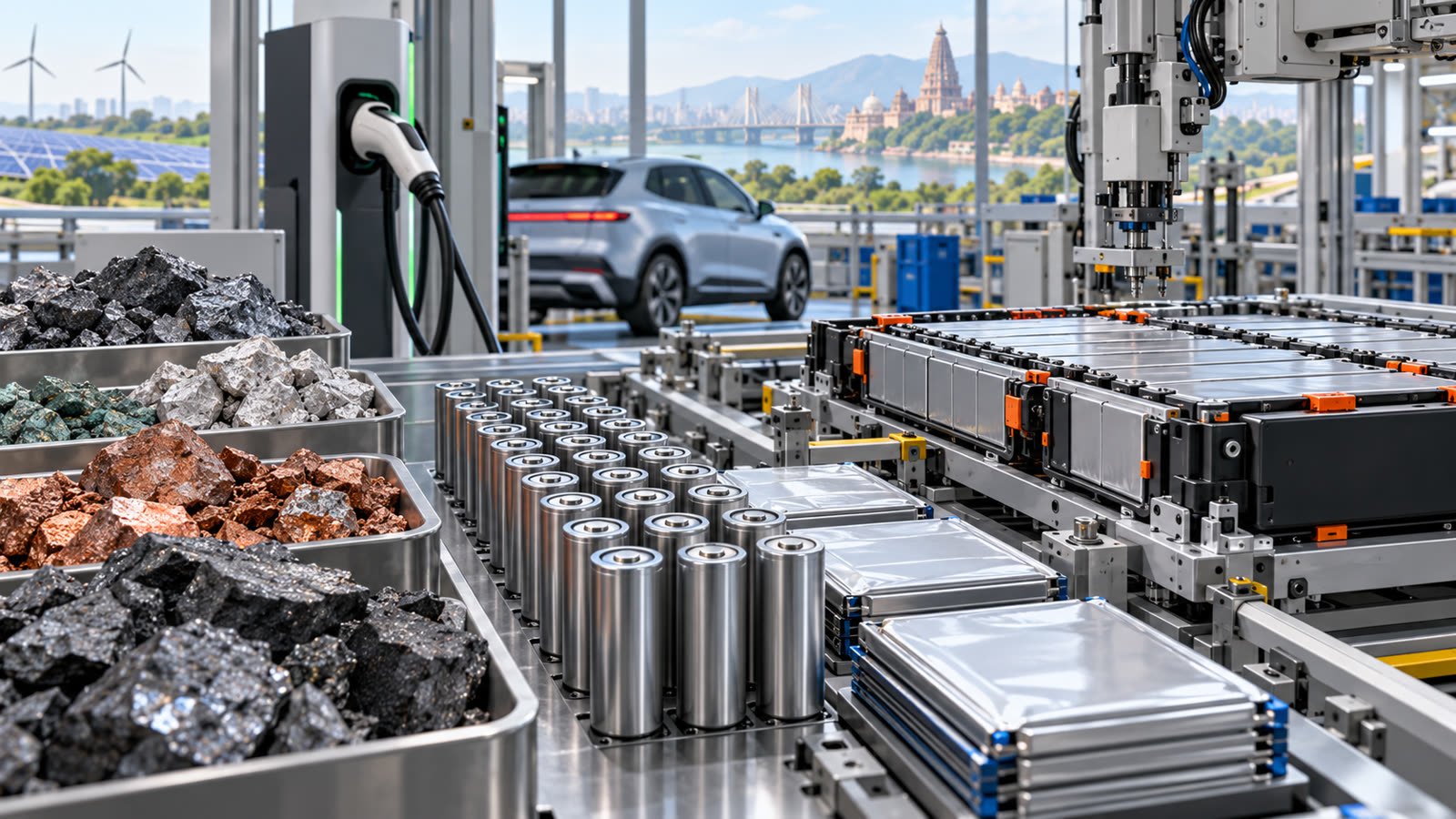
An electric vehicle is not only an assembled car, scooter or three-wheeler. Its cost, range, charging performance and serviceability also depend on the battery cells, pack design, battery-management software, power electronics and the supply of minerals and processed materials behind them.
More domestic capability can eventually give manufacturers a larger local supplier base and reduce exposure to imported cells, shipping costs and overseas disruptions. It may also support more testing, recycling and engineering work in India. But these are medium-term effects. A discussion at an expo does not automatically lower the price of a vehicle booked today, increase its certified range or add a charging station on a driver’s route.
For an EV owner planning a trip now, the practical question remains where a compatible charger is available and whether the stop fits the vehicle’s real-world range. The FuelPrice EV station directory can help locate charging points, while the road-trip planner can help organise a longer route around stops.
India’s existing battery-manufacturing roadmap
The REI discussions build on a policy programme already in progress. In a 27 March 2026 update, the Ministry of Heavy Industries said the Production Linked Incentive scheme for Advanced Chemistry Cell (ACC) battery storage had a total outlay of ₹18,100 crore to establish 50 GWh of domestic ACC manufacturing capacity. The same official update said 40 GWh had been awarded to four beneficiary firms and 1 GWh had been installed as of 27 March 2026.
That dated snapshot shows why commissioning and scale are more important than announcements alone. The policy target is large, but installed capacity, domestic value addition, quality testing and reliable raw-material supply are the steps that can eventually affect EV prices and availability. The Ministry’s scheme information also sets domestic-value-addition requirements that rise over the performance period, linking incentives to manufacturing depth rather than only final assembly.
For context, the scheme is designed to reduce dependence on imported ACC cells and strengthen the wider electric-mobility and energy-storage ecosystem. It is not a direct purchase subsidy for an individual EV buyer, and the REI event did not change the scheme’s eligibility or payout rules.
What buyers and fleets should watch next
1. Plant commissioning, not only capacity awards
Capacity awarded on paper becomes useful to the market only when factories are commissioned, cells meet quality requirements and output reaches vehicle manufacturers. Future official updates on commissioning and production will be more useful to buyers than broad promises of localisation.
2. Battery cost and warranty terms
Local cells may support lower costs over time, but the retail price of an EV also includes software, electronics, labour, financing, distribution and warranty risk. Buyers comparing models should check the battery warranty, degradation terms, charging limits and service coverage rather than assuming that a domestic-manufacturing headline guarantees a cheaper vehicle.
3. Total running cost by use case
Battery supply affects the purchase side of an EV decision, while daily energy use depends on charging access, electricity tariffs and driving distance. A buyer comparing an EV with a petrol or CNG vehicle can use the FuelPrice fuel-cost calculator for the fuel side of that comparison, while treating home charging, public-charging fees and maintenance as separate inputs.
The reader takeaway
The REI Expo story is best read as a signal about the infrastructure behind India’s EV transition. Critical minerals, battery research and local manufacturing are moving higher on the industry agenda, but there is no confirmed immediate change to EV prices, subsidies, vehicle range or public charging rules. The next meaningful milestones will be signed supply agreements, factory commissioning, verified cell output and evidence that those gains reach vehicles and fleets.
Sources
- ETAuto — “India’s battery manufacturing push opens opportunities for EV industry: Experts at REI Expo” — 24 Oct 2026
- Autocar Professional — “India Discusses Battery Manufacturing and Critical Minerals Partnerships at REI Expo” — 24 Oct 2026
- Renewable Energy India Expo — “About Expo” — accessed 25 Oct 2026
- Press Information Bureau, Ministry of Heavy Industries — “ACC Battery Production-Linked Incentive (PLI) Scheme” — 27 Mar 2026