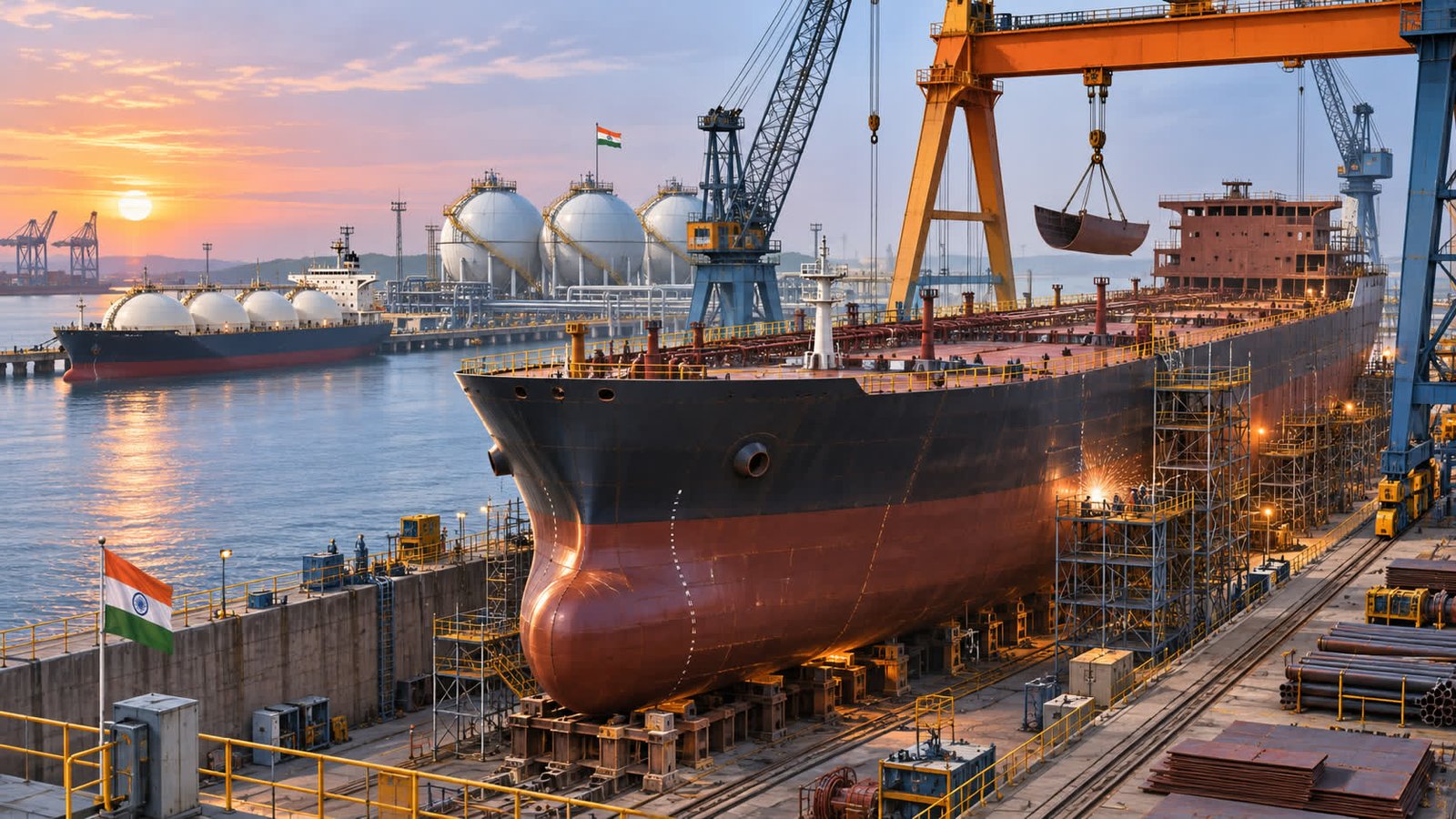
Indian Oil Corporation (IndianOil) plans to buy a few crude-oil tankers and liquefied petroleum gas (LPG) carriers after its board approved the move and tenders were floated. The decision is a logistics and supply-resilience measure amid high marine freight costs, not an announcement of a new nationwide petrol or diesel pump-price revision; drivers can continue to check current rates on FuelPrice’s live petrol and diesel prices page.
Key takeaways
- IndianOil’s board has approved the purchase of a few crude and LPG vessels, but the company has not disclosed the final count, price or delivery schedule.
- In its 31 October 2026 earnings call, IndianOil said crude time-charter freight was about $2–$2.50 per barrel, compared with $8–$10 per barrel in the spot market.
- LPG spot freight was about $160–$180 per metric tonne, against a normal level of about $40 per metric tonne, according to the company.
- The move could give the refiner more control over import capacity and timing, but it does not automatically mean cheaper fuel or LPG for households and motorists.
What IndianOil has approved
The company’s Director of Finance, Anuj Jain, said during the 31 October 2026 Q2 FY27 results call that IndianOil was pursuing three parallel shipping options: continue optimising time-chartered and voyage-chartered vessels, begin owning some ships, and explore shipbuilding in India. He said the board had already given the go-ahead to buy a few vessels and that tenders had been in the market for several months.
That wording matters. IndianOil has approved a procurement direction, but the reported plan is not the same as completed vessel deliveries. No final purchase number, vessel class, contract value or commissioning date was given in the call. Discussions with stakeholders on the Make in India shipbuilding option were also continuing.
Why marine freight is central to the plan
IndianOil’s explanation links the proposal to the sharp gap between secured charter capacity and the spot market. The company said it had three crude-oil vessels and nine LPG vessels on time charter as of the 31 October call. Those arrangements helped it maintain supply and manage costs while shipping conditions around the Strait of Hormuz remained uncertain.
| Shipping cost | IndianOil’s stated level | Comparison |
|---|---|---|
| Crude oil | About $2–$2.50 per barrel on time charter | $8–$10 per barrel in the spot market |
| LPG | About $40 per metric tonne normally | $160–$180 per metric tonne in the spot market |
These are company-reported freight comparisons from 31 October 2026, not a guaranteed future rate or a forecast of petrol, diesel or LPG prices. Owning vessels can reduce dependence on short-notice chartering when rates spike, but it also places vessel capital, maintenance, crew, insurance and utilisation decisions on the owner.
The broader procurement picture also helps explain the focus. IndianOil said spot imports accounted for about 87% of its crude sourcing in the first half of FY 2026–27, compared with 50% in the previous financial year. With a larger share of cargoes exposed to changing freight and route conditions, control over shipping capacity becomes a supply-chain question as much as a cost question.
What this means for fuel users
Private motorists and two-wheeler riders
There is no direct action for a private vehicle owner from this vessel plan. A ship purchase is not a retail fuel-price order, and any future effect on pump prices would depend on several factors, including the delivered crude cost, the rupee-dollar exchange rate, taxes, refining margins and the pricing decisions of oil marketing companies. For a current city check, use the FuelPrice fuel-price hubs rather than treating the shipping announcement as a price signal.
Transporters and fleet operators
The proposal addresses the ocean leg of the fuel supply chain. It does not change the diesel rate paid by a truck, bus or taxi today, but lower exposure to extreme marine freight could help an oil company manage import volatility over time. That possible benefit should not be converted into a promised saving: IndianOil has not stated that the purchase will reduce retail or bulk diesel prices.
For a route-level budget, operators can compare the fuel portion of a journey with the fuel cost calculator. The result should be kept separate from tolls, driver costs, maintenance and any contract-specific freight surcharge.
For longer journeys, the road-trip planner can help compare route distance and expected travel time. A change in marine freight is upstream; it does not remove the need to check the actual fuel rate and road costs before dispatch.
What changes now—and what does not
- Changes now: IndianOil has a board-backed plan to procure a few crude and LPG vessels, with tenders already floated according to the company’s earnings-call disclosure.
- Does not change now: there is no announced nationwide petrol, diesel or domestic LPG pump-price revision in the vessel reports.
- Still to be confirmed: the number and type of ships, purchase or build contracts, delivery dates, financing, insurance arrangements and how the owned fleet will be mixed with charters.
The company’s approach is therefore best read as a resilience and procurement story. It may give IndianOil an additional buffer when spot shipping becomes expensive or difficult to secure, but the financial benefit will depend on utilisation and on how freight, crude prices and route risks evolve.
What to watch next
The next meaningful updates will be the tender outcome and any formal order for vessels. Readers should also watch whether IndianOil announces a domestic shipyard partnership, changes the balance between owned and chartered capacity, or reports a sustained easing or rise in crude and LPG freight.
For drivers, the practical test is simpler: do not assume a cheaper or costlier pump price from the vessel plan alone. Check the actual rate for the city and date of travel, then calculate the trip cost using the vehicle’s real mileage and route.
Reader takeaway
IndianOil is moving to secure more of the shipping capacity behind its crude and LPG imports after a period of unusually high spot freight. The board approval and tenders are confirmed, but the final fleet and any consumer-price effect remain open; this is a supply-chain step to monitor, not an immediate fuel-price change.
Sources
- IndianOil, “Indian Oil Corporation Limited Q2 FY27 Results Conference Call” — 31 October 2026
- The Economic Times, “IOC to buy crude, LPG ships as West Asia crisis exposes shipping risks” — 8 November 2026
- Moneycontrol, “Indian Oil plans to buy ships as crude freight costs hit $10 a barrel amid Iran-US tensions” — 8 November 2026