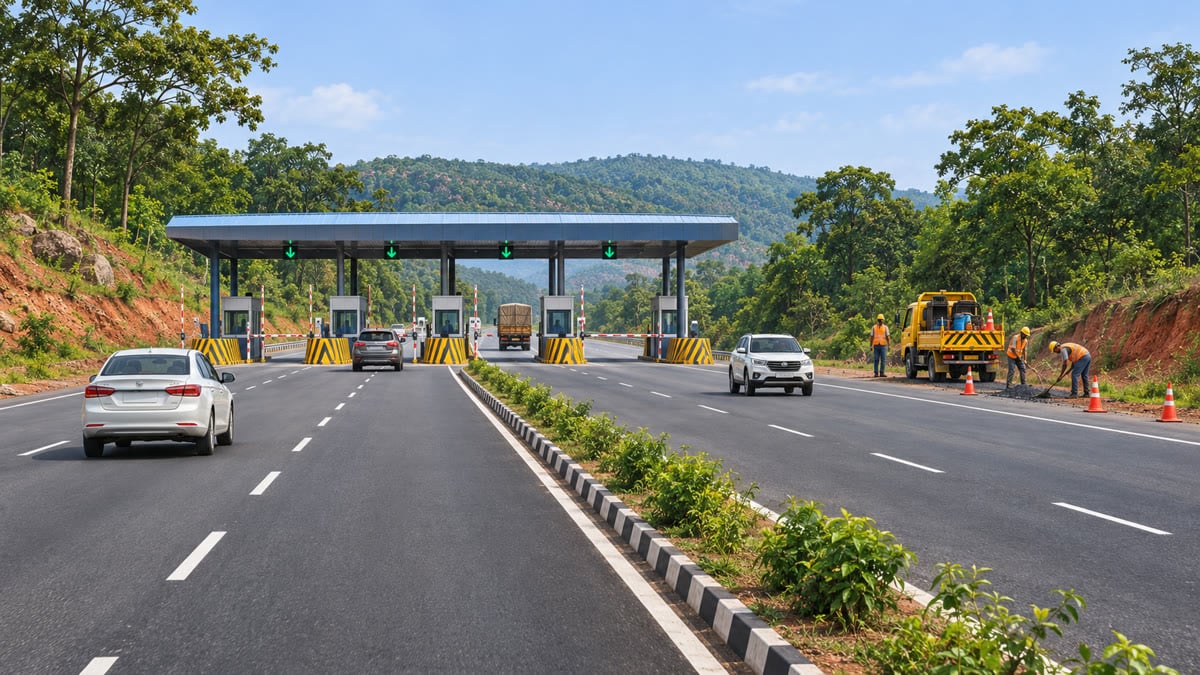
NHAI has opened bids for a proposed Toll-Operate-Transfer (TOT) package covering 137.57 km of existing highways between Ranchi and Mahulia in Jharkhand. The notice is about the future operation and maintenance of the corridor; it does not announce an immediate change in the toll fee that drivers pay.
For people who use the corridor, the practical point is timing. A private operator can be selected only after the bid process and contract steps are completed. Until then, motorists and fleet operators should treat the current toll and route conditions as the working baseline and wait for an official fee or operations notice before assuming that a trip will cost more.
What NHAI has put out
The Government eProcurement System lists the tender under NHAI reference NHAI/AssetMonetization/TOT/2026-27/TOTB 23. It was published on 6 Nov 2026 at 6:55 pm, with bid submission closing on 16 Dec 2026 at 11:00 am and bids scheduled to open on 17 Dec 2026 at 11:30 am.
The package brings three existing sections together:
- Ranchi–Rargaon: 77.3 km of NH-43, from kilometre 140 to kilometre 217.3.
- Chowka–Saharbeda: 16.05 km spanning the NH-43 and NH-18 chainage transition from kilometre 217.3 to kilometre 233.35.
- Saharbeda–Mahulia: about 44.22 km of NH-18, from kilometre 233.35 to kilometre 277.568.
Together, the three sections add up to about 137.57 km. The official tender is for a TOT arrangement, so it concerns an operating right over an existing road asset rather than a fresh four-laning approval or a new highway alignment.
What a TOT arrangement means
Under the TOT model, NHAI offers the right to collect user fees and operate and maintain an existing highway asset to a concessionaire selected through bidding. The operator is responsible for meeting the service and maintenance conditions in the eventual agreement, while the asset remains part of the public highway system.
The move fits the wider asset-monetisation plan announced by the Ministry of Road Transport and Highways in May 2026. That plan identified 17 operational highway assets with a combined length of 1,692.5 km across nine states for possible monetisation through TOT and Infrastructure Investment Trust structures. The current Jharkhand tender is a specific bidding step within that broader programme, not proof that a private operator has already taken over the corridor.
Financial Express, in its 8 Nov 2026 report, described the Ranchi–Mahulia package as a ₹1,380-crore project. The public tender listing reviewed for this article shows the work item and bid schedule but labels the amount as “refer docs” in its summary. In either case, the figure is a reported tender or asset value, not an amount payable by a driver at a toll plaza.
What it means for drivers and transporters
For a private car or two-wheeler using the route, there is no new toll rate to apply from this notice. A change in operator is different from a change in the user-fee schedule. Any later revision would need to be communicated through the applicable highway-fee framework or an official notice; the bid announcement itself does not publish a revised rate card.
For truck, bus and other commercial operators, the more immediate issue is operational continuity. A change in the agency responsible for toll collection or maintenance can affect how incidents, lane closures, roadworks, signage and roadside assistance are handled. Fleet managers tracking the Ranchi–Mahulia corridor can keep a record of current FASTag debits, travel time and fuel use so that any later change can be compared with a real baseline rather than an assumption.
Before a trip, the toll-charge calculator can help estimate the route’s toll component when a current fee is available.
The fuel-cost calculator can be used separately for the vehicle and distance, because a future toll-operator change would not by itself alter fuel consumption.
Drivers planning a longer journey can also compare timing and route options through the road-trip planner.
What changes now — and what does not
- Now: NHAI is inviting bids for TOT Bundle-23; the selection process is open.
- Next: bids are due on 16 Dec 2026, followed by the scheduled opening on 17 Dec 2026. Selection, evaluation and contract execution still have to happen.
- Not announced: the tender does not set a new toll fee, add a new toll plaza or state that the handover has taken place.
- Later: if an operator is selected, NHAI’s contract conditions and any subsequent official notices will be the documents to check for the operating start date, maintenance responsibilities and user-facing changes.
What to watch next
The next verifiable milestone is the bid process itself. After the 17 Dec 2026 opening, the important questions for corridor users will be whether NHAI names a successful concessionaire, when operations are scheduled to change and whether any separate communication affects toll collection or traffic management.
For now, motorists should not treat the reported package value as a toll hike. The useful preparation is simpler: keep the FASTag active, review transaction records after each corridor trip, and check official NHAI or highway-fee updates before changing a regular route budget.
Sources
- Government eProcurement System, “TOT of Ranchi to Rargaon of NH43 … in Jharkhand (TOT Bundle-23),” 6 Nov 2026.
- Financial Express, “Jharkhand highways to get NHAI’s Rs 1,380 crore push for Ranchi-Mahulia stretch,” 8 Nov 2026.
- Press Information Bureau, “NHAI Finalizes Tentative List of National Highway Projects for Monetization for FY 2026–27,” 28 May 2026.