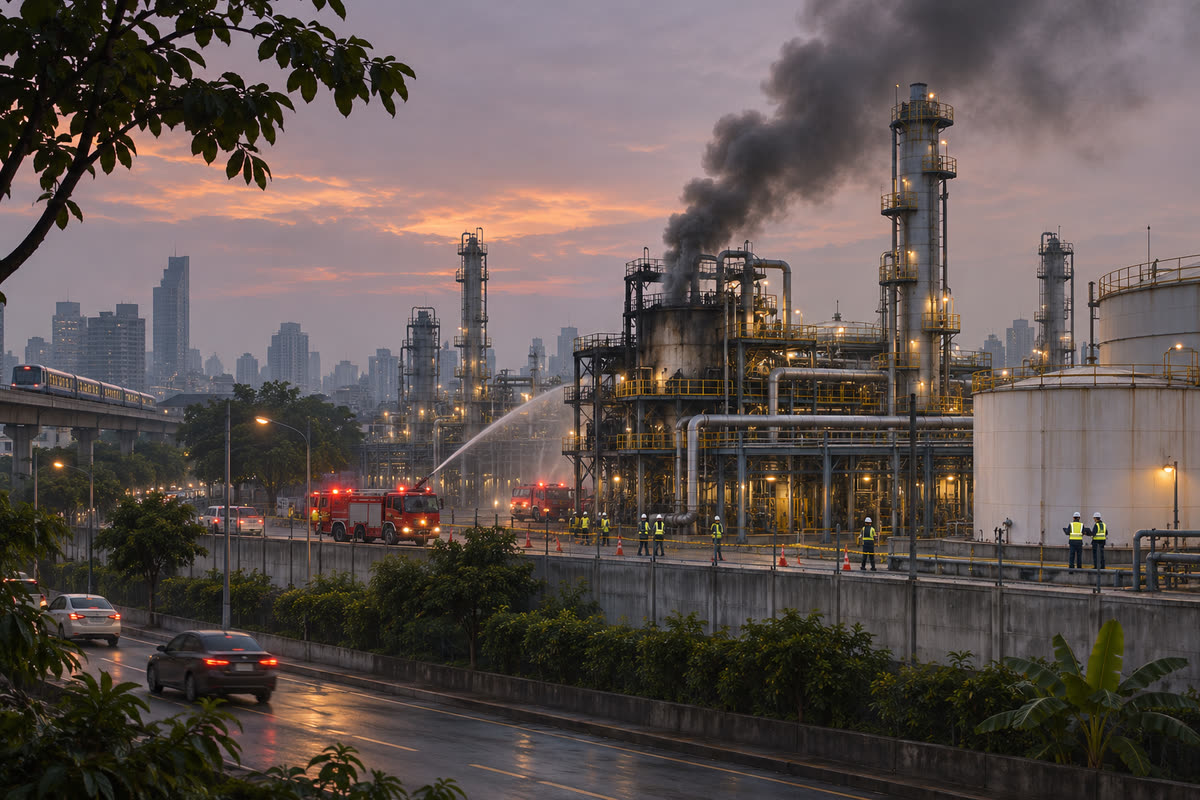
Saudi Arabia's Energy Ministry said a hostile aerial projectile struck Saudi Aramco's Jazan refinery on 26 November 2026, killing a Nepalese worker, injuring several others and temporarily halting some operations. The incident adds a new disruption point to a region already under scrutiny: UOB Global Economics & Markets Research reported Brent crude at US$96.57 per barrel on 26 November, and Reuters market coverage reported the same settlement.
Key takeaways
- Saudi Arabia's Energy Ministry confirmed one Nepalese worker was killed, several people were injured and a fire was brought under control after the strike.
- Some refinery operations stopped temporarily, but the ministry has not disclosed the affected units, lost output or a restart timetable.
- Aramco's facility profile and Reuters describe Jazan as designed to process up to 400,000 barrels per day; that is design capacity, not a confirmed outage.
- Brent settled at US$96.57 per barrel on 26 November, according to UOB and Reuters market reporting, as traders weighed fresh supply risk.
- The Saudi-led coalition attributed the attack to Yemen's Houthis, but the Energy Ministry did not name an attacker and the Associated Press said related claims could not be independently verified.
What happened at Jazan
The Saudi Energy Ministry's statement, carried by the Saudi Press Agency, said the projectile hit the petroleum refinery in the Jazan region on Thursday, 26 November 2026. A fire started at the site and was later extinguished. Emergency teams and specialist technical crews began assessing damage and checking facility safety, while the injured workers received medical care.
The official statement did not say which process units were affected, how much production was interrupted or when normal operations would resume. That distinction matters: a temporary halt to some operations is not the same as a full refinery shutdown, and the public information available does not support treating the whole site as offline.
The Saudi-led coalition said the Houthis had targeted the refinery and later said it destroyed a ballistic-missile launch platform in Yemen's Hodeidah province. The ministry statement itself did not assign responsibility. The Associated Press reported the ministry's casualty confirmation but noted that it could not independently verify claims from the parties to the wider conflict. The responsible wording, therefore, is that the strike is confirmed by Saudi authorities while the attribution remains reported rather than independently established.
Why the refinery matters to global oil markets
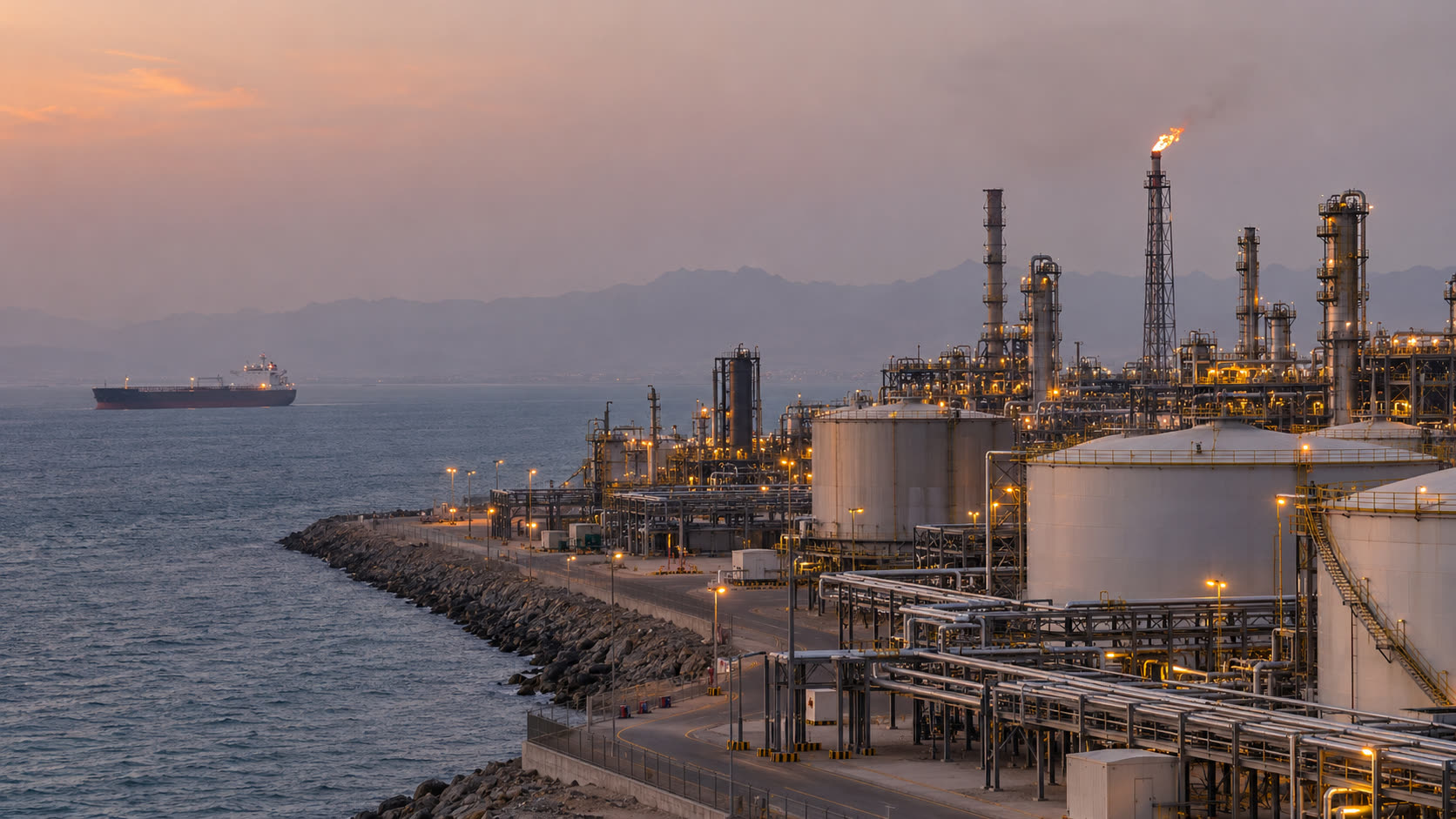
Aramco's facility profile says the Jazan refinery, in southwestern Saudi Arabia near the Yemeni border, is designed to process up to 400,000 barrels of crude oil per day, and Reuters reported the same design capacity. The figure describes maximum design capacity; it does not say that 400,000 barrels per day were lost after the incident. Neither the ministry nor the Reuters report disclosed an outage volume.
Jazan also sits on Saudi Arabia's Red Sea coast, close to a maritime corridor used by energy exporters and exposed to the wider security risks around the Red Sea, Bab el-Mandeb and the Strait of Hormuz. A prolonged refinery disruption could affect regional availability of gasoline, diesel and other products before it changes the global crude balance. A wider pattern of attacks could also add to freight, insurance and risk premiums. Those are market implications to watch, not a confirmed estimate of this strike's eventual supply effect.
The first market response was visible in crude benchmarks. UOB's 27 November markets report, using Bloomberg data, put Brent at US$96.57 per barrel on 26 November, while Reuters market coverage also reported that settlement after the refinery incident and other Middle East shipping concerns. Brent is a global benchmark, not a retail pump price: the price paid by drivers also reflects refining margins, local taxes, currency movements, freight and competition.
What it means for drivers and transport operators
The immediate reader takeaway is that a headline about a refinery strike does not automatically mean a worldwide fuel shortage or a one-for-one jump at every pump. The size and duration of the affected units, the availability of replacement products and the security of shipping routes will determine whether the event remains a risk premium in futures markets or becomes a sustained refined-fuel disruption.
Drivers and fleet operators can track local changes through the live fuel prices hub, then use the fuel cost calculator to test how a change in the price per litre or gallon would affect a planned trip. Those tools answer the practical question that a crude benchmark cannot: what does the change mean for a specific journey?
This is a new, confirmed Jazan event, separate from the earlier reported claim involving Ras Tanura and the Strait of Hormuz. The earlier report on the Ras Tanura and Hormuz risk provides background, but it should not be read as proof that either refinery has suffered a full shutdown.
What changes now
For the next market sessions, the most important missing fact is the restart timetable. A prompt return of the affected units would limit the physical supply effect, while a longer inspection or repair period would keep attention on regional product balances. The Saudi ministry's damage assessment and any Aramco operating update will be more informative than the facility's headline design capacity.
Signals to watch
- Operations: an official update on which units are running and whether the temporary halt has ended.
- Products: regional gasoline and diesel pricing, refinery margins and any changes in cargo availability.
- Shipping: further verified incidents or routing changes around the Red Sea, Bab el-Mandeb and Hormuz.
- OPEC+: Reuters reported that ministers were expected to discuss keeping first-quarter 2027 output targets unchanged at the 29 November meetings. That is a reported expectation, not a confirmed decision, and the final statement could change the market's view of spare supply.
Reader takeaway
The Jazan strike is significant because it hits a large Saudi refining site during an already fragile regional security period, but the public record does not yet establish the volume or duration of lost production. Treat the event as a confirmed facility disruption and a potential global risk signal, not as proof of a fixed fuel-price outcome. The next credible operating update will determine whether the market reaction fades or broadens.
This article is for general information only and is not financial, insurance or legal advice.
Sources
- Saudi Press Agency, “Energy Ministry: Worker Killed, Others Injured in Aerial Projectile Attack on Jazan Refinery” — 26 Nov 2026
- Aramco, “Jazan — our new smart self-powering refinery” — 14 Nov 2022
- Reuters via Zawya, “Attack on Saudi Aramco's Jazan refinery kills worker, halts some operations” — 27 Nov 2026
- Associated Press, “Israeli strikes kill 10 people in Gaza, and other Mideast news” — 26 Nov 2026
- UOB Global Economics & Markets Research, “Markets Overview” — 27 Nov 2026
- Ground News carrying Reuters, “Brent settles higher as mine strikes, refinery attack stoke Middle East supply concerns” — 27 Nov 2026
- Reuters via Business Recorder, “OPEC+ set to keep oil production targets steady” — 28 Nov 2026