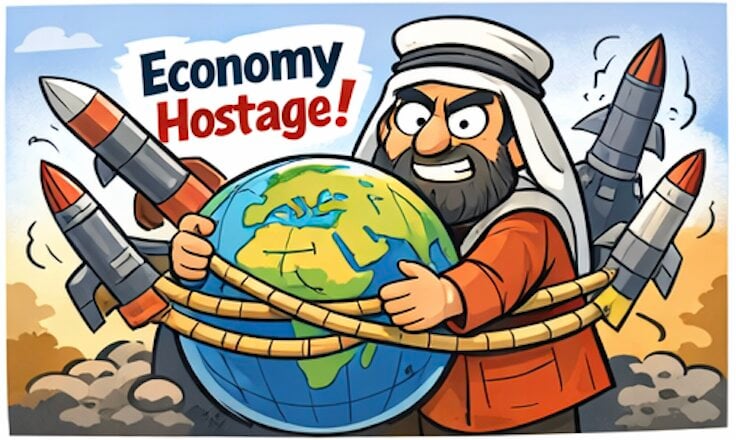
Kuwait Oil Chief Says Iran Is Holding the World Economy Hostage

Kuwait's top oil executive has warned that Gulf disruption is choking output and keeping the entire global energy system under pressure.

Kuwait Oil Chief Says Iran Is Holding the World Economy Hostage

Kuwait Petroleum chief Sheikh Nawaf Saud Al-Sabah did not bother with diplomatic soft pillows. He said Iran is “holding the world's economy hostage,” warning that missile, drone and shipping disruption across the Gulf is cutting output and threatening a much broader energy shock. When oil executives start sounding like geopolitical columnists, the market usually has a problem.

Kuwait says there is no true replacement for the Strait of Hormuz route, and that emergency workarounds are not enough if the conflict drags on. That warning matters because reduced Gulf output does not just hit crude. It can spill into fuel prices, fertilizer costs, food inflation and shipping expenses. In short, this is not only a producer story. It is also a household-budget story with very expensive side effects.

  • Kuwait warned of severe supply disruption.
  • Hormuz remains central to global oil flows.
  • The knock-on effects can reach food and transport costs.

Watch: Reuters: Iran Strike Damages LNG and Deepens Energy Risks

Related Fuel News

More updates you might want to read next.

Kanpur-Kabrai NH-34 Highway Cleared At Rs 7,145 Crore: Why The BOT Toll Corridor Matters For Freight

The Cabinet has approved a Rs 7,145.14 crore, 117.7-km access-controlled greenfield highway between Kanpur and Kabrai on NH-34 in Uttar Pradesh. The BOT toll project is designed to cut travel time from 3.5 hours to 1.5 hours, strengthen links to the Kabrai mining belt and Bundelkhand corridor, and lower logistics friction for freight, construction material and agricultural movement.

India Resets Export Duty On Petrol, Diesel And ATF From July 1: Why Refiners, Airlines And Fuel Users Should Watch It

India has reset windfall-linked export duties from July 1, 2026 by raising the levy on petrol exports to Rs 4 per litre while cutting diesel and aviation turbine fuel export duties to Rs 8.50 and Rs 7.50 per litre respectively. The move matters because it changes refining economics, export incentives and the downstream pressure points that can eventually shape domestic fuel availability, airline costs and broader transport pricing.

Commercial LPG Down Rs 183.50, ATF Cheaper By Rs 5: What July Relief Means

State-run oil companies cut the 19-kg commercial LPG cylinder price by Rs 183.50 from July 1, 2026 and reduced aviation turbine fuel by Rs 5 per litre to about Rs 110 in Delhi. The move offers relief to restaurants, hotels and airlines, but household LPG, petrol and diesel users are still waiting.