On 25 Nov 2026, a U.S.-led consortium led by Eldridge signed a definitive agreement to acquire Lukoil International GmbH, the Russian oil producer’s non-Russian energy portfolio, through a proposed share swap. The transaction matters to global fuel markets because it would change who controls oil production, refining and retail assets across multiple regions, but it is not complete: approval from the U.S. Treasury Department’s Office of Foreign Assets Control (OFAC), due diligence and other regulatory clearances are still required.
The deal covers upstream oil and gas fields, three refineries, pipelines, international trading operations and more than 2,000 retail stations. If it closes, the consortium says it will prioritise operational continuity and restoring full refining capacity. That makes this an ownership and sanctions story for now, rather than an announced change to pump prices.
Key takeaways
- The proposed transaction would transfer Lukoil International’s non-Russian assets to a consortium led by Eldridge and including the U.S. International Development Finance Corporation (DFC), UAE-based Catena Investment Holding and Xtellus Partners.
- The consortium’s 25 Nov release says upstream operations span 11 countries and produce about 350,000 barrels of oil equivalent per day; The Associated Press independently reported the same production profile on 26 Nov.
- The portfolio includes three refineries with combined capacity of about 350,000 barrels per day and more than 2,000 retail stations across 16 countries, according to the consortium release and Oil & Gas Journal.
- The proposed share swap is designed to avoid a direct cash payment to Russia, while DFC would receive an ownership interest on behalf of the United States if the transaction is approved.
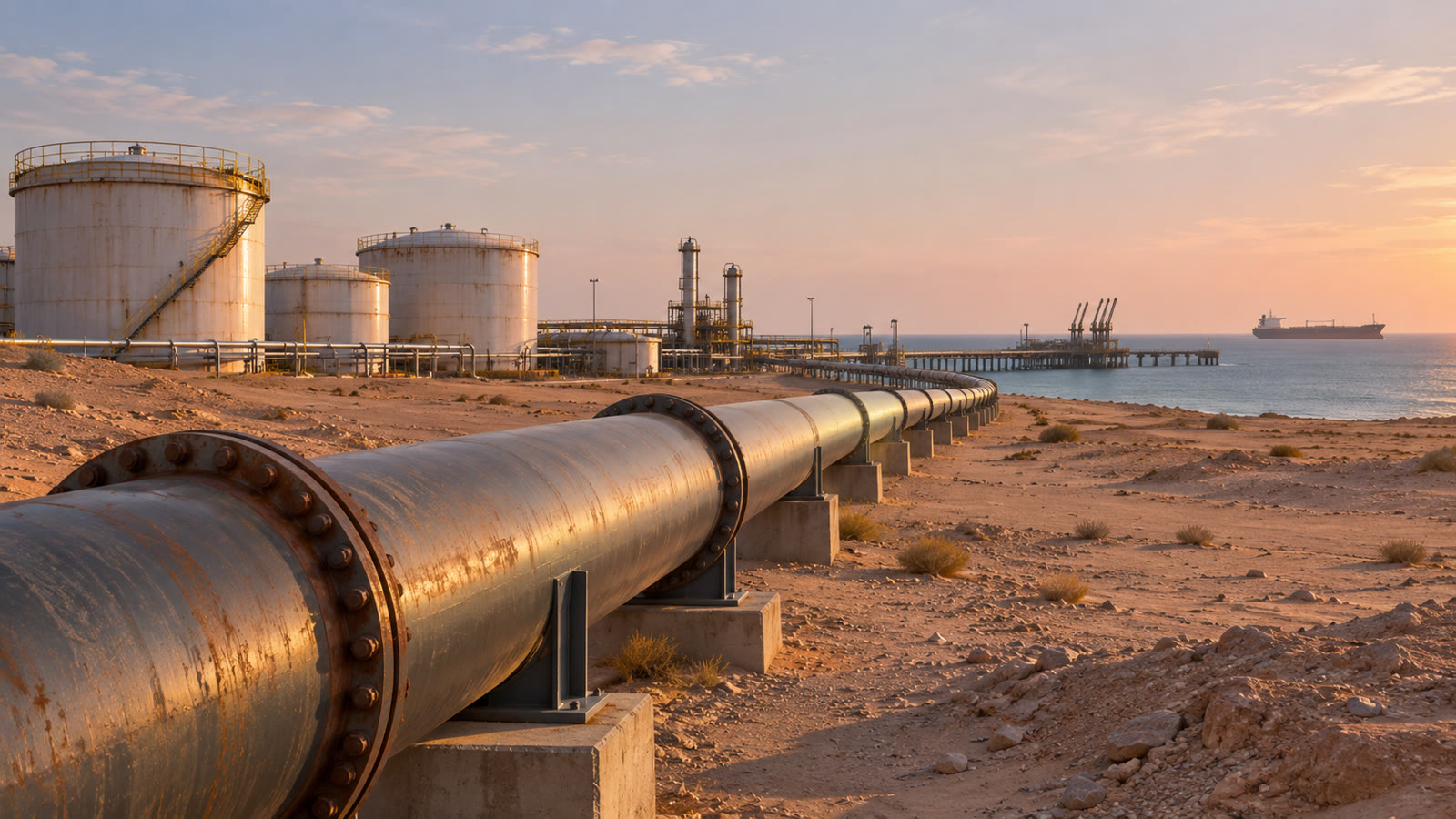
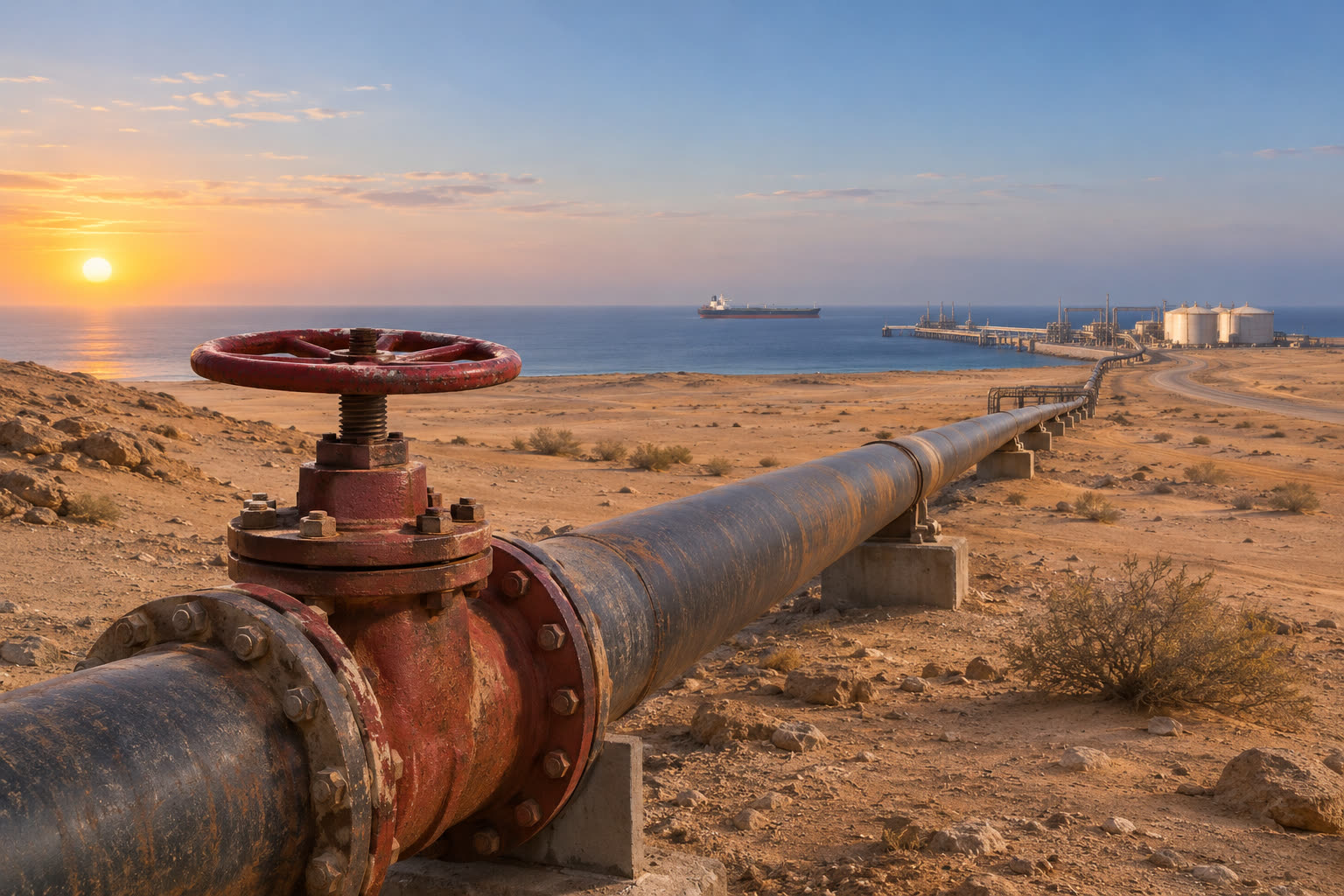
Illustrative editorial image: a refinery, fuel storage and cross-border energy routes. It is not a photograph of an exact Lukoil facility.
What the consortium is buying
Lukoil International GmbH, or LIG, holds the Russian company’s overseas energy businesses. The consortium announcement describes a portfolio that runs across the energy chain, from upstream fields and pipelines to refining, trading and retail distribution. Its geography includes Western and Southeast Europe, the Middle East, Central Asia, North and sub-Saharan Africa, and North America.
The production number is material even though it is not the same as a single crude-export figure. The consortium’s release dated 25 Nov 2026 puts LIG’s upstream output at approximately 350,000 barrels of oil equivalent per day across 11 countries. AP reported that figure on 26 Nov, while Oil & Gas Journal also reported the 11-country footprint.
Downstream assets give the proposal a direct connection to refined-fuel supply. The release and Oil & Gas Journal identify the Burgas refinery in Bulgaria, Zeeland in the Netherlands and Petrotel in Romania. Together, the three plants have approximately 350,000 barrels per day of refining capacity. The portfolio also includes LITASCO, Lukoil’s international trading business, and more than 2,000 retail stations operating across 16 countries, according to both reports.
A share swap, not a completed purchase
Under the announced structure, the consortium would exchange restricted shares of PJSC Lukoil and other Russian companies for 100% of LIG’s equity. The consortium says that structure would avoid a direct cash payment to Russia. The sale consideration would be held in a restricted custodial account for five years or until sanctions are lifted, and DFC would receive an ownership interest without an upfront taxpayer contribution, according to the 25 Nov announcement.
That language is important: an agreement to acquire is not the same as a closed sale. Reuters reported on 25 Nov that the proposed transaction requires OFAC approval and that the U.S. government would receive a share of future profits through DFC if the deal goes ahead. The wire service also reported that the review could take time because of the portfolio’s breadth.
OFAC’s General License No. 131L, dated 19 Nov 2026, authorises certain transactions needed to negotiate contingent contracts for the sale of LIG through 19 Dec 2026, but expressly requires separate OFAC authorisation before the contract can be performed. The licence also says it does not authorise transfers of funds to a person or account located in Russia. The announced deal therefore remains conditional, even though the consortium calls the agreement definitive.
Why this matters for global fuel markets
The proposed transaction brings a large and geographically spread energy portfolio into a single ownership question. It includes crude and gas production, refinery capacity, pipelines, trading and retail outlets, so the review will be watched by governments, refiners, fuel traders and transport operators in several regions. It is also part of a wider effort to move sanctioned Russian energy assets away from Russian control without interrupting operations.
The immediate market signal is continuity, not a new supply cut. The consortium says its post-closing priorities would include stabilising operations, preserving asset value and investment, keeping supply flowing across the portfolio and bringing full refining capacity back online. Those are stated intentions, not completed actions. Until approvals and closing occur, the assets remain subject to the current ownership and sanctions framework.
For drivers, there is no automatic change to a local pump price because a proposed ownership transfer has been announced. Retail prices still depend on crude benchmarks, taxes, exchange rates, refining margins, transport costs and local competition. Readers can use the live fuel-price pages to check the price in their market rather than infer a change from the headline.
What it means for drivers and fleets
A typical driver is more likely to feel this story through the broader fuel market than through an immediate change at a branded station. If the transaction closes smoothly, maintaining refinery and trading operations could reduce disruption risk in the regions served by LIG. If approvals, financing or operational decisions delay the transfer, the practical effect may be continued uncertainty around ownership and sanctioned-asset management.
Fleet operators should separate the headline scale from their own trip economics. A portfolio producing hundreds of thousands of barrels of oil equivalent per day does not translate one-for-one into a local diesel price or a monthly fuel bill. For a route-specific estimate, the fuel-cost calculator can connect distance, vehicle efficiency and fuel price into a trip estimate.
The proposed change also keeps the energy-transition question in view. LIG’s listed assets are predominantly conventional oil and gas infrastructure, while drivers and commercial fleets are weighing fuel costs against electrification and charging access. Readers comparing those options can review the EV charging directory for charging locations before making a route or vehicle-cost comparison.
What to watch next
- OFAC’s decision: The most important near-term checkpoint is the separate sanctions authorisation required before performance of the agreement. General License No. 131L sets the current negotiation window through 19 Dec 2026, subject to its conditions.
- Regulatory and closing conditions: The consortium has also cited due diligence and other required approvals. Until those steps are completed, LIG’s assets have not transferred.
- Refinery continuity: Any update on Burgas, Zeeland or Petrotel will matter for refined-product availability around the Black Sea, the Balkans and Northwest Europe, which the consortium identifies as served by the portfolio.
- Operational ownership after closing: Watch whether the new owners preserve existing supply, trading and retail arrangements, and whether the promised return to full refining capacity is delivered.
This is a major cross-border energy transaction, but its reader impact will be clearer only when the approvals and operating plans are known. Follow the latest fuel and energy coverage for further developments.
This article is for general information only and is not financial, insurance or legal advice.
Sources
- Business Wire: “American-Led Consortium Announces Agreement to Acquire LUKOIL International’s Global Energy Portfolio” — 25 Nov 2026
- Reuters: “Exclusive-Billionaire Boehly signs US-backed share swap deal to buy Lukoil global assets” — 25 Nov 2026
- The Associated Press: “US-led consortium agrees to acquire assets from Russian oil company Lukoil” — 26 Nov 2026
- Oil & Gas Journal: “US-led consortium aims to acquire LUKOIL International’s energy portfolio” — 25 Nov 2026
- U.S. Treasury, OFAC: “General License No. 131L” — 19 Nov 2026