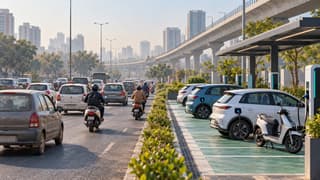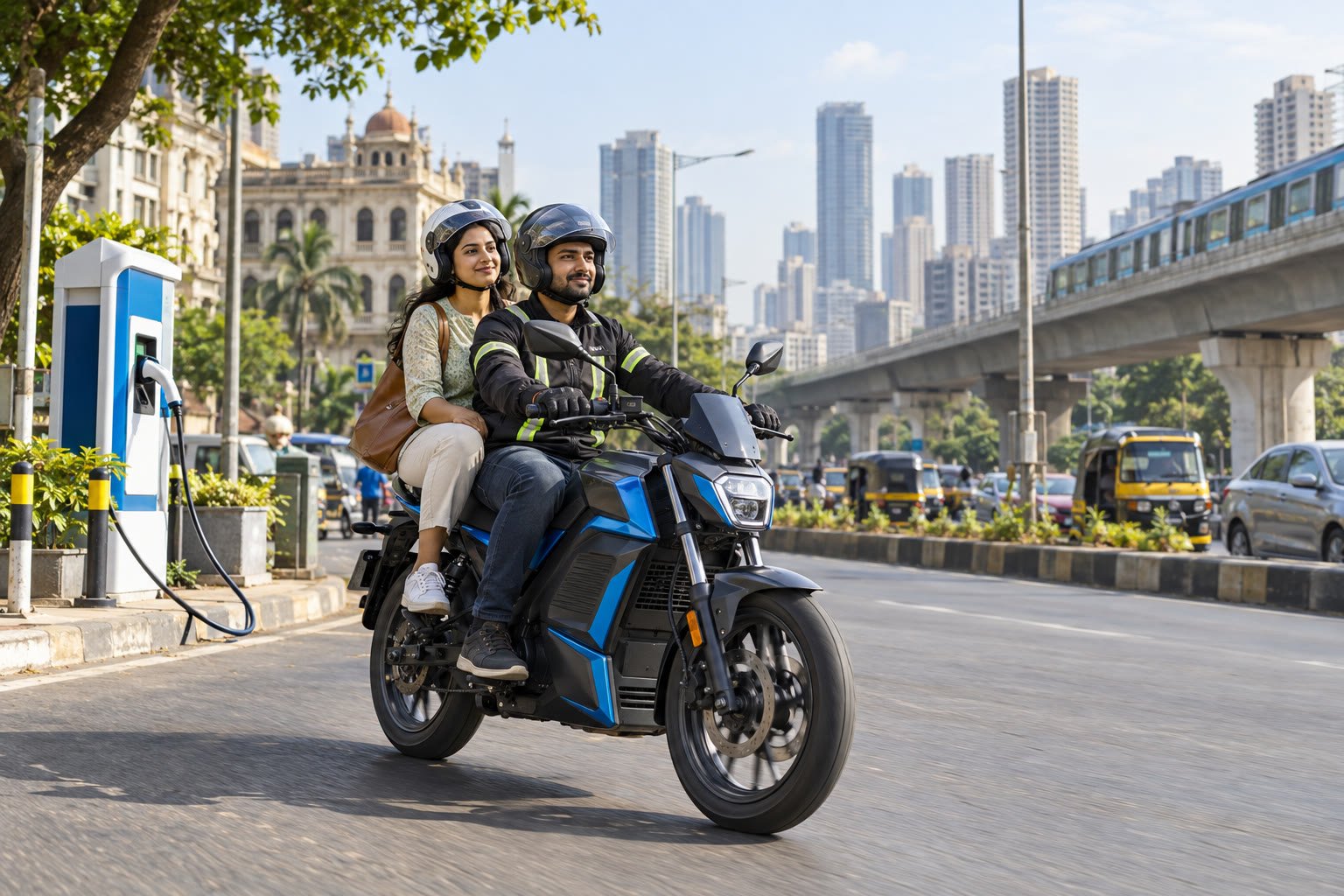
Maharashtra’s Transport Department has reportedly given bike-taxi aggregators an initial six months to move petrol-powered fleets to electric vehicles, with a possible three-month extension for operators covered by provisional or temporary licences. The reported direction points to a fully electric bike-taxi network in the state by July 2027, but it is a phased compliance window—not an overnight switch for every two-wheeler.
Key takeaways
- The reported 1 Oct 2026 communication gives most aggregators six months to meet the EV requirement.
- Operators that applied for provisional or temporary licences under the Maharashtra Bike-Taxi Rules, 2025 may receive three additional months, making the outer transition window nine months.
- The direction is aimed at licensed bike-taxi operators and aggregators; it does not require privately owned commuter motorcycles to become electric.
- The state’s 4 Jul 2025 rules document already sets an electric-bike requirement, a 50-bike minimum to start services, and charging and safety conditions.
What Maharashtra has reportedly ordered
The Economic Times reported on 8 Oct 2026 that the Transport Department issued a communication to Regional Transport Offices and aggregators holding provisional bike-taxi licences. It describes an initial six-month period for the shift from petrol-powered bike taxis to a 100% electric fleet, followed by a possible three-month extension under the Maharashtra Bike-Taxi Rules, 2025.
The Indian Express separately reported on 5 Oct 2026 that Maharashtra had set July 2027 as the outer deadline for bike-taxi aggregators, including Ola, Uber, Rapido and other services. Its account also separates the two clocks: six months for aggregators currently operating petrol-powered bike taxis, and three extra months for operators that applied for provisional or temporary licences. The latest reports therefore describe a maximum nine-month transition, rather than a single deadline that applies identically to every operator.
That distinction matters for commuters and drivers. The direction creates a compliance window; it does not mean that every bike taxi changes from petrol to electric on the day the communication was issued. The exact calendar date for an individual operator will depend on the licence or notice applicable to it, while media reports place the wider outer deadline in July 2027.
Who is affected—and who is not
The immediate burden falls on platforms and operators seeking to run bike-taxi services in Maharashtra. Drivers using their own motorcycles may be affected indirectly if a platform’s onboarding, permit or licence conditions require an electric vehicle. Operators will also have to plan for vehicle procurement or leasing, charging access, maintenance and the timing of the petrol-bike phase-out.
For riders, the likely near-term effect is a gradual change in the vehicles available on an app, and possibly in service coverage while operators replace or reallocate motorcycles. The reported order is not a statewide instruction for private owners who use motorcycles for personal commuting. It also does not announce a fare reduction; fares, availability and service conditions remain tied to the applicable transport framework and platform terms.
The existing Maharashtra rulebook
The Maharashtra Transport Department’s Bike-Taxi Rules, 2025, published on 4 Jul 2025, provides the operating baseline behind the reported transition. It says a licence is required to operate a bike-taxi agency and sets a minimum of 50 electric bike-taxis for starting services. The document also requires fitness certification, insurance, and a reasonable parking and battery-charging facility.
The same 2025 rules document sets out rider-facing conditions: a bike-taxi trip may not exceed 15 km, the vehicle speed may not exceed 60 km/h, and the operator must provide a compliant helmet for each ride. It also says the vehicle should be painted yellow and carry a prominent “Bike-Taxi” marking. These are framework requirements; the latest transition reporting concerns how existing or provisional operators move toward compliance.
What the EV shift means for operating costs
An all-EV fleet changes the cost calculation but does not guarantee a fixed saving. Petrol expense may fall, while the operator takes on vehicle or lease costs, charging tariffs, battery wear, maintenance, insurance and possible downtime. The result will vary with daily kilometres, charging location, electricity rate, vehicle efficiency and financing terms.
Operators comparing petrol usage with electricity can start with FuelPrice’s fuel cost calculator for the petrol baseline; it does not replace a charging-cost calculation. For a dated petrol input, the live fuel prices hub is the relevant follow-up. A fair comparison should use the same distance, time period and maintenance assumptions for both powertrains.
Charging access will be as important as the motorcycle itself. Fleet owners and drivers can use the state-wise EV charging directory to identify public charging options, but a listed charger is not proof that it is available at a particular time or suitable for a particular two-wheeler. Operators will need to match charging plans with shift length and the locations where rides actually begin and end.
What riders and drivers should check now
- Riders: whether the service is operating under a valid local licence, whether a helmet is provided, and whether the fare receipt and trip details are shown in the app.
- Drivers: the vehicle’s registration, insurance and fitness status, the licence category required for commercial riding, and whether the platform has explained its EV transition schedule.
- Fleet operators: charging and parking capacity, battery and service support, replacement timing for petrol motorcycles, and the conditions attached to any provisional licence.
What to watch before July 2027
The next useful confirmation will be the department’s operator-specific notices and the exact date attached to each licence. Watch for any clarification on extensions, city-wise enforcement, fare rules, charging infrastructure and whether additional aggregators receive provisional approval. The 2025 framework already points to an electric operating model; the new reported direction is about the pace at which existing and provisional services must reach it.
For now, the practical takeaway is limited but clear: Maharashtra’s bike-taxi market is being pushed toward 100% electric fleets through a phased window reported as six months, with up to three more months for a defined group of provisional or temporary licence applicants. Riders should expect the transition to develop service by service, while drivers and operators face the larger decisions on compliance, vehicle cost and charging readiness.
Sources
- The Economic Times — “Nitin Gadkari’s bike taxi push gets boost as Maharashtra notifies transition timeline from petrol bikes to EVs” — 8 Oct 2026
- The Indian Express — “Ola, Uber, bike taxis in Maharashtra get 9 months to switch to 100% EV fleets” — 5 Oct 2026
- Maharashtra Transport Department — “Maharashtra Bike-Taxi Rules, 2025” — 4 Jul 2025