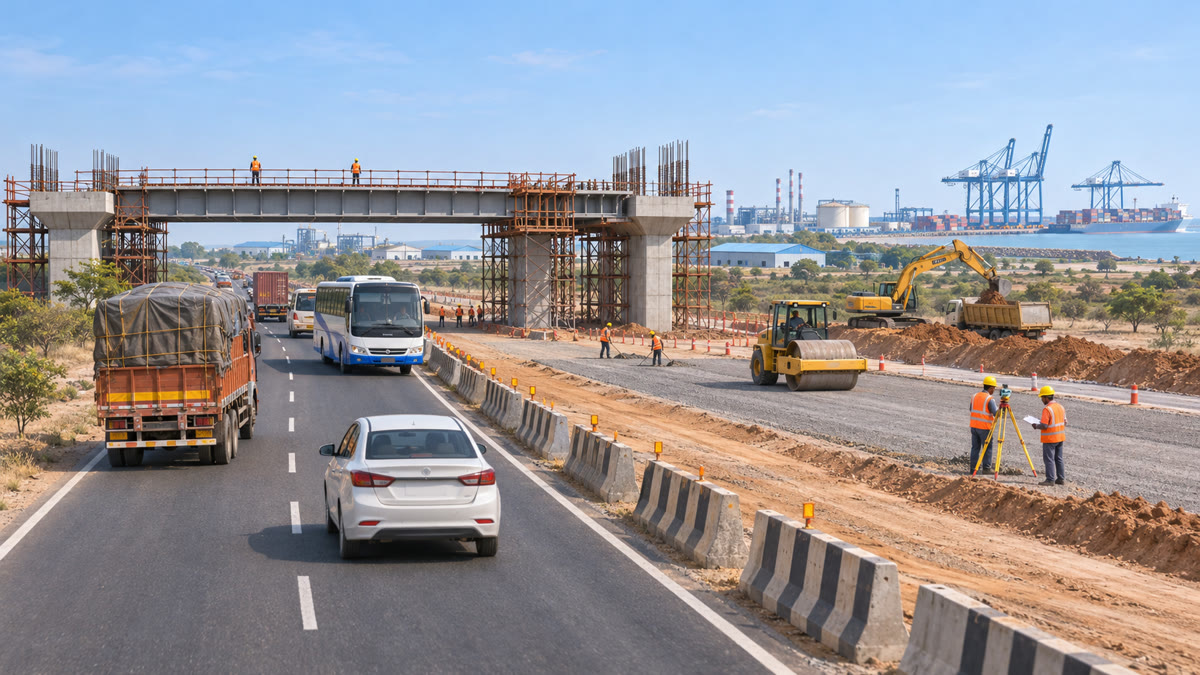
The Centre has approved a ₹1,182.40-crore project to widen the 24.51-km Maliya–Pipalia stretch of NH-151A in Gujarat’s Morbi district to six lanes. For drivers and freight operators using the corridor, the approval points to a future capacity upgrade—but it does not change tolls, lanes or journey times immediately because no construction start or completion date has been announced.
Key takeaways
- The approved project covers 24.51 km between Maliya and Pipalia in Morbi district.
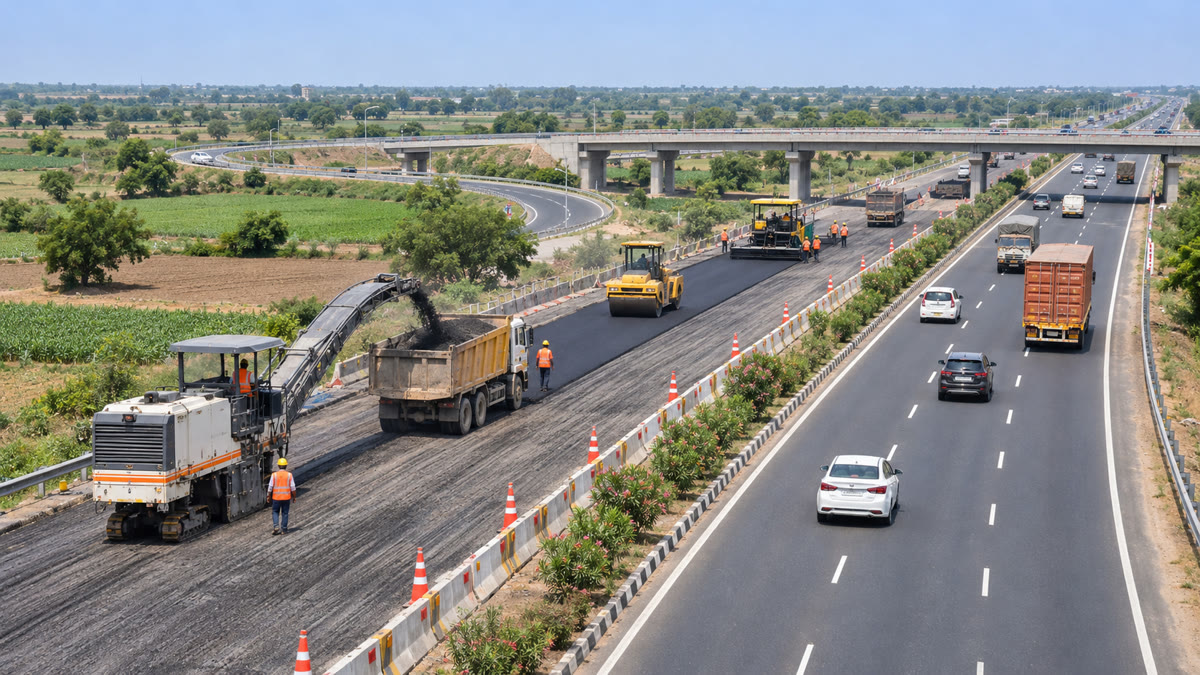
- The existing two-lane road with paved shoulders is planned to become a six-lane corridor.
- The scope includes a bypass, concrete service roads, one flyover, three vehicle underpasses and two railway overbridges.
- The route is part of the Amritsar–Jamnagar Economic Corridor and supports access to Navlakhi Port.
- No construction schedule, completion deadline or new toll rate has been announced with the approval.
What has been approved
Union Road Transport and Highways Minister Nitin Gadkari announced the approval in an official post on 13 Nov 2026. The sanctioned amount is ₹1,182.40 crore for the Maliya–Pipalia section of National Highway-151A, which currently has two lanes and paved shoulders and carries local traffic alongside heavy commercial vehicles.
The six-laning is intended to add capacity on a corridor that links Morbi’s western industrial and agricultural areas with Navlakhi Port. The project is also part of the wider Amritsar–Jamnagar Economic Corridor, so its relevance extends beyond daily commuting: it is a route for port-bound and regional freight movement.
The construction scope
The announcement covers more than widening the carriageway. The planned works include a bypass, concrete service roads, one flyover, three vehicle underpasses and two railway overbridges. These structures are meant to separate local movements, rail crossings and through traffic as the corridor is expanded.
The project’s exact alignment, construction package, contractor and traffic-management plan have not been published in the minister’s announcement. That distinction matters for anyone using the route now: an approval is confirmed, but it is not the same as a completed road or an immediate diversion notice.
Why NH-151A matters to Morbi and Navlakhi
The Maliya–Pipalia section connects the economic corridor to the port and to industrial and agricultural activity in western Morbi. Ahmedabad Mirror reported that the existing road sees congestion from the interaction of heavy commercial vehicles and local traffic. A wider road, bypass and grade-separated structures could make the movement of freight and passenger vehicles more predictable after construction is completed.
Gadkari’s announcement also linked the project to the movement of petrochemical products from major refineries towards northern states. That is a logistics benefit stated by the minister, not a quantified forecast. The available announcement and reports do not provide a completion date, a projected travel-time saving or a rupee estimate for lower operating costs.
What it could mean for drivers and fleets
For private drivers, the likely benefit is a more reliable corridor once the six-laning and associated structures are in service. Less interaction between through traffic, local access and rail crossings can reduce stop-and-go movement, but the scale of any time or fuel saving will depend on the final design, traffic levels and how construction is staged.
For truck and bus operators, reliability can matter as much as distance. A route that spends less time in queues can improve schedule planning and reduce idling, but no verified fuel-saving figure is available yet. It would be misleading to convert the ₹1,182.40-crore project cost into a promised per-trip saving before a traffic study and operating plan are published.
During construction, the short-term experience may be different. Lane shifts, work-zone queues and temporary diversions can add delay before the final capacity arrives. Drivers planning a trip through the corridor can compare the available toll charges and route costs, estimate the fuel bill with the fuel cost calculator, and check alternatives in the road-trip planner when work zones begin.
What changes now—and what does not
The approval confirms the project’s funding and broad scope. It does not mean that the whole 24.51-km road is already six lanes, and it does not announce a new toll rate. Any user-fee revision would need to be communicated separately under the applicable highway-fee process. The announcement also does not say when construction will start or when the upgraded road will open.
For now, drivers should treat the existing route as a two-lane corridor with paved shoulders and plan for current conditions. The next useful documents will be the tender or award notice, the detailed project design, the construction schedule and any traffic advisory issued for the work zone.
What to watch next
- Project award: the name of the implementing agency or contractor will clarify when mobilisation can begin.
- Work-zone plan: diversions, lane closures and access arrangements will matter to daily users before the widening is complete.
- Completion timeline: a deadline is needed before drivers can plan around the promised capacity increase.
- Toll notifications: watch for a separate official notice rather than assuming that the approval changes today’s fee.
Reader takeaway
The Maliya–Pipalia approval is a significant future upgrade for a freight-sensitive Gujarat corridor, with ₹1,182.40 crore committed to six-laning and major structures. Its immediate effect is informational: the route remains in its existing form until construction and traffic-management notices follow. Drivers, transporters and businesses connected to Navlakhi Port should watch those next notices because the construction phase—not the approval alone—will determine the near-term impact on time, fuel use and trip planning.
Sources
- Nitin Gadkari’s official X post on the Maliya–Pipalia approval — 13 Nov 2026
- Financial Express, “Rs 1,182 cr Gujarat highway project: 6 lanes, 2 railway overbridges, 3 underpasses planned” — 14 Nov 2026
- Ahmedabad Mirror, “Centre clears Rs 1,182 crore for 6-laning of Maliya-Pipalia stretch” — 14 Nov 2026