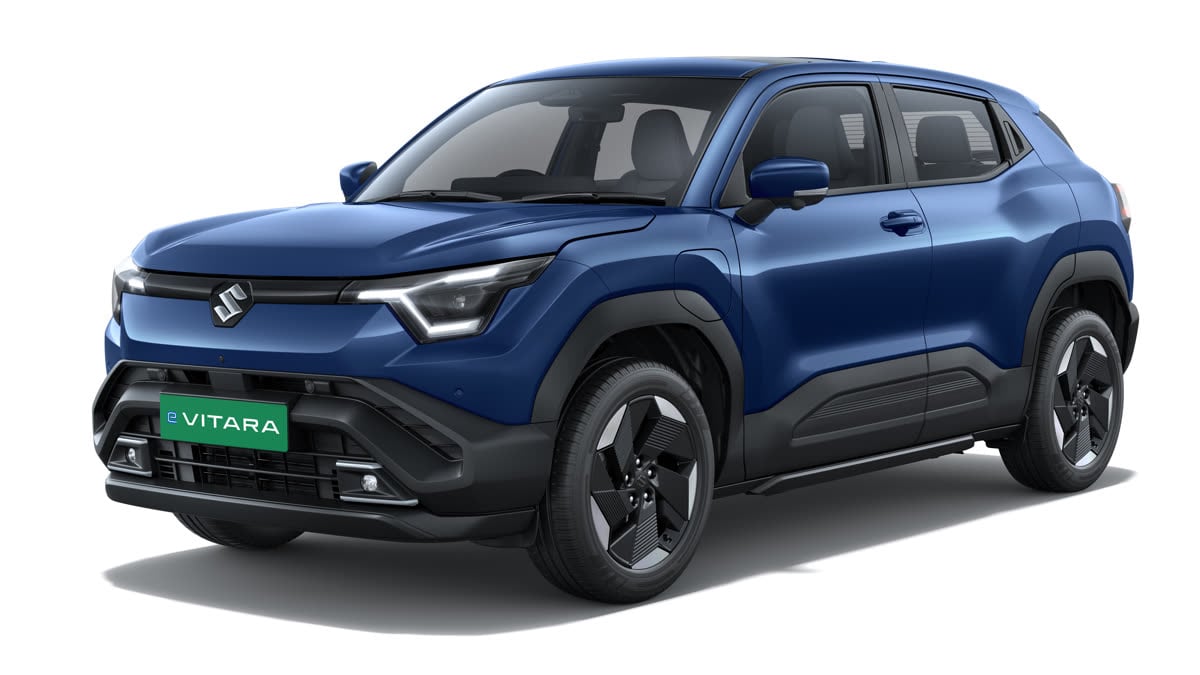
Maruti Suzuki India said on 29 Oct 2026 that cumulative exports of its Made-in-India electric vehicles crossed 50,000 units since global shipments began in August 2025. For Indian drivers and EV buyers, the milestone shows that the e VITARA is being scaled as a global vehicle from Gujarat, but it is not a domestic sales number or a change to the car's Indian price, range or ownership terms.
Key takeaways
- Maruti Suzuki reported more than 50,000 cumulative Made-in-India EV exports since August 2025.
- The company said it accounted for nearly 93% of India's electric passenger vehicle exports during April-September 2026.
- Shipments now reach nearly 50 countries, with Europe remaining the largest export market.
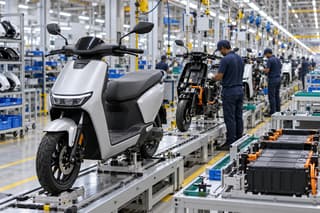
- The Hansalpur plant in Gujarat is the exclusive manufacturing base for Suzuki's first global battery electric vehicle.
What Maruti Suzuki announced
Maruti Suzuki's 29 Oct 2026 disclosure marked a new step in the export journey of the e VITARA, the company's first global battery electric vehicle. The company said international shipments began in August 2025 and that cumulative Made-in-India EV exports have now crossed 50,000 units. Autocar Professional and the Free Press Journal independently reported the same milestone from the company's exchange filing.
The e VITARA is manufactured at Maruti Suzuki's Hansalpur facility in Gujarat. Maruti's earlier export announcement described the site as the vehicle's exclusive manufacturing base and positioned the programme as an India-to-the-world export operation. The latest reports say Europe is the largest destination and that the vehicle is now shipped to about 50 countries, including the UK, Norway, Germany, Japan and Switzerland.
Why the export number matters
The most important distinction for readers is that 50,000-plus exports are not the same as 50,000 domestic sales. Export shipments measure vehicles produced in India and sent to overseas markets; they do not show how many units have been registered in India, how long an Indian buyer may wait for delivery or how the car performs on local routes.
Maruti also said it accounted for nearly 93% of India's electric passenger vehicle exports in April-September 2026, citing industry data. That is an export share, not a share of India's domestic EV market. For a buyer comparing electric SUVs in India, the figure is useful evidence of manufacturing and overseas acceptance, but it does not by itself establish a lower running cost, stronger resale value or better ownership experience.
The export reach still matters because a vehicle sold across multiple markets has to meet different regulatory, safety and quality requirements. It can also help a manufacturer build production knowledge and supplier scale. Those are potential benefits, not a promise that prices, service response times or spare-parts costs will change immediately in India.
What it means for Indian EV buyers
Export scale is useful context, not a purchase verdict
The milestone does not announce a new Indian price, subsidy, battery warranty, charging offer or service policy. Those terms need to be checked separately against the current India-market documents and the buyer's location. Buyers should also separate a company's export performance from the practical questions that affect a daily commute: charger access at home or work, public-charging reliability, realistic highway range, service coverage and the cost of insurance and tyres.
For drivers planning longer journeys, the state-wise EV charging directory can help identify charging locations before comparing routes. The road-trip planner can then be used to assess a trip's distance and stop pattern. These checks are more useful for a purchase decision than the export milestone alone.
Domestic questions remain separate
Maruti's export update does not provide Indian registration data, city-level charging uptime, real-world range or the likely cost of replacing a battery after the warranty period. It also does not say whether the company will add another India-made EV to the export programme or how quickly the domestic portfolio will expand. Those are the next questions to watch as the company's EV strategy develops.
Hansalpur's role in the programme
Autocar Professional and the Free Press Journal, both citing the company disclosure, reported that the Hansalpur facility has expanded to an annual production capacity of 1 million vehicles. They also reported cumulative investment of ₹25,288.7 crore in the plant. These figures put the EV milestone in a wider manufacturing context: the facility is not only supplying India's e VITARA demand but is also being used as a global production and export hub.
That scale can be relevant to Indian buyers if it is followed by durable service capacity, clear parts availability and transparent ownership support. It should not be treated as a guarantee of those outcomes. The practical test will be how the India-market product is supported after sale and how charging access develops along the routes owners actually use.
What to watch next
- Whether Maruti reports a separate update on domestic e VITARA registrations, deliveries and service coverage.
- Whether the company expands the Made-in-India EV export programme beyond the current model.
- Whether charging access, ownership terms and after-sales support improve alongside production scale.
Reader takeaway: Maruti Suzuki's 50,000-plus EV export milestone is significant for India's role as an electric-vehicle manufacturing base. For an Indian buyer, it is a useful signal about production scale, but the decision still depends on local price, charging, range, service and ownership checks.
Sources
- Maruti Suzuki official press-release archive — Maruti Suzuki, India's No. 1 Electric Vehicle exporter, crosses EV exports of 50,000 units — 29 Oct 2026
- Autocar Professional — Maruti Suzuki EV Exports Cross 50,000 Units Since August 2025 — 29 Oct 2026
- Free Press Journal — Maruti Suzuki Crosses 50,000 EV Export Units; Holds 93% Share Of India's Electric Vehicle Exports — 29 Oct 2026