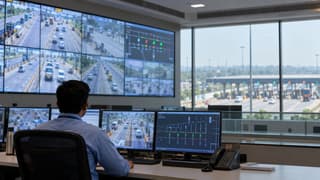
Montra Electric has partnered with MobiLane Network to connect its commercial electric vehicles with more than 120 DC charging points across 40 cities and nine states, according to reports published on 8 Oct 2026. The OCPI-based integration is intended to let eligible users find participating stations, check live availability, authorise charging sessions and manage payments through a connected network.
For fleet operators, the announcement addresses a practical problem: an electric vehicle can be ready for work while the charging information needed to plan its next trip remains split across different apps, networks or site operators. The partnership may make charging stops easier to plan, but it does not mean every Montra vehicle can use every charger or that every route now has guaranteed uptime.
Key takeaways
- Montra Electric commercial EV users will get access to MobiLane’s network of more than 120 DC charging points across 40 cities and nine states, subject to participation and eligibility.
- The integration uses the Open Charge Point Interface, or OCPI, to support station discovery, real-time availability, charging authorisation and session management.
- The partnership is an access and interoperability update, not a new Montra vehicle launch or a published promise of lower charging costs.
- Fleet operators still need to verify connector compatibility, charger power, tariffs, site access, payment setup and a backup charging point before assigning a route.
What the Montra–MobiLane partnership changes
Autocar Professional and The Battery Magazine reported that MobiLane will connect its charging infrastructure with Montra Electric’s commercial EV ecosystem. The reported footprint is more than 120 DC charging points spread across 40 cities and nine states. MobiLane is operated by EVamp Technologies, while Montra Electric is the commercial EV brand of the Murugappa Group’s mobility business.
The important part is the network integration rather than the raw count of sites. Through the Open Charge Point Interface protocol, a compatible platform can share information between the vehicle ecosystem and charging network. In the reported use case, eligible Montra drivers and fleet teams can discover stations, see whether a charger is available, authorise a session and manage the charging process at participating MobiLane locations.
That can reduce one layer of friction for a driver who has to keep moving between a vehicle system, a charger application and a payment workflow. It does not remove the physical limits of a charging site. A station may be occupied, unavailable, unsuitable for a vehicle’s connector or outside the operator’s permitted access arrangement.
Why interoperability matters to commercial fleets
Commercial EV economics depend on utilisation. A delivery vehicle, passenger carrier or small goods carrier earns from the work it completes, so a charging stop has to be planned around route distance, loading windows, driver time and the next available job. A network integration cannot by itself prove that a route will be profitable, but it can give a fleet team more information before the vehicle leaves its depot.
The useful change for a fleet manager is the ability to see charging as part of a route plan rather than as a separate emergency task. If station status, session authorisation and payment records are visible in one connected workflow, dispatch teams can build a more consistent operating routine. The actual benefit will depend on how widely the integration works, how current the availability data is and whether the network’s sites are placed where commercial vehicles need them.
Operators planning an electric route can compare available stations through FuelPrice’s state-wise EV charging directory. The directory is a planning aid, not a guarantee that a specific third-party charger is available at the moment of travel.
For a route with mixed vehicle types, use the road-trip planner to map distance and stops, then confirm the charging plan with the vehicle and network operator. A diesel baseline can be checked separately through the fuel cost calculator using the fleet’s actual mileage and local fuel rate.
What the announcement does not establish
The reports do not publish a single tariff for all MobiLane locations, a guaranteed uptime level, a universal charging speed or a list showing that every Montra commercial EV is accepted at every point. Those details matter more to a fleet than the headline size of the network.
There is also a difference between network access and route coverage. More than 120 points across 40 cities and nine states can improve choice for eligible users, but the relevant question for an operator is whether a suitable station is available on the vehicle’s actual corridor, at the required time and with the right connector and power output. A route that works for a city delivery cycle may still need a different plan for intercity movement.
Checks before relying on a charging route
- Confirm that the vehicle variant, connector and required charging power are supported at the planned MobiLane location.
- Check the live station status shortly before dispatch and keep an alternative point or depot charge in the route plan.
- Verify the current tariff, taxes, parking rules, session limits and payment method; the partnership announcement does not set one common price.
- Ask whether the driver or fleet account needs a separate activation, consent or onboarding step before the first session.
- Compare the charging stop with the vehicle’s expected load, route distance and turnaround time rather than treating a network listing as a guaranteed service level.
What to watch next
MobiLane and Montra Electric are expected to take the collaboration to more locations and capabilities as their networks expand, according to the reported partnership coverage. The next useful evidence will be operational: how many participating sites are visible to users, how quickly status data updates, how disputes and failed sessions are handled, and whether commercial fleets can use the network consistently across city and highway work.
For EV buyers and operators, the partnership also highlights why charging access is becoming a product consideration. Vehicle range still matters, but route confidence depends on charger density, interoperability, uptime, payment simplicity and service support. A network integration can improve the user journey only when those pieces work together on the routes that generate revenue or daily mobility.
Reader takeaway
Montra Electric’s MobiLane tie-up is a meaningful charging-access development for eligible commercial EV users because it links vehicle operations with a wider DC charging network. The headline footprint is useful context; the purchase or fleet decision still depends on local coverage, compatibility, live availability, tariff and a realistic backup plan.
Sources
- Autocar Professional — Montra Electric and MobiLane Partner to Expand E-CV Charging Network — 8 Oct 2026
- The Battery Magazine — MobiLane Partners With Montra Electric to Expand EV Charging Access — 8 Oct 2026
- Montra Electric — Commercial electric mobility overview — accessed 8 Oct 2026
- MobiLane — Official charging network and coverage page — accessed 8 Oct 2026