Automated tolling structures have been installed at the Nemili and Chennasamudram fee plazas on Tamil Nadu's NH-48, and the two locations are expected to move towards booth-free Multi-Lane Free Flow (MLFF) collection. The Times of India reported on 4 Oct 2026 that NHAI's system will read number plates or FASTags and deduct the fee automatically; drivers should still keep a functional tag and enough balance.
Key takeaways
- Current reporting says automated MLFF structures are in place at Nemili near Sriperumbudur and Chennasamudram near Walajah on NH-48.
- The development changes how the toll is collected, not whether the road user fee applies.
- ANPR cameras and FASTag/RFID equipment are designed to identify vehicles as they pass without a staffed booth or boom barrier.
- A driver with an inactive tag, an incorrect vehicle match or insufficient balance may face an electronic notice or challan.
- The current report does not announce a final go-live date or a new toll tariff for either plaza.
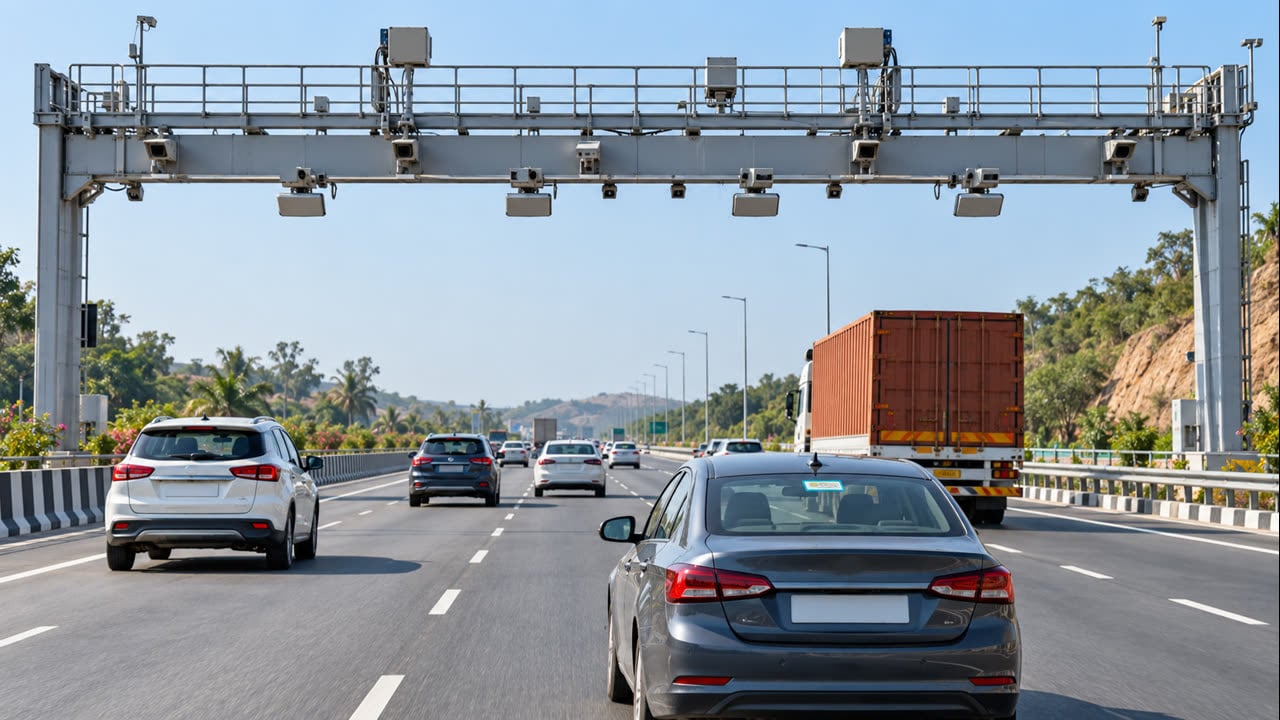
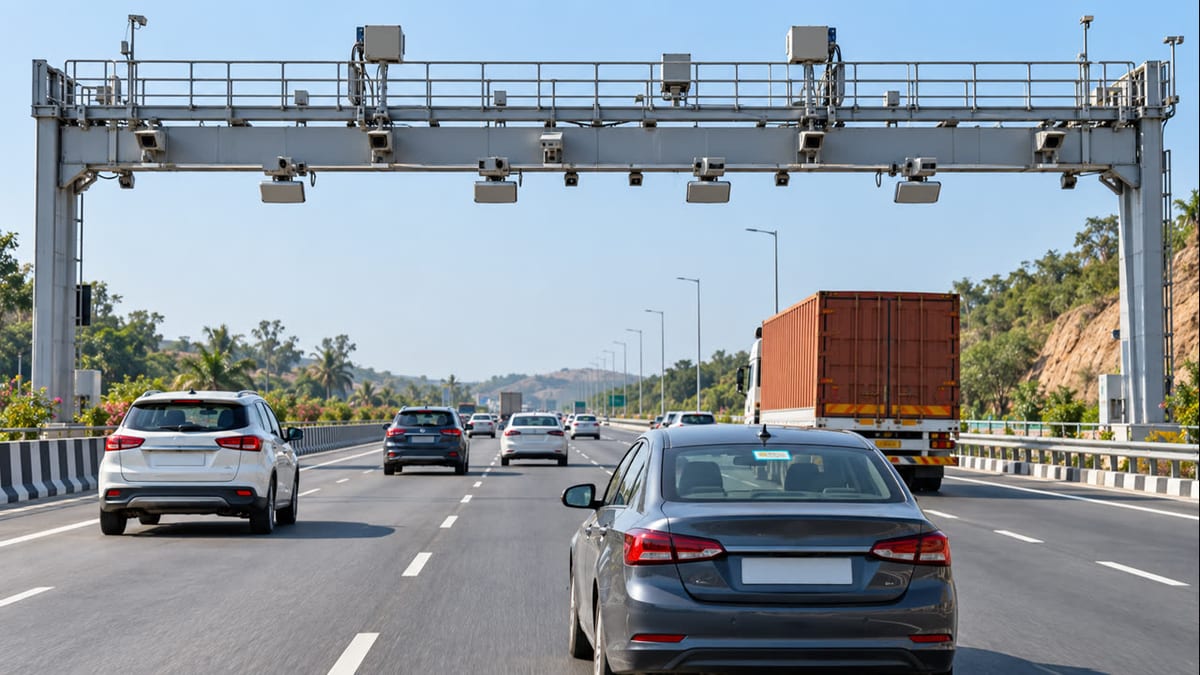 Illustrative barrier-free MLFF gantry; this is not a photograph of Nemili or Chennasamudram. Credit: AI-generated editorial illustration.
What has changed at the two plazas
The immediate update concerns the physical and digital tolling equipment. The Times of India reported on 4 Oct 2026 that NHAI had installed automated structures at the Nemili toll plaza near Sriperumbudur and the Chennasamudram plaza near Walajah. The report said the system will use multiple cameras to scan number plates or FASTags and deduct the applicable fee automatically.
The report is relevant to drivers travelling on the Chennai-Bengaluru corridor, including journeys towards Vellore, Krishnagiri and Bengaluru. It also described the two plazas as locations where queues and payment delays have been an issue. That means the likely benefit is a shorter stopping process; it does not mean every journey on the corridor will be free of congestion or road-work delays.
The wording matters because the current update does not say that both plazas are already live under the new collection mode. The New Indian Express had reported in September that NHAI had installed MLFF equipment near Paranur, Nemili and Chennasamudram and begun trials. It said the barriers would be removed after vehicle-registration and category data were linked and the trials were completed. Drivers should therefore treat the October report as a readiness and rollout update until an official go-live notice or on-road signage confirms the operating change.
How booth-free MLFF tolling works
Under conventional FASTag collection, a vehicle slows down at a toll lane, the RFID reader reads the tag and the barrier lifts after the fee is deducted. MLFF moves the reading equipment onto overhead gantries and uses a combination of FASTag/RFID and Automatic Number Plate Recognition (ANPR) cameras to match the passing vehicle with its toll transaction.
The Ministry of Road Transport and Highways described the same model in its 1 Oct 2026 release on Tamil Nadu's first barrierless MLFF rollout at Paranur. The official explanation says vehicles can pass without stopping and that users should maintain a functional FASTag with sufficient balance to avoid an electronic notice. The technology can remove the physical queue, but it does not remove the obligation to pay the user fee.
For a driver, that is the key practical difference between booth-free and toll-free. The vehicle may not have to stop at Nemili or Chennasamudram once the new system is operational, but the transaction still needs to be identified and settled. If the tag cannot be read or the balance is inadequate, the vehicle may be matched through its registration number and the unpaid amount can become an electronic notice or challan.
What drivers and fleet operators should check
- Keep the FASTag active. Check the tag status before entering the corridor, especially if the vehicle has recently changed ownership, windshield or issuing bank.
- Maintain enough balance. A booth-free lane gives the driver no convenient point to stop and resolve a failed deduction. The official MLFF guidance specifically links sufficient balance with avoiding an electronic notice.
- Check the vehicle match. Registration details, vehicle category and the FASTag account should correspond. This matters for fleets because a wrong category can affect the fee or create a dispute.
- Read the transaction alert. Save the issuer's SMS or app entry after the crossing and compare it with the trip log if the vehicle is used for business.
- Do not assume the route is free. Until a formal fee notice says otherwise, budget for the existing toll and verify any revised information at the plaza or through an official NHAI channel.
What it means for the trip budget
The most direct benefit could be less idling at the toll point. A vehicle that spends less time in a queue may use less fuel than it would in stop-start traffic, but the actual effect depends on traffic, approach-road conditions, vehicle type and the length of any remaining bottleneck. It is not a guaranteed rupee saving for every trip.
The toll charge calculator can help keep the user fee in the route budget because the MLFF rollout does not announce a waiver. For the fuel side, the fuel cost calculator can compare the journey's fuel estimate using the vehicle's mileage and current local price.
Drivers planning a longer Chennai-Bengaluru journey can also use the road-trip planner to review the route, stops and timing. These tools are estimates; they do not replace a current FASTag balance check, transaction alert or traffic advisory.
What to watch next
The next useful confirmation is a formal operating notice for Nemili and Chennasamudram: when the barriers are removed, whether every lane is covered, how e-notices are delivered and which dispute channel handles a misread number plate or incorrect deduction. The sources reviewed for this report establish the equipment and the intended MLFF model, but they do not publish a separate new fee schedule for either plaza.
The Times of India's latest report also points to unfinished corridor and plaza work around the two locations. Even after booth queues reduce, lane markings, road surface, merging traffic and construction can still determine the total journey time. The safe takeaway is to prepare for automatic toll collection while continuing to allow for ordinary highway conditions until NHAI confirms that the new arrangement is fully operational.
Will the toll become free?
No. MLFF is a collection method, not a toll exemption. The fee should still be deducted or otherwise recovered under the applicable rules; the change is that the vehicle can pass beneath the gantry without stopping at a physical booth.
Sources
- The Times of India — Nemili, Walajah tolls to soon go booth-free — 4 Oct 2026
- The New Indian Express — Three toll plazas in TN to go barrier-free from October — 7 Sep 2026
- Press Information Bureau, Ministry of Road Transport and Highways — NHAI Rolls out Tamil Nadu's First Barrierless Multi-Lane Free Flow Tolling System — 1 Oct 2026
- Rajya Sabha annexure — MLFF fee-plaza implementation list including Nemili and Chennasamudram — 17 Dec 2025