The Supreme Court on 20 Nov 2026 dismissed Karnataka’s appeal against a Karnataka High Court ruling that had set aside a blanket ban on bike taxis. The decision leaves the service legally open in the state, but it does not itself create an automatic licence: vehicles, drivers and aggregators still have to meet registration, permit and operating conditions.
Key takeaways
- The Supreme Court dismissed the Karnataka government’s appeal against the High Court’s 23 Jan 2026 bike-taxi ruling.
- The outcome applies to Karnataka; it is not a nationwide permission for motorcycle taxis.
- The High Court said a motorcycle could be registered as a transport vehicle and used as a contract carriage, while authorities could impose lawful conditions.
- Karnataka can still decide how permits, safety requirements, aggregator licences and other operating conditions will be implemented.
- Commuters should not assume that every bike-taxi service is immediately available or that the ruling fixes fares.
What the Supreme Court decision means
Reports by Bar & Bench and LiveLaw on 20 Nov said a bench of Justices Satish Chandra Sharma and N Kotiswar Singh dismissed the state’s challenge to the Karnataka High Court’s decision. The Supreme Court’s move leaves the High Court’s directions in place, subject to any detailed reasoning or directions in the written order.
That distinction matters for riders and drivers. The ruling removes the immediate basis for restoring a blanket ban, but it is not the same as giving every motorcycle an unconditional right to carry passengers for payment. The practical rollout still depends on vehicle registration, commercial permits, aggregator permissions and conditions imposed by the competent transport authorities.
What the Karnataka High Court had held
The legal foundation is the Karnataka High Court’s 23 Jan 2026 judgment in the connected bike-taxi appeals. The court held that motorcycles can fall within the Motor Vehicles Act framework for transport vehicles and contract carriages. It also said a blanket refusal to issue contract-carriage permits merely because the vehicle is a motorcycle is not a reasonable restriction.
The same judgment preserved a regulatory role for the state. It said transport authorities could examine individual applications, impose conditions attached to permits under Section 74(2) of the Motor Vehicles Act, and consider pending or fresh applications from aggregators. In other words, the court rejected a category-wide prohibition while leaving room for safety, paperwork and operational controls.
What changes now—and what does not
For commuters
Bike-taxi availability may improve in Bengaluru and elsewhere in Karnataka as operators and vehicle owners pursue the approvals required by the judgment. Availability, fares and service coverage can still vary by city, platform and permit status. The ruling does not set a fare, guarantee a particular app’s service or make every ride legal without further compliance.
For riders and vehicle owners
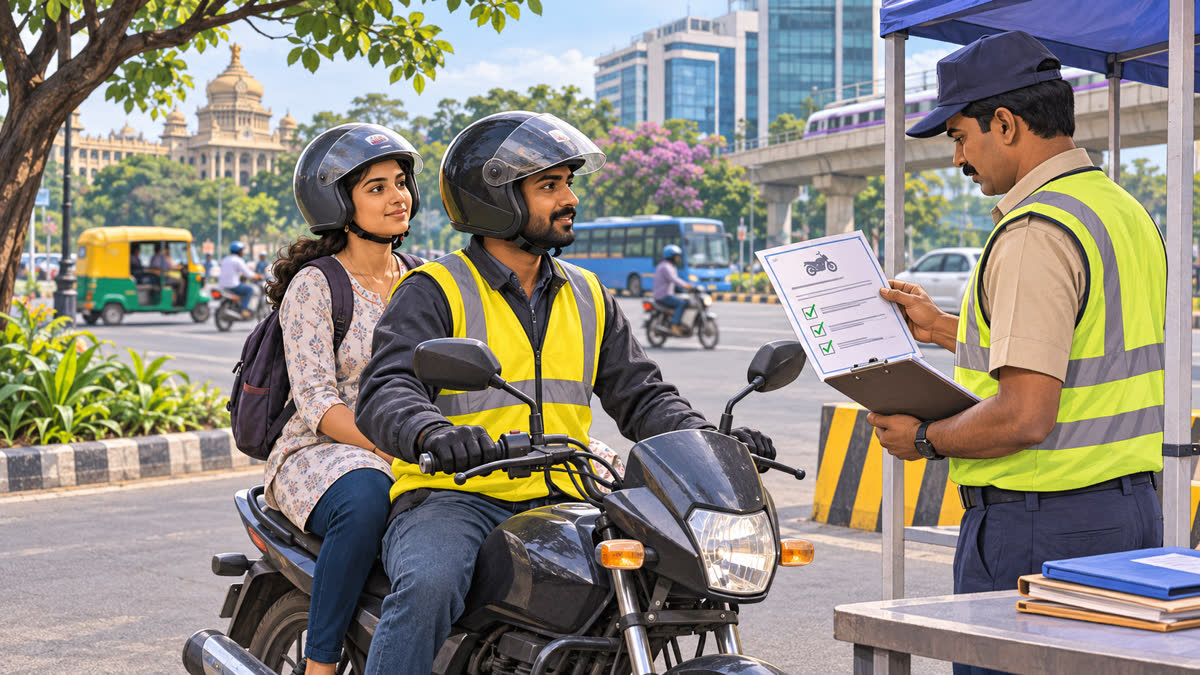
A private motorcycle should not be treated as a commercial passenger vehicle simply because the Supreme Court dismissed the appeal. Owners who want to operate for hire still need the applicable transport-vehicle registration, contract-carriage permit and other requirements. Karnataka’s transport minister said on 20 Nov that officials would work on rules and were considering safeguards such as GPS devices and insurance; those details were reported as under consideration, not as a final statewide code.
For aggregators and the state
Ola, Uber, Rapido and other operators may continue seeking licences and permits under the High Court framework, but the state transport machinery still has to process applications and set workable conditions. The next operational test will be whether approvals are issued consistently and whether the rules cover passenger protection, driver identification, vehicle checks, insurance and grievance handling.
What commuters should check before booking
The court outcome is useful clarity, but a careful check remains important while Karnataka works through implementation:
- Confirm that the service is shown as available in your city and that the booking is made through the platform’s official app.
- Check the vehicle and driver details displayed in the booking, along with helmet and passenger-safety requirements.
- Look for the fare, cancellation terms and any passenger-protection information before accepting the ride; the judgment does not standardise these items.
- If a service is unavailable, do not infer that the court has ordered an immediate launch. Permit processing and state conditions can affect the date on which operations resume.
For a private two-wheeler owner comparing the fuel cost of a short trip with the price of a paid last-mile ride, the fuel cost calculator can estimate the fuel side from distance and mileage.
Current petrol rates can be checked through the petrol price directory for Indian cities; actual ride fares remain platform-specific.
How the dispute reached the Supreme Court
The dispute began with a Karnataka High Court single-judge order in April 2025 that restricted bike-taxi operations until the state framed relevant rules and guidelines. A Division Bench set that order aside on 23 Jan 2026 and directed authorities to consider motorcycle registration and permit applications under the law. Karnataka then approached the Supreme Court, seeking to restore the earlier restriction. The Supreme Court’s dismissal on 20 Nov 2026 leaves the Division Bench position operative.
The decision arrives alongside wider debate about how states should regulate app-based two-wheeler mobility. FuelPrice’s earlier report on calls for states to allow private bikes under the 2025 rules covers the separate policy discussion; the Supreme Court case is a distinct judicial development involving Karnataka.
What to watch next
The immediate watchpoints are the written Supreme Court order, Karnataka’s final operating conditions and the transport authorities’ treatment of pending applications. A clear process for yellow-board or other commercial registration, permit issuance, insurance, safety equipment and complaints would determine whether the ruling translates into reliable service for passengers rather than only a legal opening.
For now, the reader takeaway is simple: the Supreme Court has stopped Karnataka’s blanket-ban challenge from taking effect, but bike taxis remain subject to valid permits and state regulation. Commuters may see services return progressively, while drivers and platforms still have compliance work before treating the decision as a full operating licence.
Sources
- Bar & Bench — Supreme Court allows bike taxis in Karnataka, rejects State’s appeal to restore ban — 20 Nov 2026
- LiveLaw — Supreme Court Dismisses Karnataka Govt Plea To Restore Ban On Bike Taxis, Says Better To Regulate — 20 Nov 2026
- The Times of India — Bike taxis to return as SC bins Karnataka plea against HC order — 21 Nov 2026
- Karnataka High Court — ANI Technologies v. State of Karnataka, connected writ appeals judgment — 23 Jan 2026
- Moneycontrol — Karnataka to frame bike taxi rules; GPS devices, insurance, other safeguards under consideration, says minister — 20 Nov 2026