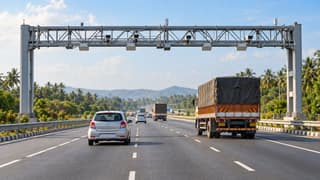
National Highways Authority of India (NHAI) and Telangana road agencies are preparing a proposed stray-cattle control system for highways around the former Nalgonda district, with animal tags, marked risk stretches and possible owner penalties. For drivers, the immediate message is practical: this is not a new toll or blanket traffic restriction, but a safety measure aimed at reducing sudden cattle crossings on NH-65 and connected high-speed roads.
Construction World reported on 5 Oct 2026 that the proposed plan would link cattle found on highways to their owners through special tags, mark stretches where animals are frequently seen and move cattle to shelters. The report says the work is being prepared with central and state road departments; the measures should therefore be read as proposed until Telangana authorities publish local implementation orders.
Key takeaways
- The reported plan covers highway stretches around the former Nalgonda district, including the NH-65 corridor through Choutuppal, Narketpally, Nakrekal, Suryapet and Kodad.
- Special tags are proposed to help trace owners when cattle are found on a highway; applicable fees, fines or penalties may then be recovered under relevant cattle-trespass rules.
- Highway agencies would identify and mark risk stretches, arrange safe removal and transport to shelters, while state and local authorities handle shelter facilities and owner records.
- The national highway emergency helpline 1033 can be used to report stray animals or other highway emergencies; PIB material says it operates around the clock.
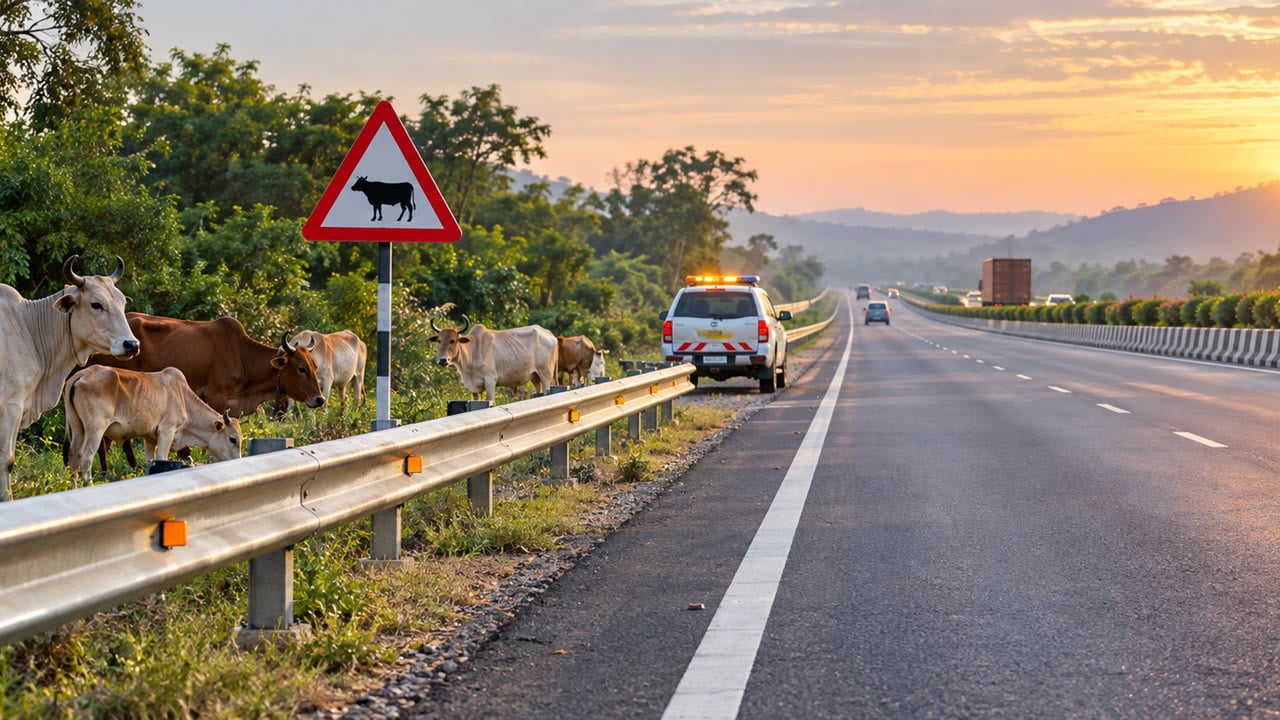
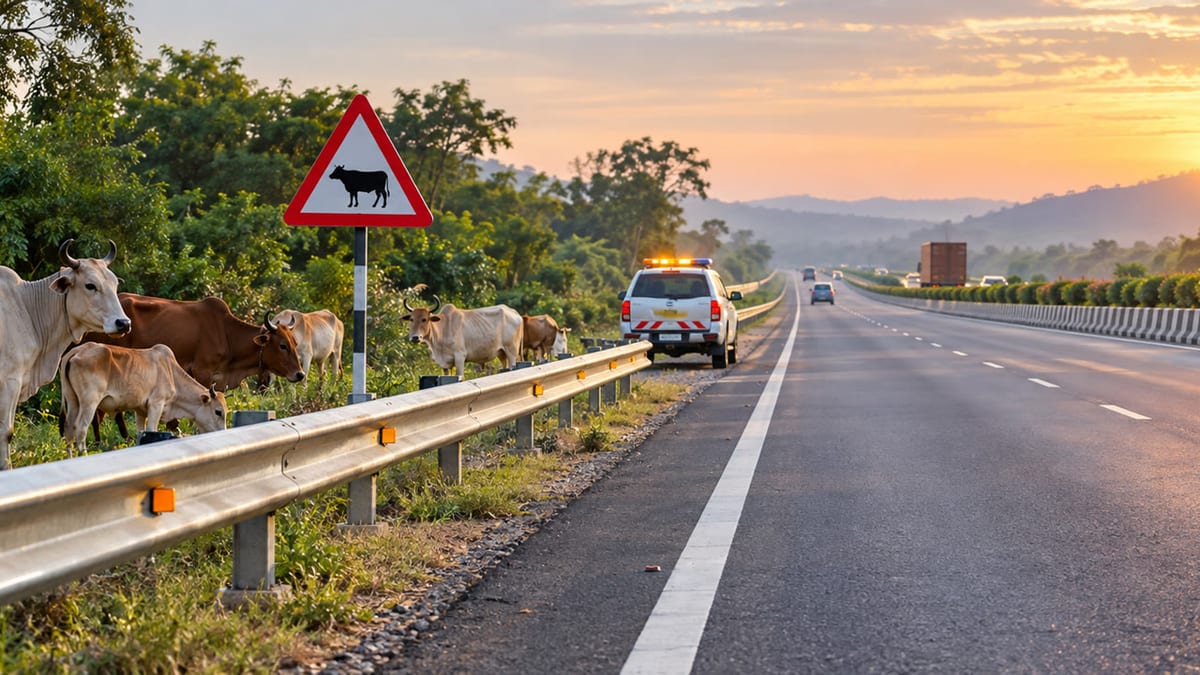 Illustrative image of highway animal-safety management; generated for this report and not a photograph of the reported Telangana stretches.
What the Telangana plan would change
The fresh report is about a local response to a wider highway-safety problem. It says NHAI, central departments and Telangana road agencies are preparing measures for stretches in the former Nalgonda district where cattle movement has been reported frequently. The proposed approach combines three steps: identify the animal, identify the risky road section and create a process for removal.
The tagging proposal matters because it shifts the response from simply clearing an animal from the carriageway to tracing who is responsible for leaving it there. Construction World reported that owners could face penalties and that cattle would be taken to shelters maintained by state or local authorities. The report did not specify a final tag design, a penalty amount or a start date.
The plan is consistent with the Ministry of Road Transport and Highways’ national standard operating procedure listing for the safe removal of stray cattle and other animals from National Highways and expressways. The national framework assigns removal and transport to highway agencies, while state, district and local authorities identify and maintain shelters and keep cattle-pound records. That division is important: a proposed warning sign or patrol on a highway does not by itself confirm that every local shelter or owner-tracing process is already operational.
What drivers should expect
On the reported NH-65 stretches and connected roads, motorists may see more animal-warning signs, patrol activity or short controlled movements when cattle are being removed. The 5 Oct report does not announce a new speed limit, toll charge or route closure. It also does not say that every road in Telangana will immediately receive the same treatment.
Drivers should treat a marked cattle-prone stretch as a reason to reduce speed and leave more braking distance, especially near medians, settlements, service-road openings and dawn or night-time conditions. If an animal enters the carriageway, avoid a sudden swerve into another lane; slow down when safe, use hazard lights only when appropriate and follow instructions from highway patrol staff. These simple checks matter because a high-speed evasive move can create a second collision even when the original hazard is avoided.
If a stray animal is obstructing the road or has caused a crash risk, call 1033 first. The NHAI toll-charge and trip-cost tool can help with planning only after the immediate hazard is reported. A July 2026 PIB release on NHAI operations in Andhra Pradesh says the helpline runs 24x7 and can be used to report stray animals and other highway emergencies. Save the number before a long journey, but do not stop in a live lane to make the call.
Why the national SOP matters
The Telangana proposal follows a national policy and legal backdrop. MoRTH has listed a standard operating procedure for safe removal from National Highways and expressways, while the Supreme Court’s directions require authorities to identify stretches where stray animals are frequently found, arrange removal to designated shelters, maintain patrols and display helpline numbers. The court directions also separate highway-agency duties from state and local responsibilities for shelters and records.
Times of India reported in September that the SOP allows owner-tracing and recovery of applicable fees, fines and penalties under relevant cattle-trespass legislation, including the Cattle-Trespass Act, 1871. This is why the word “proposed” matters in the Telangana story: the national framework exists, but the operational details for each district—such as tags, patrol schedules, shelters, signage and enforcement—still need to be communicated by the responsible authorities.
For trip planning, the effect is more likely to be on caution and travel time than on a direct rupee charge. A short slowdown near a marked hazard can add minutes; a temporary control or diversion could change fuel use and toll exposure. Before leaving, drivers can use the road-trip planner to review the corridor and the fuel cost calculator to estimate the trip budget. Those tools cannot replace a live highway instruction, so check signs and patrol directions on the road.
What to watch next
The next useful update will be a district or state order that names the stretches covered, the authority responsible for animal removal, the shelters that will receive cattle and the process for tracing owners. Motorists should also watch for new warning signs and any public notice explaining how 1033 reports are routed.
Until those details are published, the safest reading is that Telangana is preparing a targeted road-safety response, not imposing a new charge on drivers. Livestock owners and local authorities will carry much of the compliance burden; highway users should respond by slowing down at marked risk areas, avoiding abrupt manoeuvres and reporting obstructions promptly.
Sources
- Construction World — NHAI Plans Measures to Curb Stray Cattle on Highways — 5 Oct 2026
- Ministry of Road Transport and Highways — Standard Operating Procedure (SoP) for Safe Removal of Stray Cattle and Other Animals from National Highways/Expressways — 15 Sep 2026
- The Times of India — Owners face penalties as govt moves to curb stray cattle on highways, e-ways — 17 Sep 2026
- Press Information Bureau — NHAI Intensifies Measures to Prevent Accidents Caused by Stray Animals on National Highways — 28 Jul 2026
- Supreme Court of India — 2026 INSC 506, directions on removal of stray cattle and animals from highways — 19 May 2026