The National Highways Authority of India (NHAI) has issued guidelines for upgrading and monitoring toilets and designated parking areas at National Highway toll plazas. The 23 Oct 2026 framework matters to drivers because it sets service standards for safer stops, accessible facilities and a new QR-linked route for reporting problems, without announcing any change to toll rates.
Key takeaways
- Covered toll plazas must provide cleaner, better-maintained toilet facilities and at least one universally accessible toilet unit.
- Lighting, CCTV coverage, sanitary napkin vending machines, visible amenity signs and designated parking are part of the upgrade plan.
- QR codes linked to the Rajmargyatra app and on-site touchscreens will let highway users submit feedback and complaints.
- Smart monitoring is intended to track water, sewage, electricity, leakages, odour and toilet occupancy through NHAI’s central platform.
- The PIB release does not state one nationwide completion date, so the changes should be read as standards to be implemented rather than proof that every plaza already complies.
What NHAI’s new toll-plaza guidelines cover
The Ministry of Road Transport and Highways said in its 23 Oct PIB release that NHAI’s guidelines cover the upgradation, maintenance and smart monitoring of public toilets and designated parking areas at toll plazas. The document focuses on cleanliness, safety, accessibility, round-the-clock service and accountability for the agencies responsible for upkeep.
Toilets will be assessed before repair work
Existing toilet blocks are to undergo a technical assessment before rehabilitation. The listed upgrade areas include flooring, plumbing, sanitary fittings, lighting, ventilation, drainage and signage. Cleaning and housekeeping schedules are to be based on the size of a toilet block and the traffic it handles, which links maintenance frequency to actual highway use rather than a single blanket schedule.
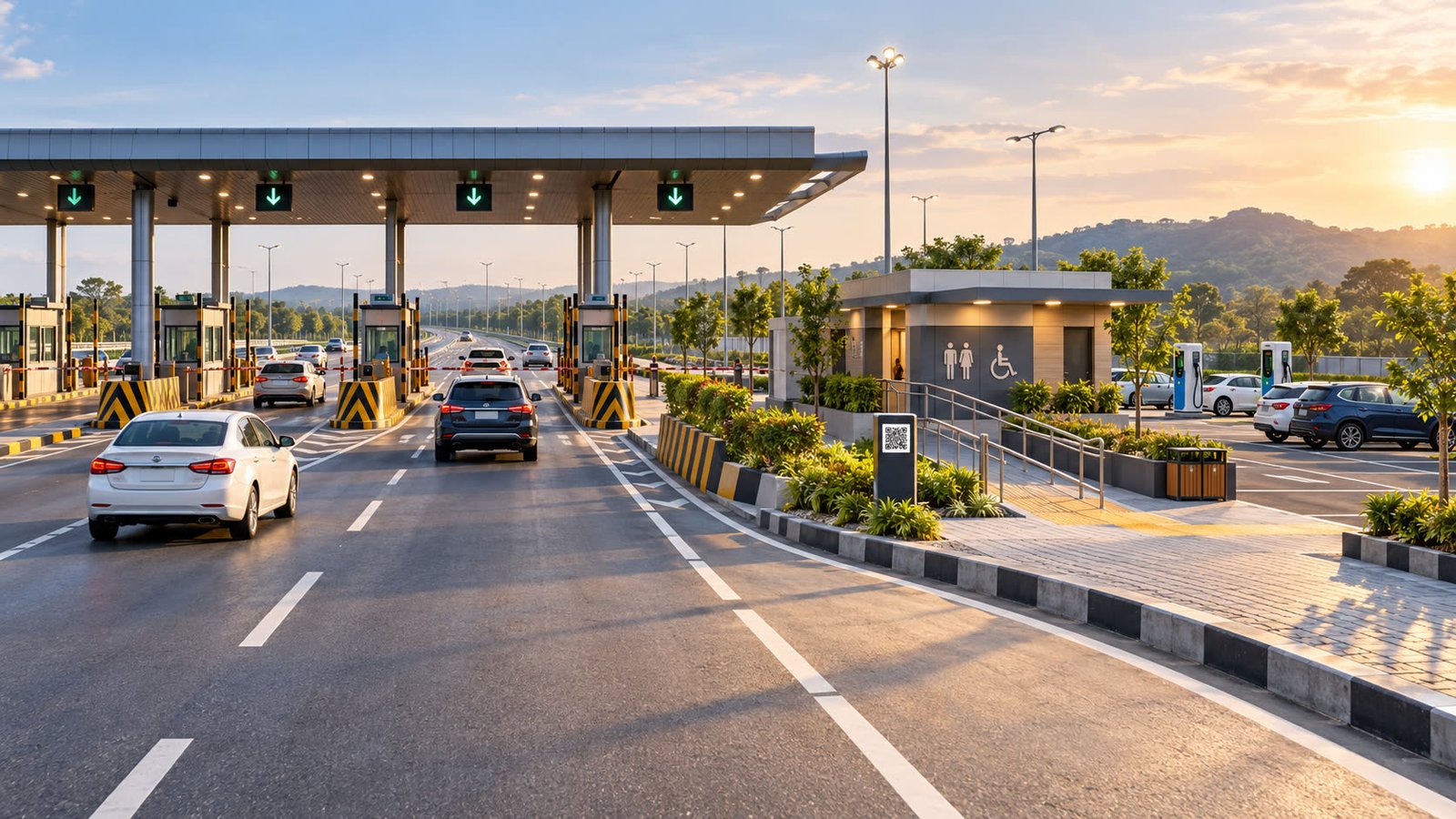
The guidelines also require at least one universally accessible toilet unit at each covered toll plaza. The facility is expected to have barrier-free access, suitable doorways and grab bars for people with disabilities. For families and women travelling at night, the framework includes better lighting, CCTV surveillance of approaches and parking areas, sanitary napkin vending machines and clear signs showing where amenities are available.
Parking and future EV charging are included
The parking part of the plan is easy to overlook, but it directly affects the quality of a highway break. NHAI’s standards call for designated parking bays and proper drainage. They also leave room for future electric-vehicle charging infrastructure, although the release does not announce a new nationwide charging network or a deadline for installing chargers.
Drivers planning a long journey can compare the route’s toll exposure in the toll charges and trip-cost calculator before leaving, then use the planned amenity upgrades as a service-quality checkpoint rather than treating them as a change in the fee itself.
How smart monitoring and complaints are supposed to work
The proposed monitoring layer is designed to turn basic amenities into trackable services. It will monitor water availability, odour, sewage levels, leakages, electricity supply and toilet occupancy. Alerts for problems such as water shortages, sewage overflow and equipment failures are intended to help officials identify issues faster.
Data from these checks is to feed into NHAI’s central digital platform, where officials can view facility conditions, maintenance activity, complaints and agency performance. Highway users are expected to be able to share feedback through QR codes linked to the Rajmargyatra app and through touchscreens at toilet facilities. That creates a record of a complaint and its resolution instead of leaving a traveller with only an informal verbal report.
The release also mandates fully mechanised cleaning and desludging of septic tanks, soak pits and sewer lines. Manual entry into septic tanks, manholes and sewer lines is prohibited under the guidelines, making worker safety part of the same maintenance framework.
Inspections, penalties and what travellers should watch
NHAI has set out a layered inspection structure: daily supervision, weekly technical inspections, monthly joint reviews, quarterly audits and annual third-party assessments. Performance is to be judged through physical inspections, monitoring data and verified citizen feedback. The framework includes deadlines for fixing deficiencies and financial penalties when facilities are not maintained properly; agencies that repeatedly fail to meet standards may face further action.
For a driver, the practical test will be whether a plaza has a clean, usable toilet, safe lighting, orderly parking, clear amenity signage and a working way to report a problem. The rules do not promise that every stop will be upgraded immediately, and the PIB release does not give a single national go-live date. Travellers should therefore treat the QR feedback feature and improved facilities as rollout items to check on the ground.
Before a long drive, the road-trip planner can help organise breaks around the route. EV owners can also check the state-wise EV charging directory, because the NHAI release describes future charging provisions at parking areas but does not confirm that a charger is available at a particular plaza.
For the running-cost side of the same journey, the fuel cost calculator can be used separately from toll planning. Keeping those two costs distinct helps explain what the new NHAI guidelines do: they target the quality and accountability of highway stops, not the amount deducted from a FASTag.
The reader takeaway
NHAI’s initiative could make highway stops more predictable for families, women, older travellers, people with disabilities and commercial drivers who spend long hours on the road. Its value will depend on execution: timely repairs, visible standards, working feedback channels and follow-through on complaints. The next useful signal will be evidence that the inspection and monitoring system is operating at individual plazas, not merely that the guidelines have been issued.
Illustrative image: a representative toll-plaza amenities layout created for editorial use; it is not an official NHAI photograph.
Sources
- Press Information Bureau — “NHAI Issues Guidelines for Upgradation, Maintenance and Smart Monitoring of Toilet Facilities & Parking at National Highway Toll Plazas” — 23 Oct 2026
- DD News — “NHAI Issues Guidelines for Upgradation, Maintenance and Smart Monitoring of Toilet Facilities, Parking Areas at National Highway Toll Plazas” — 24 Oct 2026
- Indian Masterminds — “NHAI Issues New Guidelines for Toilet Facilities and Parking at National Highway Toll Plazas” — 23 Oct 2026