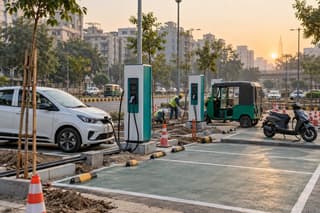
Odisha has extended the validity of its Electric Vehicle Policy, 2021 through 31 Dec 2026, according to reports citing a Commerce and Transport Department notification issued on Saturday, 3 Oct 2026. For eligible private and commercial EV buyers, the move keeps the state’s existing purchase-incentive and road-tax and registration-fee relief framework available into the final quarter of the year.
The extension matters because it avoids an immediate expiry of the state’s EV support framework, but it is a continuation rather than a reported new subsidy rate. OrissaPOST, in a PTI report published on 4 Oct, and OMMCOM News on 3 Oct both said the department had extended the policy under paragraph 11.5 of the 2021 policy.
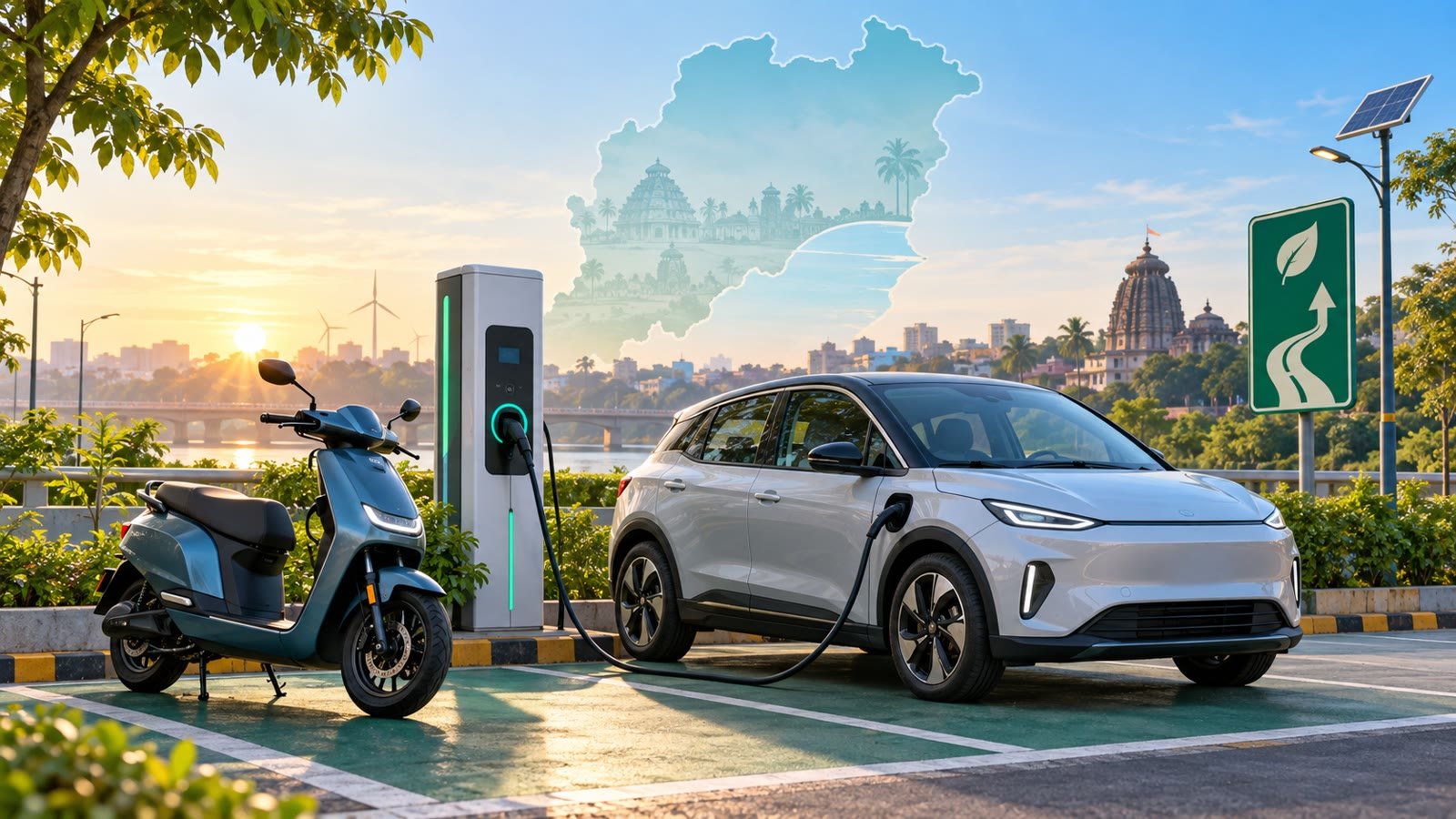
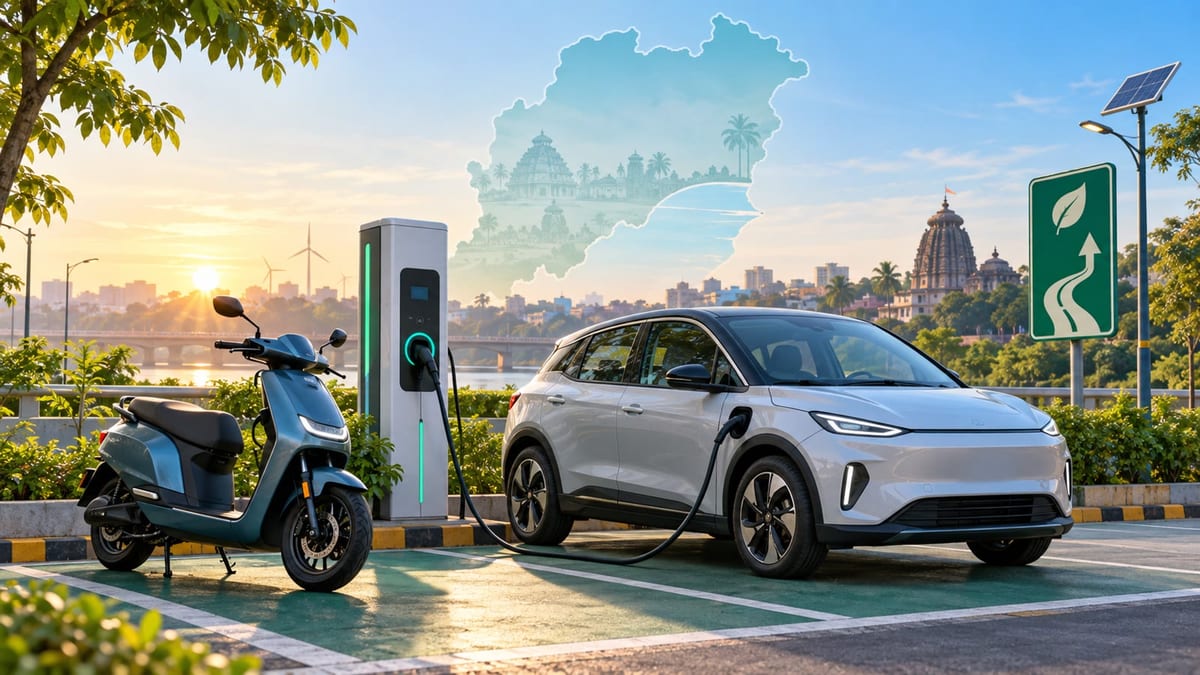 Illustrative EV charging scene representing Odisha’s electric-mobility policy. Credit: FuelPrice editorial illustration.
Key takeaways
- The Odisha Electric Vehicle Policy, 2021 is reported to remain valid until 31 Dec 2026.
- The amended purchase slabs list up to ₹20,000 for electric two-wheelers, ₹30,000 for three-wheelers and ₹1.5 lakh for four-wheelers.
- For two- and four-wheelers, the amended slabs are linked to battery capacity rather than being a flat amount for every vehicle.
- The government-hosted policy documents describe 100% exemption from motor vehicle tax and registration fees for battery-operated vehicles during the policy period.
What the extension changes
The 3 Oct notification is important for buyers who were planning an EV registration close to the earlier policy deadline. The government-hosted policy PDF shows that Odisha had already extended the policy to 30 Jun 2026 through a notification dated 31 Mar 2026. The latest extension, as reported by the two Odisha news outlets, carries that policy framework through 31 Dec 2026.
Neither report describes a fresh 2026 revision to the subsidy amounts or a new list of eligible models. That means buyers should read the extension as more time under the existing framework, not as an automatic increase in the benefit. Eligibility, vehicle registration in the state and the department’s processing requirements still matter.
Subsidy slabs buyers need to know
The official policy document hosted by the Odisha government records the amended purchase incentives notified on 26 Apr 2023. The revised rates for the main retail and three-wheeler segments are:
| Vehicle segment | Calculation in amended policy | Maximum subsidy |
|---|---|---|
| Electric two-wheeler | ₹5,000 per kWh of battery power | ₹20,000 |
| Electric three-wheeler | Flat amount per vehicle | ₹30,000 |
| Electric four-wheeler | ₹10,000 per kWh of battery power | ₹1.5 lakh |
The battery-linked formula is the practical detail to check on a quotation. For example, an eligible 8 kWh two-wheeler reaches the ₹20,000 cap on the stated formula, while an eligible 15 kWh four-wheeler reaches the ₹1.5 lakh cap. These are simple illustrations of the published rates, not guaranteed payouts for any particular model; the vehicle and its battery capacity must meet the state’s eligibility and registration requirements.
The amended policy also says the incentive applies during the policy period. The official transport-department implementation note says manufacturers must upload battery capacity and register eligible two- and four-wheeler models on the Odisha EV subsidy portal. That is why a model’s advertised battery size alone should not be treated as proof that the subsidy will be approved.
Road-tax and registration-fee relief
Odisha’s government-hosted policy notifications describe a 100% exemption from motor vehicle tax and registration fees for battery-operated vehicles during the policy period. The current extension reports also list these exemptions among the policy benefits. The relief affects the on-road calculation separately from the purchase subsidy, so a buyer should look for both items in the price and registration paperwork.
For a petrol-versus-EV comparison, the petrol-versus-EV running-cost guide helps separate the upfront policy benefit from the later energy cost. The Odisha extension does not, by itself, fix electricity tariffs, home-charging installation costs, public-charging prices or insurance premiums.
Who is affected
The immediate audience is a private buyer or owner of an eligible electric two-wheeler, three-wheeler or four-wheeler registering a vehicle in Odisha before the extended end date. The policy text also contains separate provisions for passenger buses and electric goods carriers, including purchase incentives and tax relief for specified categories. Fleet operators should treat those provisions separately from the retail-car slabs because the policy includes category conditions, caps and registration limits.
The extension is also relevant to drivers moving from petrol or diesel because it gives more time to compare the total on-road cost rather than only the showroom price. A buyer can use the fuel-cost calculator for a petrol or diesel baseline, then compare it with the EV’s electricity, charging and maintenance assumptions.
What buyers should check before paying
- Confirm that the exact EV model is registered on the Odisha subsidy portal and that the battery capacity used for the calculation matches the approved record.
- Ask for a written breakup showing the purchase subsidy, any road-tax or registration-fee treatment, and any separate manufacturer discount. These are different items.
- Check the registration workflow with the dealer and the relevant RTO, especially if the vehicle is being delivered close to 31 Dec 2026.
- For daily commuting or commercial use, check charging access and route length. The state-wise EV charging directory can help identify the infrastructure question before the running-cost comparison is finalised.
Why the 31 December date matters
Odisha’s 2021 policy set an adoption objective of 20% electric vehicles by the end of 2025. The same government-hosted document records that EV registrations had reached about 4.48% by the end of 2022, after which the state amended the purchase-incentive structure to use battery-linked slabs for two- and four-wheelers.
The extension gives buyers and the state administration more time under the current framework, but it does not announce what will replace it after 31 Dec 2026. That end date is therefore the next policy checkpoint. Buyers considering a longer wait can also use the road-trip planner to assess charging and route needs instead of treating the subsidy alone as the deciding number.
FAQ
Does the extension mean every EV gets the maximum subsidy?
No. The maximum is a cap under the amended slabs. Two- and four-wheeler support is calculated from eligible battery capacity, and the model must meet the state’s registration and portal requirements.
Is this a new Odisha EV policy?
No. The reported announcement extends the validity of the 2021 policy. It does not, in the sources reviewed for this update, announce a replacement policy or a higher retail subsidy.
Sources
- OrissaPOST (PTI), “Odisha extends validity of EV policy till December 31, 2026” — 4 Oct 2026
- OMMCOM News, “Odisha Extends Electric Vehicle Policy Till December 31, 2026” — 3 Oct 2026
- Government of Odisha, Commerce & Transport Department, “Odisha Electric Vehicle Policy, 2021” and extension/amendment notifications — 31 Mar 2026 document
- Odisha Motor Vehicle Department, “Grant of subsidy to EV purchaser under amended provision of Odisha EV Policy-2021” — 2023
This article is for general information only and is not financial, insurance or legal advice.