Paranur toll plaza on the Chennai–Tiruchi National Highway became Tamil Nadu’s first booth-free Multi-Lane Free Flow (MLFF) toll facility on the night of 30 Sep 2026. For motorists travelling from Chennai towards Chengalpattu and the southern districts, toll collection now happens through overhead FASTag, RFID and automatic number plate recognition equipment, allowing vehicles to pass the toll point without stopping; a valid tag and sufficient balance remain important.
Key takeaways
- Paranur is the first Tamil Nadu toll plaza to move from staffed booths and boom barriers to a booth-less MLFF setup.
- The fee is still collected: the change is in how the vehicle is identified and charged, not a waiver of toll.
- Vehicles with no valid FASTag or insufficient balance may be identified through their registration number and issued a challan.
- Nemili near Sriperumbudur and Chennasamudram near Walajah are the next Tamil Nadu plazas in the same rollout, but drivers should treat their go-live timing as separate from Paranur’s.
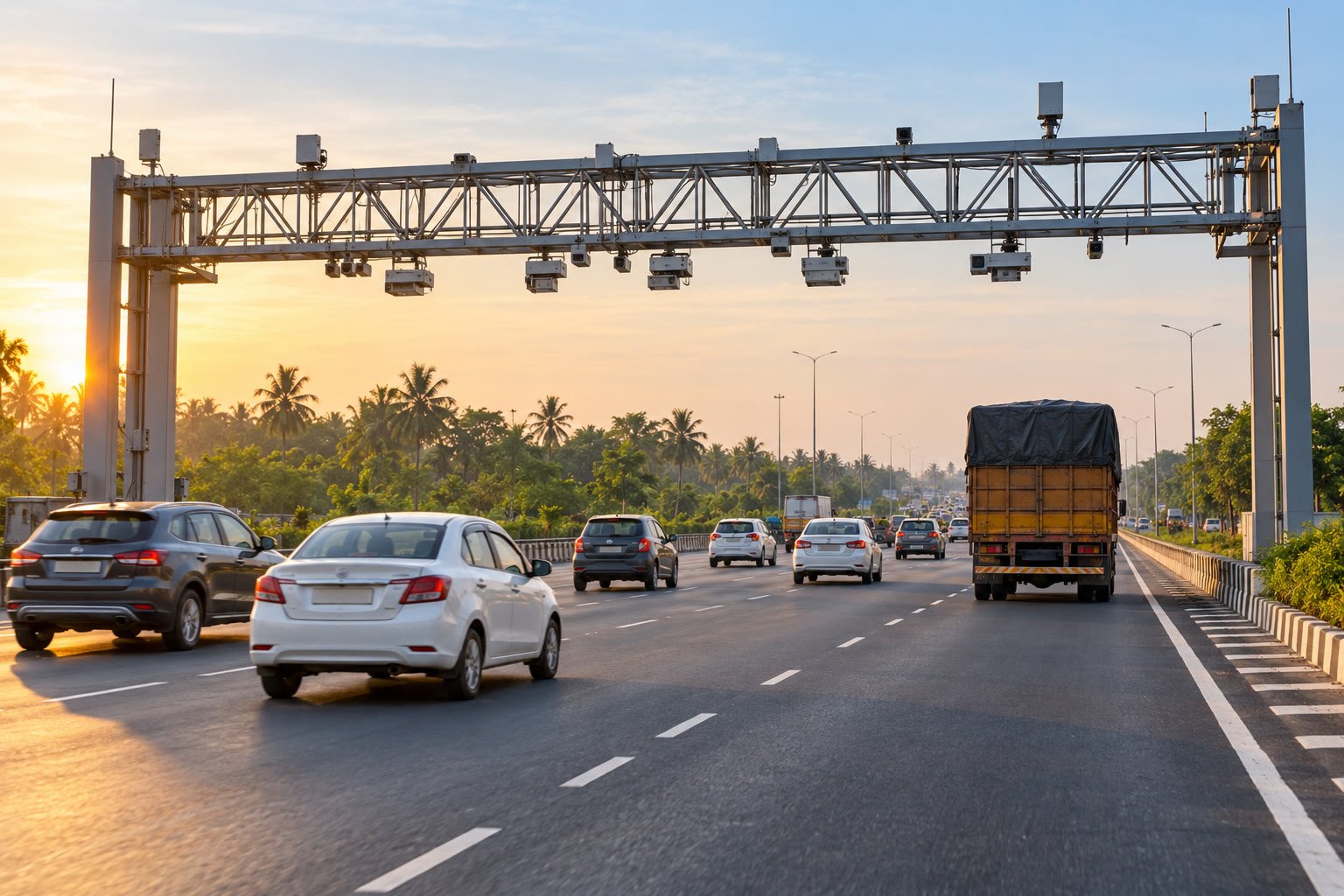
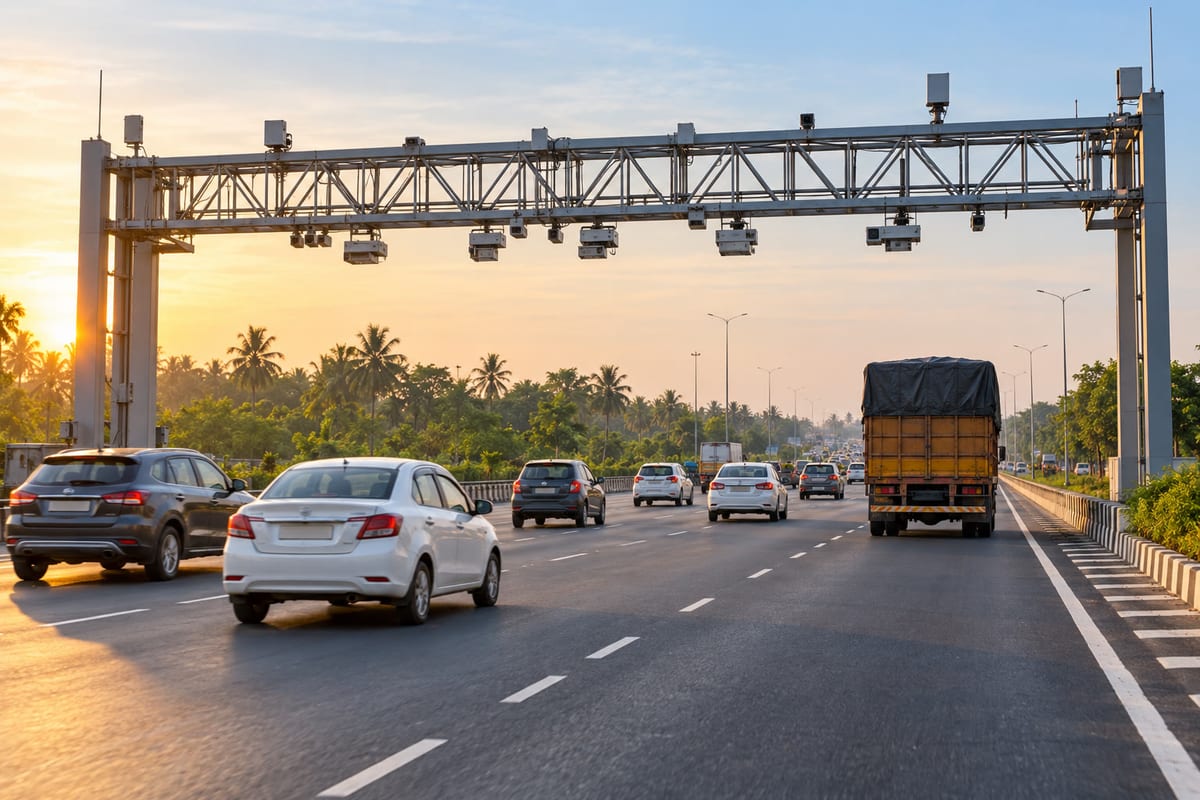 Representative illustration of an overhead MLFF tolling gantry; this is not a photograph of Paranur toll plaza. Credit: FuelPrice illustration.
What changed at Paranur
The Hindu reported on 1 Oct 2026 that the Paranur facility became operational from the night of 30 Sep. Instead of driving up to a manned booth, paying through the usual FASTag lane and waiting for a barrier to lift, a vehicle is read as it moves through the tolling point. The new arrangement is designed to remove the physical stop from the crossing.
The system does not make the route toll-free. It is a different collection method for the user fee. The Ministry of Road Transport and Highways said in a 22 Jul 2026 PIB release that the MLFF model uses existing FASTag radio-frequency identification together with ANPR and AI-based technology, so the fee can be charged without the vehicle having to stop, slow down or remain in a particular lane.
That distinction matters on a busy route. A shorter queue can reduce idling and the stop-start movement around a conventional plaza, but it does not remove the need to plan for the route’s toll charge. Drivers can use FuelPrice’s toll charge calculator to estimate the fee alongside the rest of the journey budget.
How the booth-less system works
At Paranur, overhead equipment reads the FASTag and the vehicle’s registration number while the vehicle passes. The Hindu reported that the gantries carry RFID readers, radar scanners, audit-surveillance cameras and FASTag-linked ANPR equipment. Exempt vehicles with eligible tags are also covered by the system.
For a vehicle with a working tag and adequate balance, the normal expectation is an automatic deduction followed by the usual transaction alert from the issuer. A vehicle without a tag, or with insufficient balance, is not treated as a free passage. The reported system can use the registration number to generate a challan, which is why a driver should not assume that the absence of a booth means payment can be deferred.
The July PIB explanation also helps separate this rollout from earlier discussion about satellite-based tolling. The Tamil Nadu installation is based on FASTag RFID plus ANPR and AI analytics at selected fee plazas. It is therefore a roadside, camera-and-tag collection system, not a nationwide satellite toll regime.
Where the Tamil Nadu rollout goes next
New Indian Express reported in September that NHAI had installed MLFF equipment and begun trials near three Tamil Nadu plazas: Paranur on the Chennai–Tiruchi corridor, Nemili near Sriperumbudur and Chennasamudram near Walajah on the Chennai–Bengaluru highway. The report said the barriers were expected to be removed after vehicle-registration and category data were linked and the trials were completed.
Paranur has now crossed that operational milestone. The reports on Nemili and Chennasamudram describe them as the next locations in the rollout, not as facilities that should automatically be treated as live at the same moment. Motorists using those corridors should follow the latest on-road instructions and transaction alerts until each plaza is formally operational.
The change is especially relevant before long weekends and the festive travel season, when the Chennai–Tiruchi and Chennai–Bengaluru corridors can see heavier traffic. NHAI told New Indian Express that it would assess toll collection, safety and travel-time outcomes after the launch before considering expansion to more plazas. That makes the first weeks a live test of both traffic flow and enforcement.
What drivers and fleets should check now
- Check that the FASTag is active. A tag that is not linked correctly or is not being read can create a problem when there is no booth at which to stop and resolve it.
- Keep sufficient balance. The reported Paranur process can issue a challan for a vehicle with insufficient balance, so the normal pre-trip balance check is more important on an MLFF route.
- Confirm the vehicle details. During the Tamil Nadu trials, NHAI officials said registration numbers had to be linked with vehicle categories to avoid confusion, including in cases where a truck was running with a car number.
- Save the transaction alert. Fleet operators should match toll deductions and any e-notice against the trip log. Private drivers should retain the message if the deduction appears incorrect.
- Use the official complaint channels for a dispute. The MoRTH release lists the National Highways helpline 1033, the FASTag issuer’s helpline and other NHAI grievance routes for user-fee issues.
For the fuel side of the same trip, the reduction in idling is a practical benefit rather than a guaranteed saving for every vehicle. Traffic, vehicle type and the length of any queue still determine actual consumption. The fuel cost calculator can help compare the route’s fuel estimate with its toll outlay, while the road-trip planner can be used to review the wider journey before departure.
The takeaway for Paranur users
Paranur’s booth-less launch is a concrete step in NHAI’s wider move from stop-and-pay toll points to camera-and-tag collection. For the driver, the routine is simple but less forgiving: keep the FASTag valid, keep enough balance, check that the vehicle details are correct and read the transaction alert after crossing. The promised time benefit comes from removing the physical barrier; the toll obligation and the need to resolve a mistaken charge remain.
Sources
- The Hindu — Tamil Nadu’s first booth-less toll system becomes operational at Paranur — 1 Oct 2026
- The New Indian Express — Three toll plazas in TN to go barrier-free from October — 7 Sep 2026
- Press Information Bureau, Ministry of Road Transport and Highways — FASTag Based Toll Collection and Digital Tolling System — 22 Jul 2026
- Tamil Oneindia — Tamil Nadu’s first barrier-free toll gate: Paranur MLFF system operational — 1 Oct 2026