Petrol and diesel prices remained unchanged across the major Indian cities tracked on 23 Nov 2026. Delhi petrol was ₹102.12 per litre and diesel ₹95.20 per litre, while Mumbai petrol was ₹111.21 per litre and diesel ₹97.83 per litre, keeping the immediate fill-up cost stable for drivers in those markets.
That stability does not mean the same rate applies across India. City taxes, local levies and outlet-level differences still affect the amount on the dispenser, so the useful check before a long drive is the rate for the place where you will refuel.
Key takeaways
- On 23 Nov 2026, Delhi petrol was ₹102.12 per litre and diesel was ₹95.20 per litre.
- Mumbai petrol was ₹111.21 per litre and diesel was ₹97.83 per litre on the same date.
- NDTV Profit, LiveMint and HDFC Sky reported no change across the major cities they listed.
- IndianOil says daily petrol and diesel price changes take effect at 6 am, and its indicative prices can vary by outlet.
Petrol and diesel rates on 23 Nov
The current reports show a steady day rather than a new nationwide cut or hike. NDTV Profit listed the Delhi and Mumbai rates above, while LiveMint separately reported that prices remained unchanged in several cities, including New Delhi, Mumbai, Kolkata and Chennai. HDFC Sky also reported zero change in the major cities it tracked.
| City | Petrol | Diesel | Status on 23 Nov 2026 |
|---|---|---|---|
| New Delhi | ₹102.12 per litre | ₹95.20 per litre | Unchanged |
| Mumbai | ₹111.21 per litre | ₹97.83 per litre | Unchanged |
These figures are reported retail rates for the date shown, not a promise that every pump in a city will display an identical amount. IndianOil’s official price page says its daily changes are effected at 6 am and that prices received for a particular location are indicative; it also notes that rates may vary from one outlet to another. Drivers can use the IndianOil price-check guidance and verify the amount shown at the dispenser.
What the city gap means for a trip
Mumbai petrol was ₹9.09 per litre higher than Delhi petrol on 23 Nov 2026, based on the two reported city rates. For a simple illustration, a 200-km trip in a petrol car averaging an assumed 15 km per litre would use about 13.33 litres. At Delhi’s reported price, that fuel would cost about ₹1,361.60; at Mumbai’s rate, it would cost about ₹1,482.80. The difference is about ₹121.20 for that example.
This is a calculation using the reported 23 Nov prices and an assumed mileage, not a mileage claim for any particular car or bike. Actual cost changes with traffic, load, driving style, route and the local pump rate. For a vehicle-specific estimate, enter your distance and efficiency in the fuel cost calculator.
What drivers and fleet operators should check
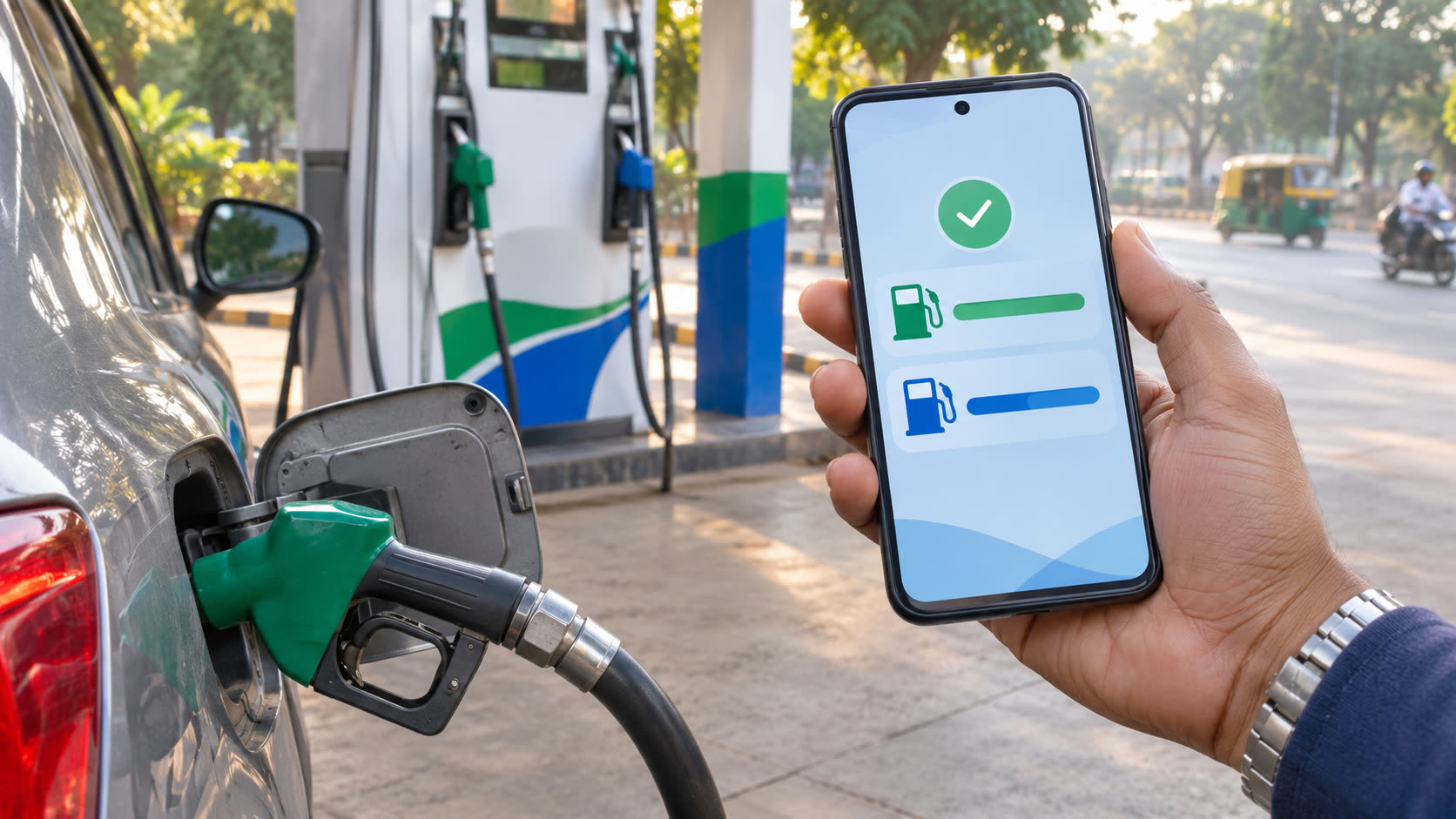
- Check the city or locality before refuelling, especially when a road trip crosses a state or large urban area. The live fuel prices page provides a starting point for that check.
- Confirm whether you are comparing petrol, diesel or another fuel, and read the price per litre shown at the pump before authorising a fill.
- For regular inter-city driving, compare the route’s likely refuelling points instead of using Delhi’s rate as a nationwide proxy. Petrol users can check petrol prices across Indian cities.
- Fleet managers should record the date, city and fuel type with each cost entry. Diesel-heavy operations can use the diesel price city hub alongside route consumption data.
What happens next
IndianOil’s guidance points to a daily 6 am pricing cycle, so one unchanged day should not be read as a long-term price freeze. NDTV Profit notes that retail fuel rates respond to global crude prices and currency movements, while local taxes help create differences between cities. The practical takeaway is simple: check the current local rate on the day of travel, then calculate the trip using the vehicle’s real-world consumption rather than relying on a headline rate.
For 23 Nov 2026, however, the verified picture is one of stability in the major cities reported by the sources below. That gives private drivers, riders and transport operators a clear baseline for budgeting today’s commute or dispatch, while leaving the next daily revision to the regular 6 am cycle.
Sources
- IndianOil — Petrol and Diesel Price (daily guidance; accessed 24 Nov 2026)
- NDTV Profit — Petrol, Diesel Price Today In India: Latest State And City-Wise Fuel Rates (23 Nov 2026)
- LiveMint — Petrol and diesel prices today, 23 November: Check fuel rates in Delhi, Mumbai, Gurgaon, Noida, other cities (23 Nov 2026)
- HDFC Sky — Petrol, Diesel Prices Today, November 23, 2026: Check Latest Rates in Delhi, Mumbai, Bengaluru, Chennai, Hyderabad (23 Nov 2026)