Government data shows that 26.59 lakh electric vehicles had been supported or sold under the PM Electric Drive Revolution in Innovative Vehicle Enhancement (PM E-DRIVE) scheme by 30 June 2026. For Indian buyers, delivery fleets and public-transport users, the more important point is that the scheme is now a wider ecosystem programme: it combines targeted purchase incentives with charging infrastructure, electric buses and testing support, rather than offering a blanket discount on every EV.
The latest update, reported by DD India on 1 October 2026 with PIB inputs, puts the supported figure close to the scheme's approximately 28.30-lakh vehicle target reported from a written Ministry of Heavy Industries reply. The August 2026 amendment keeps the overall PM E-DRIVE framework in force through 31 March 2028, subject to the funds available for each component.
Key takeaways
- PM E-DRIVE had supported 26.59 lakh EVs as of 30 June 2026, against an approximately 28.30-lakh scheme target.
- The latest notified outlay is ₹11,900 crore, with the scheme running through 31 March 2028.
- Eligible electric two-wheelers can receive ₹2,500 per kWh, capped at ₹5,000 per vehicle, subject to price and other scheme conditions.
- The programme also provides for ₹2,000 crore of pan-India public charging support and ₹4,391 crore for 14,028 electric buses.
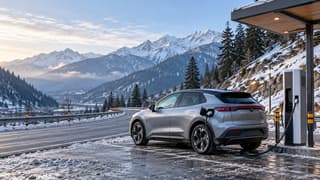
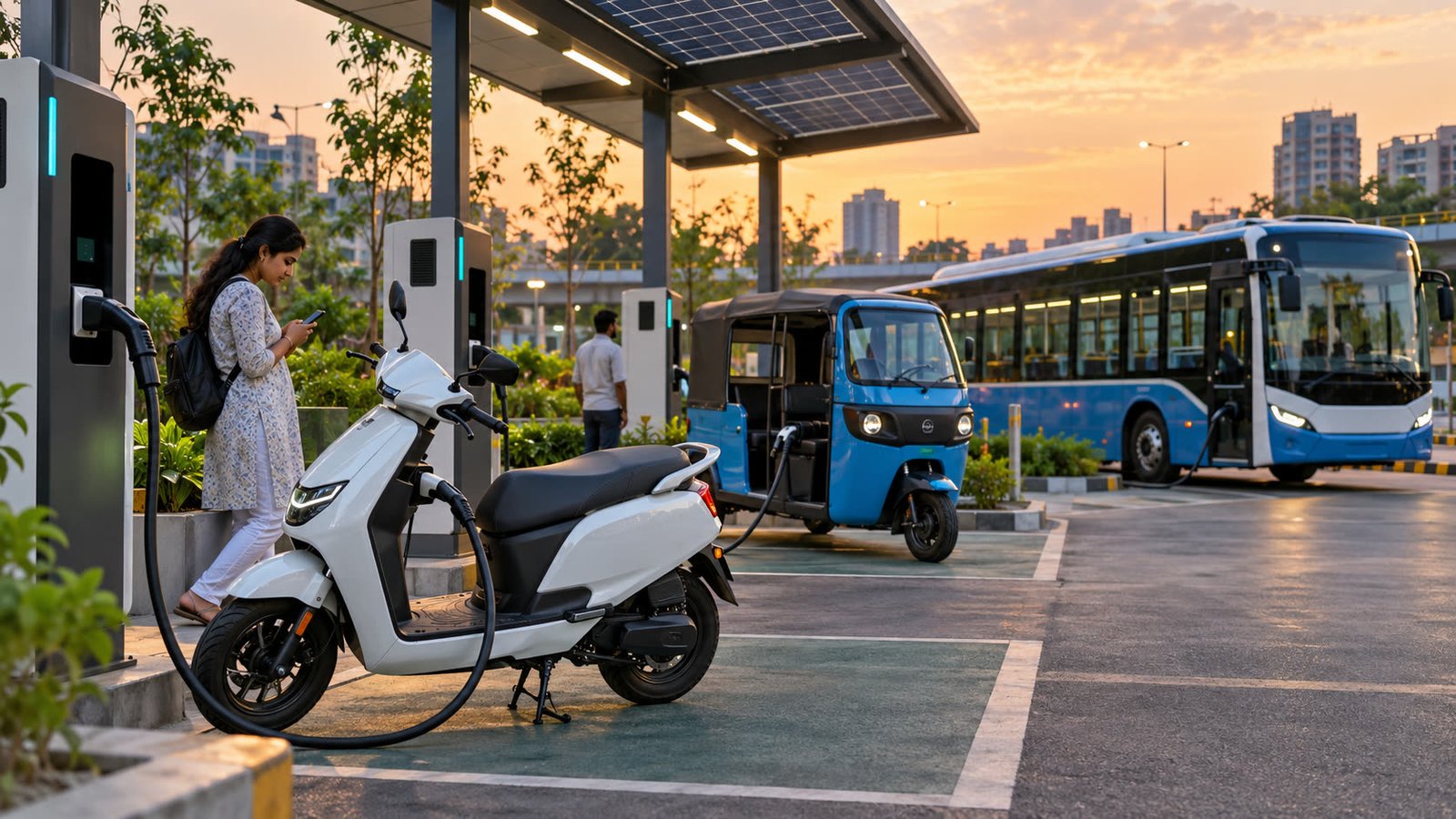
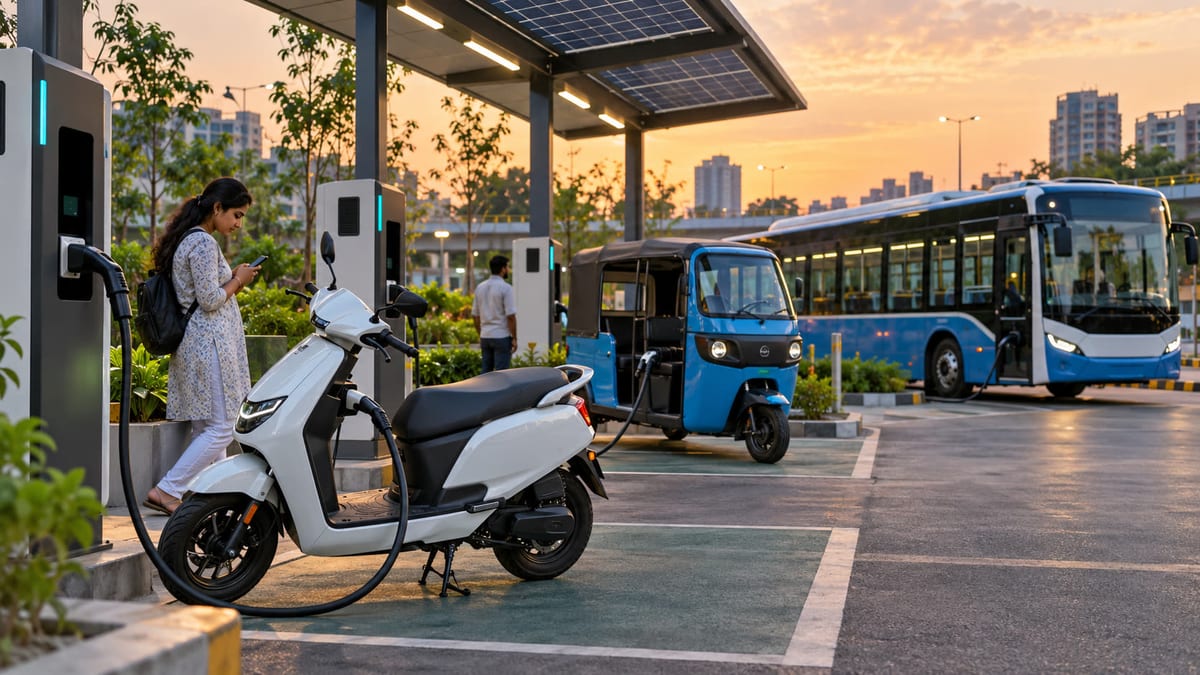 Illustrative image of an EV charging hub; generated for FuelPrice and not a photograph of a specific site.
What the latest PM E-DRIVE figures show
Moneycontrol reported in August, citing a written Lok Sabha reply from the Ministry of Heavy Industries, that 26.59 lakh EVs had been supported or sold under PM E-DRIVE by 30 June 2026. The same report said the scheme was designed to support approximately 28.30 lakh EVs across electric two-wheelers, three-wheelers, trucks, buses and ambulances. DD India's 1 October update repeated the 26.59-lakh figure and described the scheme's current ₹11,900-crore outlay and infrastructure components.
These are supported or scheme-linked vehicles, not a count of every EV sold in India. That distinction matters: a buyer should not treat the headline figure as a market-share number or assume that every electric car or scooter automatically received a central incentive.
What an EV buyer can actually claim
The 10 August 2026 Ministry of Heavy Industries notification revised the registered electric two-wheeler component. For the period from 1 April 2025 to 31 March 2028, it specifies an incentive of ₹2,500 per kWh, capped at ₹5,000 per vehicle, with a maximum ex-factory price of ₹1.5 lakh for the eligible e-2W category. The notification also says the support is limited to the notified amount or 15% of the ex-factory price, whichever is lower.
That means the scheme is category-specific and price-limited. The published PM E-DRIVE categories cover selected electric two-wheelers and three-wheelers, e-ambulances, e-trucks and e-buses. Private electric cars are not listed among the demand-incentive categories in the Ministry's scheme description, so a private-car buyer should not assume that a PM E-DRIVE discount will be deducted from the invoice.
For a buyer comparing an electric scooter with a petrol model, the useful calculation is the total running cost after the dealer shows the applicable incentive, insurance, charging and maintenance assumptions. FuelPrice's fuel cost calculator can provide the petrol or fuel baseline for that comparison; it does not replace the dealer's eligibility confirmation or the official scheme rules.
Charging and public transport are the other half
PM E-DRIVE is also intended to address the infrastructure gap that can make an EV harder to use outside a familiar daily route. The Ministry's scheme information sets aside ₹2,000 crore for electric vehicle public charging stations on a pan-India basis. The programme separately allocates ₹4,391 crore for 14,028 electric buses, with 13,800 buses allocated across seven cities in the government update published by PIB.
For drivers, an allocation is not the same as a live, working charger. Location, connector compatibility, operating hours and payment access still determine whether a stop is useful. Before a longer trip, drivers can check FuelPrice's state-wise EV station directory and use the road-trip planner to assess charging stops alongside distance and travel time.
What it means for fleets and electric three-wheelers
Delivery operators and last-mile fleets are affected differently from private buyers because vehicle utilisation and charging downtime often matter more than the headline purchase incentive. The scheme supports selected electric three-wheelers and commercial categories, but the registered e-3W L5 component had already reached its target and was closed on 26 December 2025, according to the Ministry notification. Operators should therefore check the exact category and registration status instead of assuming that a current showroom offer is centrally subsidised.
For public transport, the bus allocation can improve the supply of electric buses in the cities named by the government. The benefit to a commuter will depend on procurement, route deployment, depot charging and service reliability. The policy creates funding capacity; it does not by itself guarantee that a particular route will switch to an electric bus.
What to check before purchase or deployment
- Confirm the vehicle category, ex-factory price and registration date against the current PM E-DRIVE rules.
- Ask for the incentive amount and the e-voucher or invoice treatment in writing; compare the final payable price, not only the advertised price.
- Check home, workplace and public charging access, including connector type, expected charging time and operating status.
- For a fleet, model energy cost, downtime, payload, service support and replacement-vehicle needs together.
- Use the Ministry's live PM E-DRIVE dashboard for the latest scheme-linked data rather than relying on an old dealer poster or social-media claim.
What to watch next
The notification makes PM E-DRIVE fund-limited: if money for the overall scheme or a component is exhausted before 31 March 2028, that component can close earlier. It also sets 31 December 2027 as the last date for submitting claims to the Ministry or programme implementation agency. The next useful signals for buyers and operators will therefore be the pace of e-2W support, the conversion of charging approvals into operational sites, and the actual deployment of allocated electric buses.
For now, the data points to a large and still-expanding policy effort, but the reader takeaway is narrower: verify category eligibility, invoice treatment and usable charging access before treating PM E-DRIVE support as part of an EV's final cost.
Sources
- DD India, “PM E-DRIVE accelerates India's electric mobility push with 26.59 lakh EV sales, ₹11,900-crore outlay” — 1 Oct 2026
- Moneycontrol, “India has over 67,600 EV chargers, Centre tells Lok Sabha” — 11 Aug 2026
- Gazette of India, “PM Electric Drive Revolution in Innovative Vehicle Enhancement, S.O. 4424(E)” — 10 Aug 2026
- Press Information Bureau, “PM e-DRIVE SCHEME” — 3 Feb 2026
- Ministry of Heavy Industries, “PM E-DRIVE Sales Dashboard” — data as on 30 Sep 2026