Private fuel retailers Jio-bp and Nayara Energy have reportedly limited diesel purchases at some retail outlets as industrial and bulk users shift to cheaper pump fuel. The development matters most to long-haul operators and remote-route fleets; the reports do not indicate a nationwide cap or a general diesel shortage for private motorists.
Key takeaways
- Business Standard reported on 28 Sep 2026, and The Times of India reported on 24 Sep 2026, that some Jio-bp outlets were limiting diesel purchases to 50 litres per customer per day.
- The same reports say Nayara Energy limits ranged from 70 to 200 litres per transaction, depending on the outlet.
- TOI and Financial Express separately reported a 6,000-litre daily sales ceiling at individual Jio-bp outlets.
- IOC, BPCL and HPCL told TOI that they had no such restriction at their outlets when it reported the issue. Any wider PSU limits remain reported or expected, not confirmed.
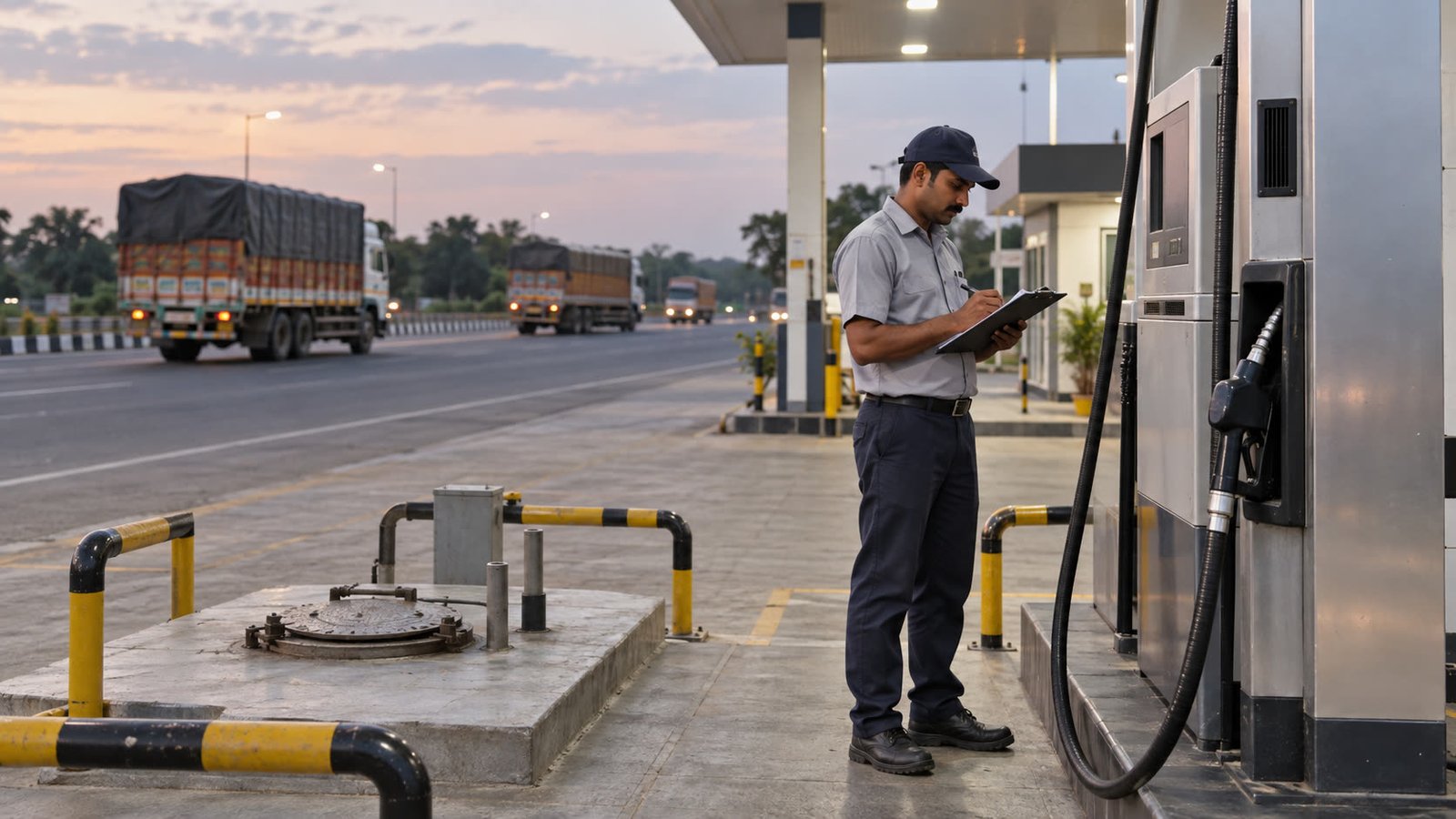
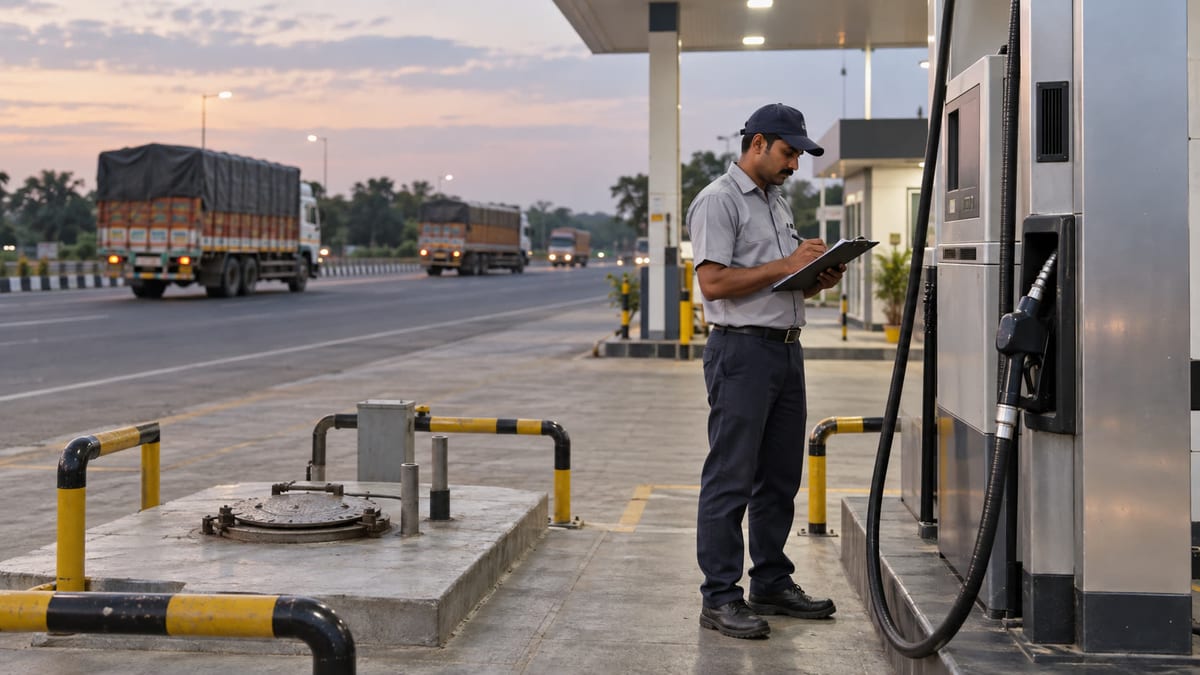 Editorial illustration generated for FuelPrice; no official fuel-station branding is shown.
What has changed at private diesel pumps
The reported change is a purchase-control measure at selected private retail outlets, not a change to the diesel price shown on every pump. Business Standard’s 28 Sep report said Jio-bp outlets had capped purchases at 50 litres per customer per day, while Nayara Energy outlets had limits ranging from 70 to 200 litres per transaction. TOI’s 24 Sep report independently cited the same customer-level ranges and said some Jio-bp outlets were also limiting total daily diesel sales to 6,000 litres.
Financial Express had reported the Jio-bp limit on 22 Sep 2026 and quoted the company saying that its measures were responding to changing demand, particularly from industrial and other non-transport users. The company also said its mobility stations were operational and adequately stocked. That distinction matters: a station can remain open and supplied while limiting unusually large purchases to protect availability for ordinary mobility demand.
Why bulk users are moving to retail pumps
Retail diesel and bulk diesel are supplied through different channels. Retail pump rates have not moved in step with market-linked prices paid by large industrial and commercial buyers, according to the reports. When that gap widens, businesses that need diesel for machinery, backup generators or fleets have a strong cost reason to seek fuel at ordinary forecourts.
That shift can put pressure on individual station inventories. A retail outlet is designed around regular vehicle traffic and scheduled replenishment, whereas a large industrial draw can remove a sizeable share of its available stock in one visit. The reported limits are therefore aimed at managing the channel through which fuel is bought, rather than declaring that diesel is unavailable across India.
The development follows the wider crude-cost pressure already covered by FuelPrice in its report on OMC under-recoveries and fuel prices. That earlier story dealt with the financial strain on oil marketing companies; the new development shows how a retail-versus-bulk price mismatch can also affect station-level availability.
Who is most likely to feel the impact
A private car or two-wheeler driver making a routine refill is not the target described in the reports. The immediate pressure is on long-haul commercial vehicles, contractors, generators and other users that need large quantities, especially on routes where the next suitable station is far away. TOI specifically said larger-tank commercial vehicles and remote areas with fewer fuel stations could be affected.
For a fleet operator, the operational cost is not limited to the diesel bill. A vehicle may need an additional stop, a detour or a revised dispatch plan if a preferred outlet will not complete a large fill. Those effects can be more important than the pump price itself when a truck is working to a delivery window.
What drivers and fleet operators should check now
- Before a long diesel journey, check the latest rates through FuelPrice’s live fuel-price page and confirm the intended station’s current purchase policy directly.
- Do not assume the reported cap applies to every brand or every outlet. Ask about the per-customer limit, any outlet-level daily limit and whether commercial vehicles are being handled differently.
- Fleet managers should confirm whether a planned fill is being sourced through a retail pump or a dedicated bulk channel, because the two channels can have different prices and availability.
- For a route-level estimate, use the fuel cost calculator before dispatch and the road-trip planner to review possible stops. These tools estimate trip needs; they do not guarantee fuel availability at a particular outlet.
What to watch next
The key uncertainty is whether the limits remain confined to private retailers or spread to the large public-sector network. Business Standard reported that IOC, BPCL and HPCL could also introduce quantity restrictions, but that was presented as a possibility rather than an announced rule. TOI, meanwhile, reported that the three state-owned retailers had confirmed no restriction at their outlets at the time of its report.
Drivers should therefore separate three developments: a reported limit at a particular pump, a confirmed company-wide policy and an official government order. Unless an authority or retailer announces a broader change, the evidence points to targeted controls at some private outlets amid unusual bulk demand—not nationwide diesel rationing.