Petroleum minister Hardeep Singh Puri said on 28 Sep 2026 that India has so far navigated crude and natural-gas supply disruptions linked to the West Asia crisis, even as public-sector oil marketing companies face reported under-recoveries of about ₹530 crore a day. For drivers, the important distinction is that this is a cost-pressure warning and not a confirmed announcement of a new petrol or diesel price.
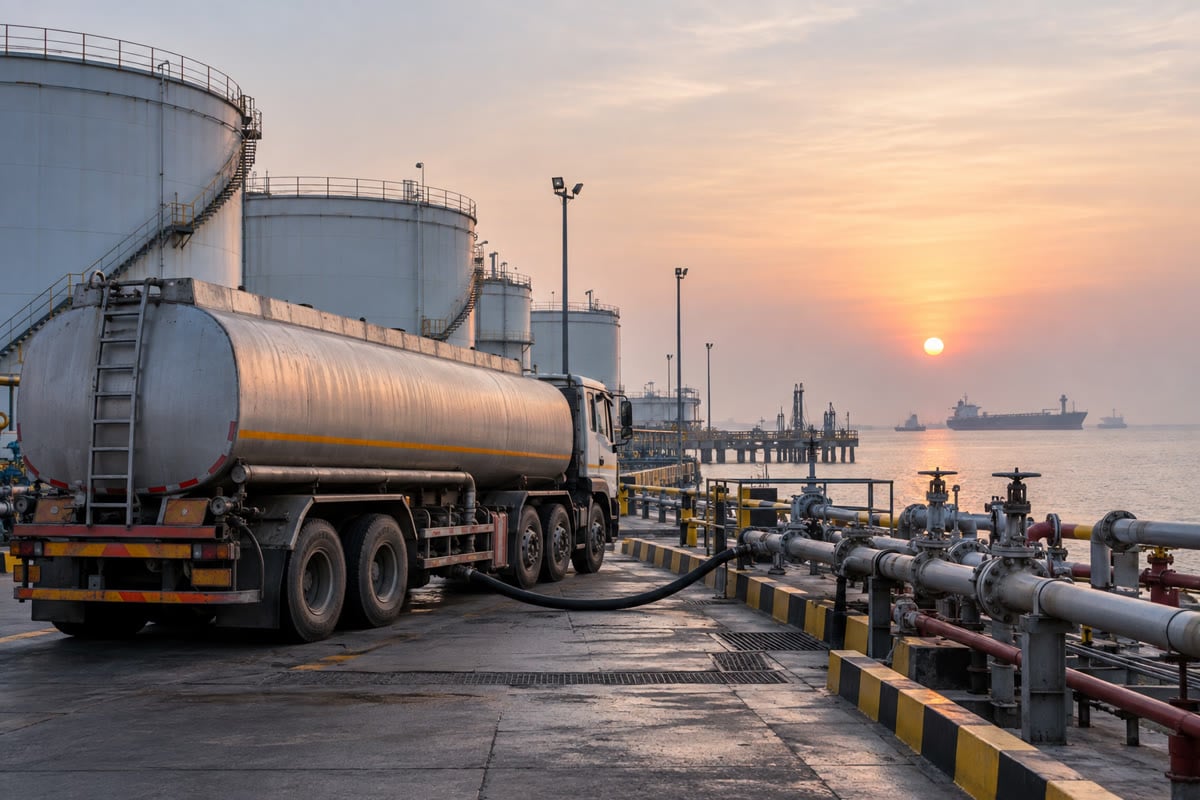
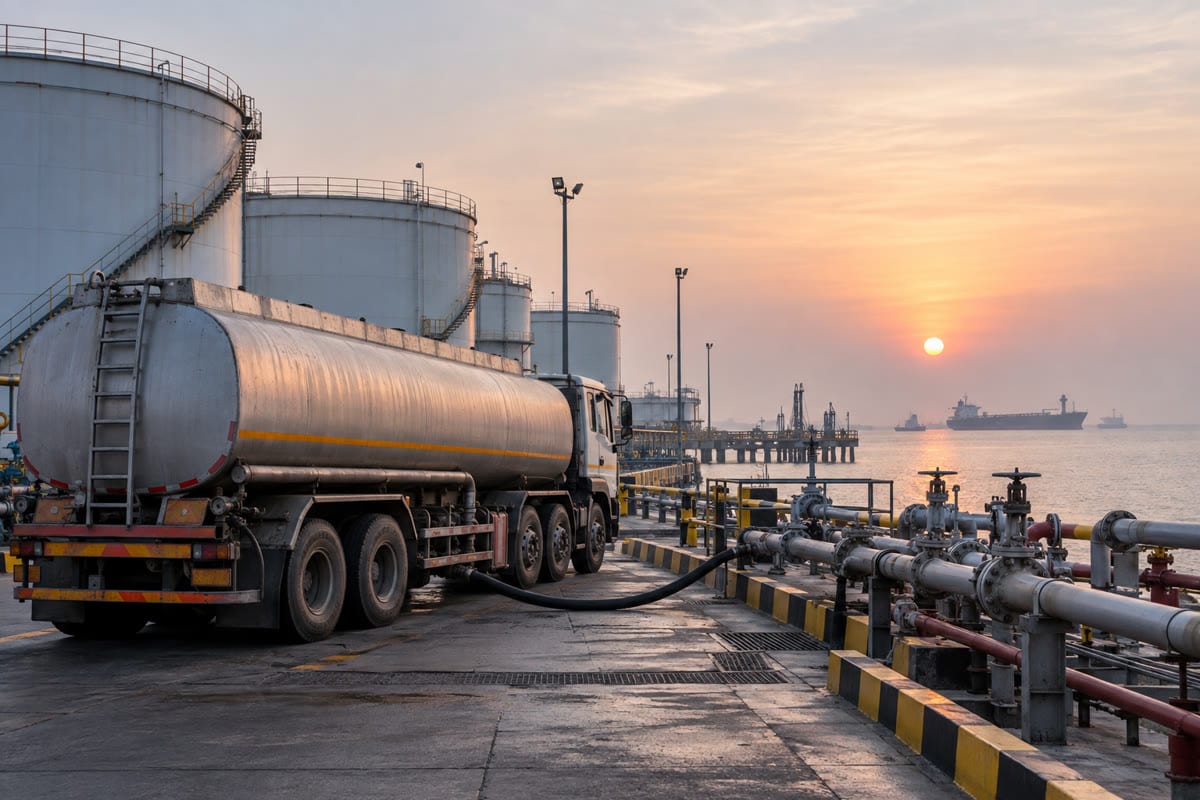 Credit: FuelPrice editorial illustration, AI-generated; no specific company or facility is shown.
Key takeaways
- Puri said India has managed recent supply disruptions, but logistics and vulnerable transit routes remain a challenge.
- He said public-sector OMCs are facing about ₹530 crore a day in under-recoveries, while the government is supporting them.
- ICRA’s 23 Sep 2026 estimate put negative marketing margins at about ₹8 per litre on petrol and ₹9 per litre on diesel; domestic LPG under-recovery was about ₹300 per cylinder for September.
- The remarks did not announce a new pump-price revision. Drivers should use dated rates and confirmed notices when budgeting a refill or trip.
What Puri said on 28 Sep
Speaking at an energy-security event organised by the Merchants’ Chamber of Commerce and Industry in Kolkata, Puri said India had remained insulated from the worst of the turbulence caused by the West Asia crisis and disruption around the Strait of Hormuz. News On AIR also reported the minister’s view that the government was monitoring the situation and would work to prevent disruptions from getting out of control.
The minister’s emphasis was on availability and logistics rather than on a new consumer price. Business Standard reported that he described the main risk as the movement of crude and petroleum products through volatile routes, while also saying that public-sector oil marketers were facing under-recoveries of around ₹530 crore a day and receiving government support. That is a fresh development from the 28 Sep event; it does not change the pump price by itself.
What the ₹530 crore estimate means
The figure should be read as an estimate of the gap between the cost environment and the prices at which fuel is marketed, not as a newly disclosed audited loss in a company’s quarterly accounts. In its 23 Sep 2026 assessment, ICRA said Indian Oil Corporation, Bharat Petroleum Corporation and Hindustan Petroleum Corporation were facing negative marketing margins of roughly ₹8 per litre on petrol and ₹9 per litre on diesel. The same assessment put domestic LPG under-recovery at about ₹300 per cylinder in September 2026.
The Economic Times and the Financial Express both reported ICRA’s estimate. Their coverage also made clear that the eventual effect on OMC cash flow depends on several moving parts, including crude prices, product cracks, domestic retail-price revisions and government support. A high international crude price can therefore put pressure on the companies before a driver sees any change on a price board.
Why this is not an immediate petrol or diesel hike
Puri’s remarks were about energy security and the financial pressure being absorbed in the system. They were not a notification changing petrol or diesel rates, an excise-duty order or a direction to state governments. The reports from the event did not give a date or amount for any future pump-price revision.
That distinction matters when comparing fuel bills. A driver checking a number from an old article or a social post can mistake a market-risk assessment for a current rate. For the latest dated city and state listings, use FuelPrice’s fuel prices page and record the date alongside the rate.
What it means for private motorists
There is no confirmed price change to apply to a refill solely because OMCs are reporting under-recoveries. The practical effect today is uncertainty: if crude and shipping costs stay high, the pressure on marketers can last longer; if supply routes stabilise or costs ease, the pressure can reduce. Neither outcome is guaranteed by the minister’s remarks.
For a simple illustration, a ₹1 per litre change would add ₹50 to a 50-litre refill. That is a calculation example, not a forecast and not a recommendation. Drivers can test their own distance, mileage and tank assumptions in the fuel cost calculator instead of applying a national headline to every trip.
Why fleets may feel the pressure sooner
For buses, trucks and delivery vehicles, fuel is a recurring operating input rather than an occasional household purchase. A stable retail price can still sit alongside higher freight costs if vessels are rerouted, cargoes take longer to arrive or operators add kilometres to avoid a disruption. The exposure depends on diesel use, load, route length and the fleet’s contract terms.
Transport operators should separate three questions: what the pump charges today, whether a route has become longer or slower, and whether a carrier has added a fuel or freight surcharge. The road-trip planner can help compare route distance and stops, but the fleet’s own fuel records remain the right basis for its operating-cost calculation.
How this differs from the earlier route-risk warning
FuelPrice’s earlier report on Puri’s oil-route risk warning focused on vulnerable supply corridors and chokepoints. The 28 Sep update is materially different: it adds the minister’s assessment that India has navigated the disruption so far and puts a current estimate on the pressure being absorbed by public-sector OMCs. It should be read as a follow-up on resilience and cost pressure, not as a repeat of the earlier warning or a prediction of a price hike.
What to watch next
The most useful signals for drivers are dated retail rates, official notices from oil companies, Petroleum Planning and Analysis Cell data, any change in central or state fuel taxes, and confirmed information about shipping or refinery operations. A report that OMCs are under pressure does not establish when or whether that pressure will be passed through to consumers.
The reader takeaway is simple: India’s fuel supply has remained available according to the minister’s latest remarks, but the cost of maintaining that stability is being watched closely. Treat ₹530 crore a day as a reported estimate of current OMC under-recovery, not as a bill that has already been added to your refill. Use dated prices for immediate decisions and revisit trip or fleet costs only when a confirmed rate, route or surcharge changes.
Sources
- Business Standard — India so far successfully navigated crude supply disruption, says Puri — 28 Sep, 2026
- News On AIR — PNG Minister Hardeep Singh Puri Says India Successfully Navigated Energy Supply Disruptions Amid West Asia Crisis — 28 Sep, 2026
- The Economic Times — Oil firms face Rs 530 crore daily fuel losses as crude surges: ICRA — 23 Sep, 2026
- The Financial Express — OMCs lose Rs 530 cr a day amid crude spike — 23 Sep, 2026