Fresh landslides have blocked the roads linking Rimbi with Yuksom and Khecheopalri in West Sikkim after heavy rain, according to reports published on 25 Sep 2026. Hindustan Times reported at least 30 houses and government quarters damaged, while EastMojo reported 32 houses and four government quarters under threat; no casualties were reported, but the disruption matters to local commuters, supply vehicles and Sikkim road-trip plans.
Key takeaways
- Fresh blockage: EastMojo reported that the Rimbi-Yuksam and Rimbi-Khecheopalri roads remained closed on 25 Sep 2026.
- Damage: Hindustan Times reported at least 30 houses and government quarters damaged; EastMojo reported 32 houses and four government quarters under threat.
- Earlier reopening: An official Sikkim update dated 24 Sep 2026 said the Rimbi road had been restored and reopened after earlier work.
- What drivers should do: Treat the route as changeable, verify the latest local advisory, and do not enter active debris or stream zones.
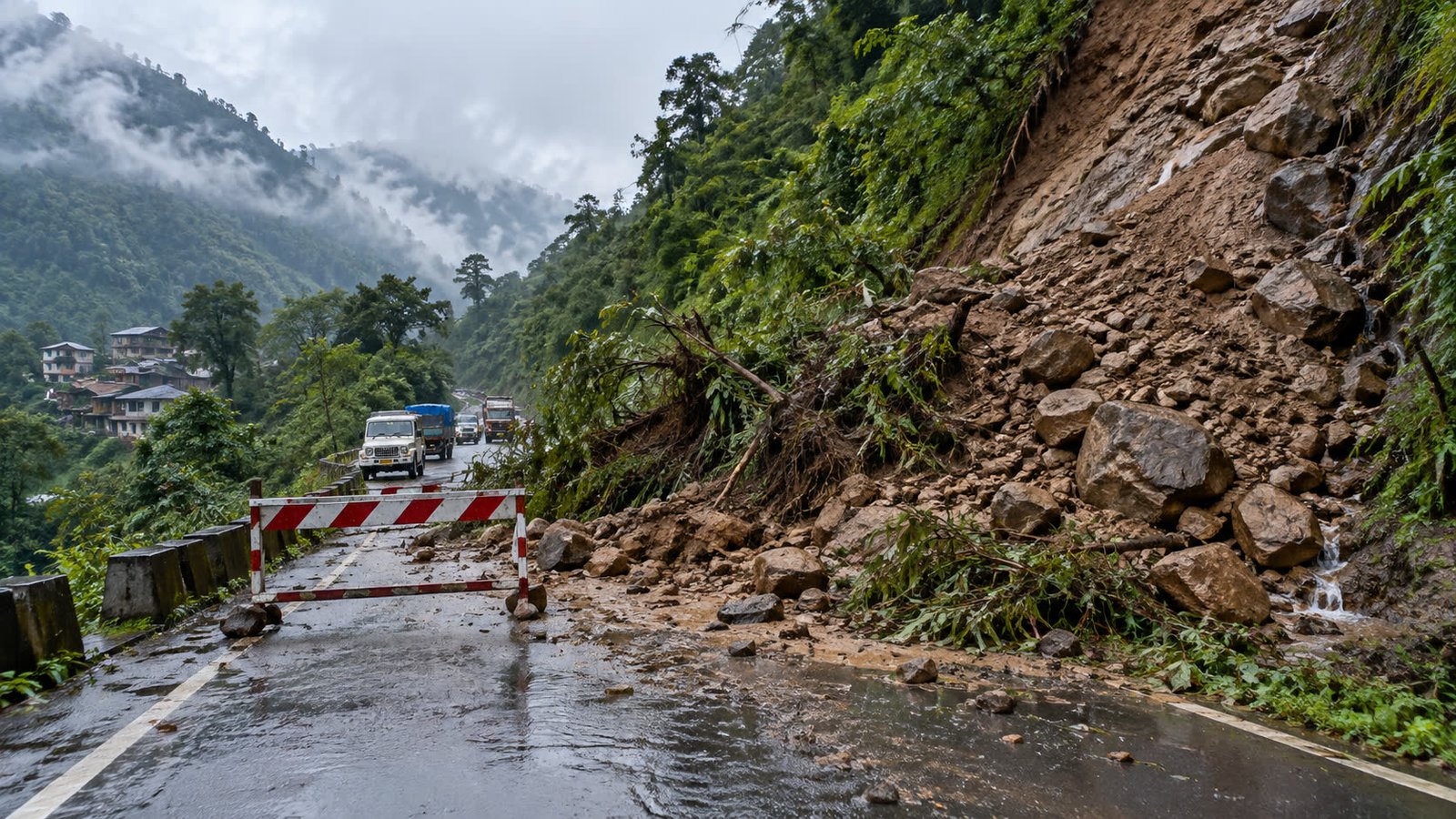
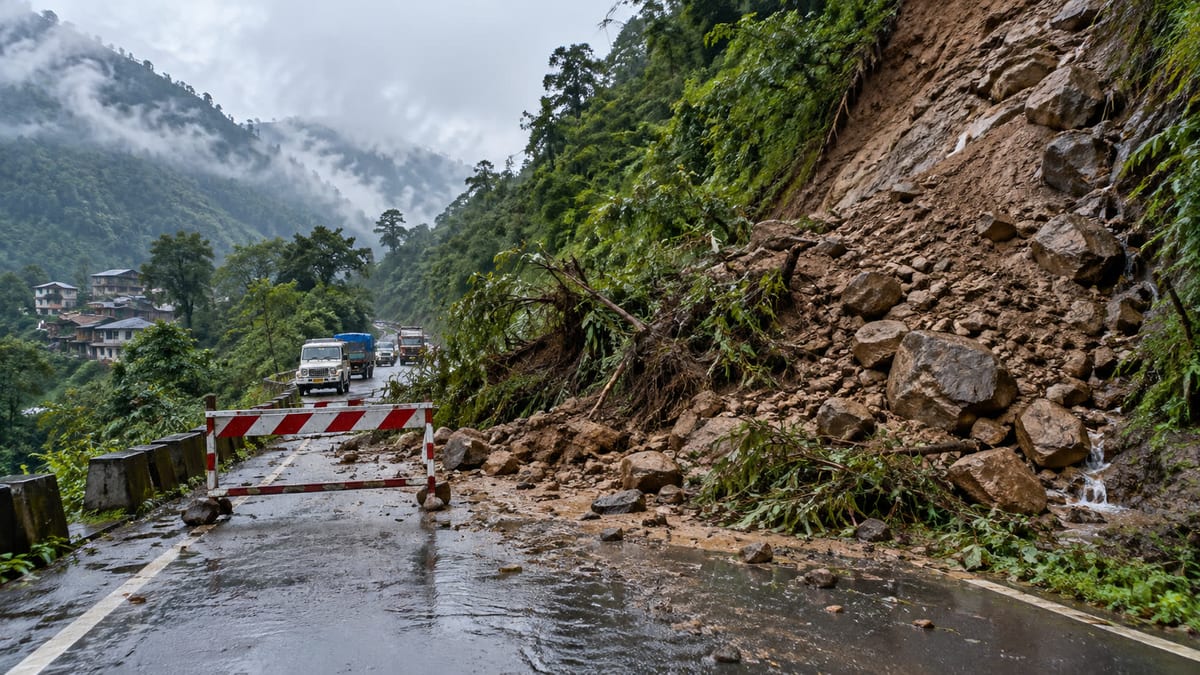 Editorial illustration of a rain-hit Himalayan road blocked by landslide debris. Credit: FuelPrice, AI-generated.
What happened in Rimbi
Hindustan Times reported that a landslide hit late on Thursday night in Rimbi village, in Gyalshing district. It said residents had been evacuated ahead of the slide, no casualties were reported, and the road linking Geyzing, the district headquarters, with Yuksom was blocked.
EastMojo described fresh flash floods and mudslides after two days of intense rain. Its report said the Rimbi-Yuksam and Rimbi-Khecheopalri roads remained closed, with the latter connection completely blocked. The outlet also reported that affected families had moved to the Rimbi Panchayat Bhawan or were staying with relatives while the district administration monitored the situation.
The damage count is not identical across the reports. Hindustan Times put the figure at at least 30 houses and government quarters, while EastMojo reported 32 houses and four government quarters facing the landslide and flash-flood threat. FuelPrice is retaining both attributed figures rather than treating them as a single confirmed count.
Why the road status is shifting
This is a developing route-status story rather than a permanent road closure. On 24 Sep, IPR Sikkim said the Rimbi road had been restored and reopened for vehicles after a three-day joint inspection and urgent repair effort. The official update said the reopening helped local residents, commuters and the movement of essential supplies and services.
That reopening notice was followed by fresh closure reports on 25 Sep after additional rainfall. A 21 Sep update on the Sikkim government website said work toward a temporary road was expected by the first week of October, subject to site conditions. For travellers, the practical conclusion is that an earlier reopening message is not enough: the latest route-specific clearance should decide whether to leave.
What this means for drivers and operators
The affected links connect villages, tourist approaches and local supply movements. Even when a hill road is reopened, debris clearance can leave the surface narrow, muddy or vulnerable to another slide. A route that appears open on a map may therefore not be usable for a private car, taxi, two-wheeler or small goods vehicle.
For private travellers
- Check with the district administration, a local hotel or a local transport operator immediately before departure. Ask about the exact road stretch, not simply whether Sikkim roads are open.
- Do not cross a barricade, drive through fresh mud or use a river or stream edge as an improvised bypass. Turn around if visibility drops or debris begins moving.
- Keep a time and fuel buffer for a turnaround or longer diversion. The road-trip planner can help keep alternate legs visible while the route status changes.
For fleet and supply operators
Passenger and goods operators should separate the trip into a confirmed open segment and an uncertain segment, then plan any handover or staging point away from active slopes. A short delay can protect vehicles, cargo and passengers when the road condition is changing. For cost planning, the fuel cost calculator can show how a detour changes the fuel budget, but it should be used only after the latest access route is confirmed.
Rainfall risk and what to watch next
The Economic Times, summarising the IMD warning for 25 Sep 2026, said heavy to very heavy rain was forecast in Sikkim. The warning also noted that runoff, waterlogging and intense rain can disrupt road and rail traffic and trigger localised landslides or mudslides. The advice for people in affected areas was to avoid unnecessary travel during intense rain and monitor local updates.
The next useful update for road users is a route-specific clearance, not a broad tourism announcement. Watch for:
- whether the Rimbi-Yuksom and Rimbi-Khecheopalri roads reopen, and whether movement is controlled;
- fresh rainfall or landslide advisories from local authorities; and
- progress on the temporary-road schedule, which the state said was subject to site conditions.
Fuel and trip-cost takeaway
A blocked hill road changes trip economics through delay, idling, missed connections and detours rather than through a change in petrol or diesel prices. Check live fuel prices before departure, but treat the latest local road clearance as the deciding input.
Sources
- Hindustan Times — “30 houses damaged, roads blocked after landslides hit West Sikkim” (25 Sep 2026)
- EastMojo — “Sikkim: 32 houses in Rimbi face landslide, flash flood threat” (25 Sep 2026)
- Government of Sikkim — “Minister for Roads and Bridges Inspects Legship-Gyalshing Highway, Reviews Road and Landslide Mitigation Works at Rimbi-Singlitam” (21 Sep 2026)
- IPR Sikkim — “Rimbi Road Restored and Reopened for Connectivity Following Three-Day Joint Inspection” (24 Sep 2026)
- The Economic Times — “Weather today, September 25: Heavy rain likely in 8 states; check IMD forecast” (25 Sep 2026)