Commerce and Industry Minister Piyush Goyal met Piyush Arora, managing director and chief executive of Škoda Auto Volkswagen India, on 9 Nov 2026 for talks covering automobile exports, domestic manufacturing, localisation and electric-vehicle manufacturing. The meeting is a policy and industry signal, not a launch announcement: no India EV model, price, plant or production date was announced in the public accounts of the meeting.
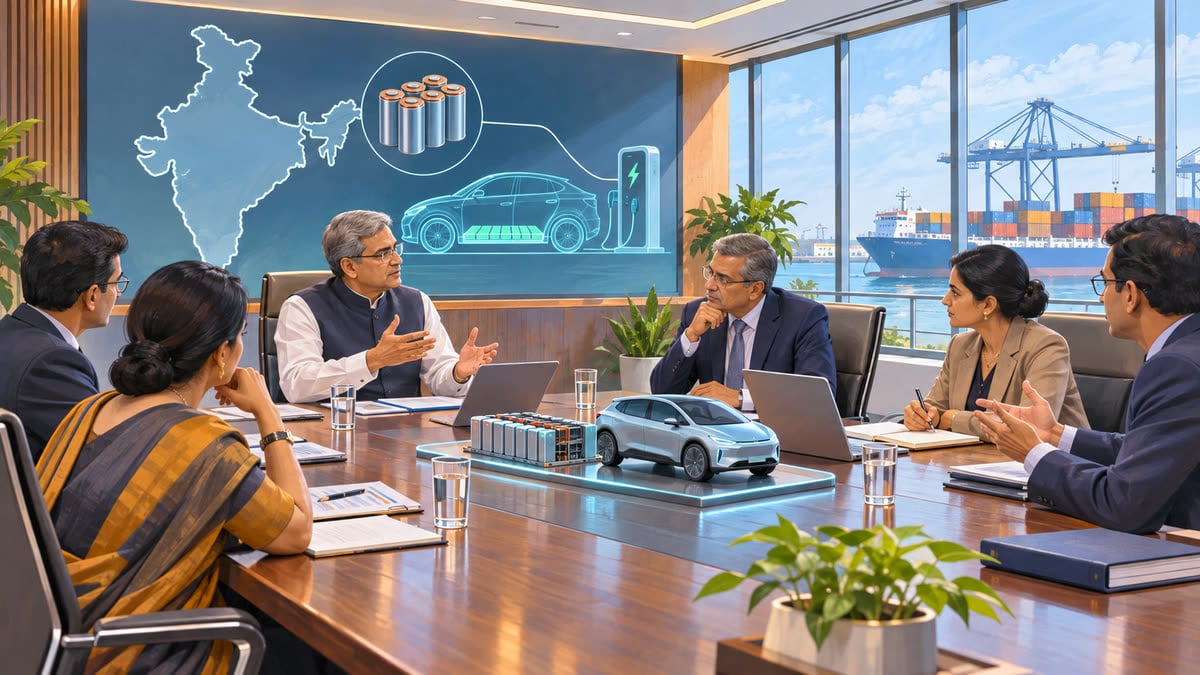
Illustrative image: an editorial rendering of India’s EV manufacturing and export discussions; not a photograph of the meeting.
Key takeaways
- The minister’s office said the discussion covered exports, India’s manufacturing position, EV manufacturing, localisation and innovation.
- No specific EV model, India launch date, ex-showroom price, plant, investment amount or production timeline was announced.
- Škoda Auto India separately says its network has crossed 350 customer touchpoints across 193 cities, but that is a sales and after-sales reach update, not an EV launch commitment.
- For buyers, the next useful signal will be a named product and an official timeline, followed by price, battery, charging and service details.
What happened in the Goyal–SAVWIPL meeting
The meeting was reported on 9 Nov by The Economic Times and ET Auto, citing a post from the Commerce Minister’s office. The public account described a conversation with a delegation led by Piyush Arora, MD and CEO of Škoda Auto Volkswagen India Private Limited, or SAVWIPL.
The agenda was broad. It included expanding automobile shipments, strengthening domestic manufacturing, accelerating EV assembly, deepening localisation, encouraging innovation and integrating India more closely with global automotive value chains. Those are important industrial priorities, but they describe the direction of the conversation rather than a completed investment or product decision.
That distinction matters for anyone tracking future EV prices in India. A ministerial meeting can open or reinforce discussions with an automaker, but it does not by itself create a booking window, confirm a subsidy, or set a showroom price.
What was confirmed—and what was not
Confirmed: government–industry dialogue
The confirmed development is the meeting and the subjects discussed. The minister’s office publicly linked the engagement to exports, manufacturing and EV production. It also referred to localisation and innovation, which are relevant to the cost and supply-chain questions around electric cars.
Not confirmed: a buyer-ready EV
The public reports used for this article do not name an India-bound EV model, battery size, certified range, price, assembly plant, investment figure or launch date. SAVWIPL’s own public news page also did not publish a product announcement tied to the 9 Nov meeting when this article was prepared.
That leaves the consumer position unchanged for now. There is no verified model to compare, no official price to put into a purchase budget and no confirmed production schedule that can be used to plan a switch from a petrol or diesel car. Any claim that the meeting means a particular Skoda or Volkswagen EV is coming soon would go beyond the available evidence.
Why the discussion still matters to Indian EV buyers
Localisation can matter to buyers if it eventually leads to more locally sourced parts, a wider choice of products or a different cost structure. Those are possible outcomes, not promises from the meeting. The route chosen—fully built import, local assembly or a more heavily localised product—can affect availability, pricing and after-sales planning, as Business Standard reported in August while describing the company’s options.
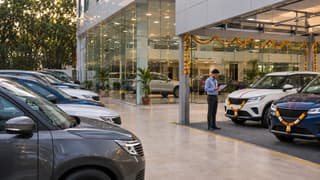
The nearer-term, verifiable buyer fact is service reach. In a 2 Nov release, Škoda Auto India said it had crossed 350 customer touchpoints across 193 cities, with 270 sales touchpoints and 203 after-sales touchpoints. The release said the milestone was reached on 30 Oct with the opening of an outlet in Imphal. These figures describe the wider Škoda network; they do not mean that an EV charging network or an EV-specific service programme has been announced.
Charging remains a separate practical question. A buyer assessing an eventual EV can use FuelPrice’s state-wise EV charging directory to understand current access, while the recent EV charging viability checks explain why charger availability and service support matter alongside the advertised range.
What buyers can check now
Until a product announcement arrives, the useful checks are about evidence rather than speculation:
- Product: look for an official model page naming the battery, powertrain, certified range, warranty and expected delivery period.
- Price: wait for an official ex-showroom price and a written explanation of what is included. A meeting alone does not establish a discount, subsidy or booking amount.
- Ownership: check charging options near home, work and regular routes, then use the road-trip planner to compare journey time and route needs once a real vehicle’s specifications are available.
- Running cost: use the fuel-cost calculator to establish the current petrol or diesel baseline before comparing it with an EV estimate based on confirmed electricity and charging rates.
This approach keeps the comparison grounded. It also avoids treating a policy discussion as a commercial offer, particularly when no model, price or timeline has been published.
What to watch next
The next meaningful update would be a named EV, a signed investment or manufacturing announcement, a decision on local assembly, or a formal launch and pricing timeline. A credible announcement should also explain whether the vehicle will be imported, assembled or built with a higher level of local content, and how sales and after-sales support will work.
For context, Škoda Auto India’s 2 Nov release lists four models in its India portfolio—Kylaq, Slavia, Kushaq and Kodiaq—and does not list an EV among them. That is the current published product position; the 9 Nov ministerial meeting does not change it.
Reader takeaway
Goyal’s meeting with SAVWIPL confirms continued government–industry discussion around EV manufacturing, exports and localisation. It does not confirm a new India EV, a price cut, a plant, an investment or a launch date. For buyers, the practical trigger to revisit the comparison will be a formal company announcement with product and ownership details, not the meeting itself.
Sources
- The Economic Times — Piyush Goyal meets Skoda Auto Volkswagen India CEO; talks focus on EV push, exports (9 Nov 2026)
- ET Auto — Piyush Goyal meets Skoda Auto Volkswagen India CEO; talks focus on EV push, exports (9 Nov 2026)
- Škoda Auto Volkswagen India — Škoda Auto India surpasses 350 Customer Touchpoints, expands reach to 193 cities (2 Nov 2026)
- Business Standard — Volkswagen group weighs global EVs, local assembly for India market (23 Aug 2026)