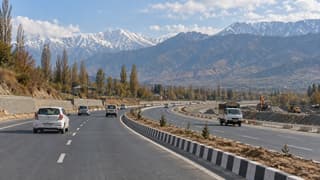
Officials in Kashmir on 26 Sep found the revised alignment for the first 8 km of Srinagar Ring Road Phase III suitable and feasible for construction, according to reports by Kashmir News Service and Kashmir Images. The Dalgate–Pandach section is not final: the National Highways Authority of India (NHAI) has been asked to compare three route options before one is selected.
For drivers, the important distinction is that this is a planning and alignment update, not an opening date or a new toll announcement. The review could shape future traffic movement around Srinagar, but existing routes and current travel arrangements remain in place for now.
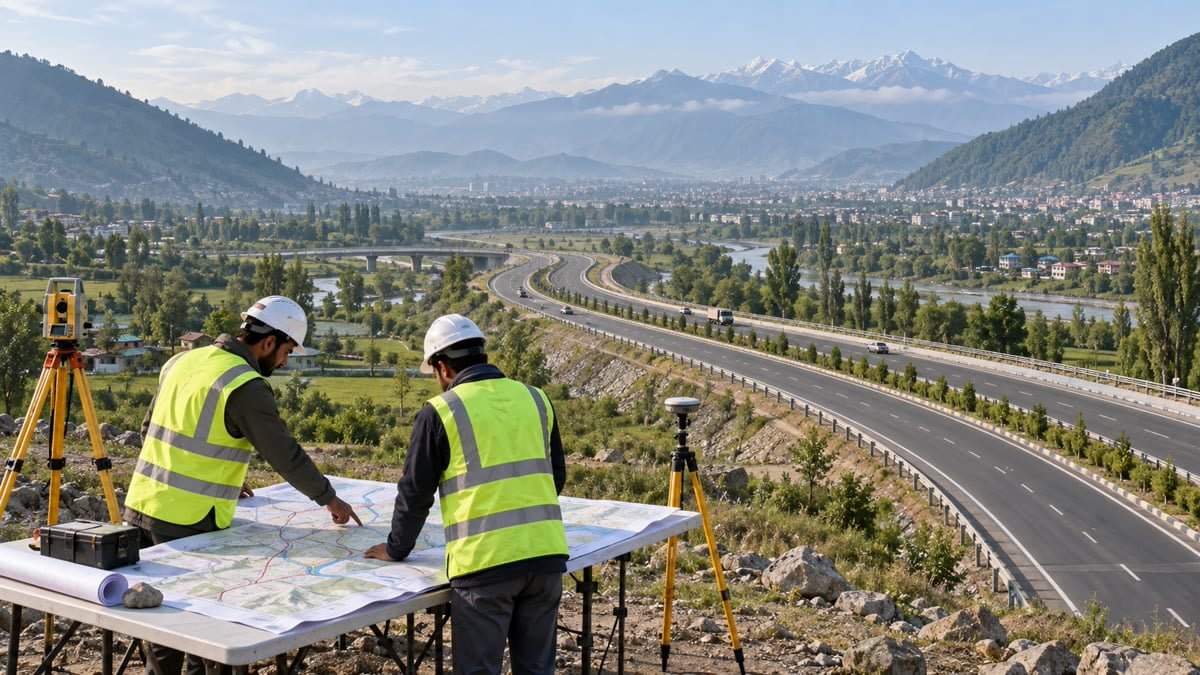
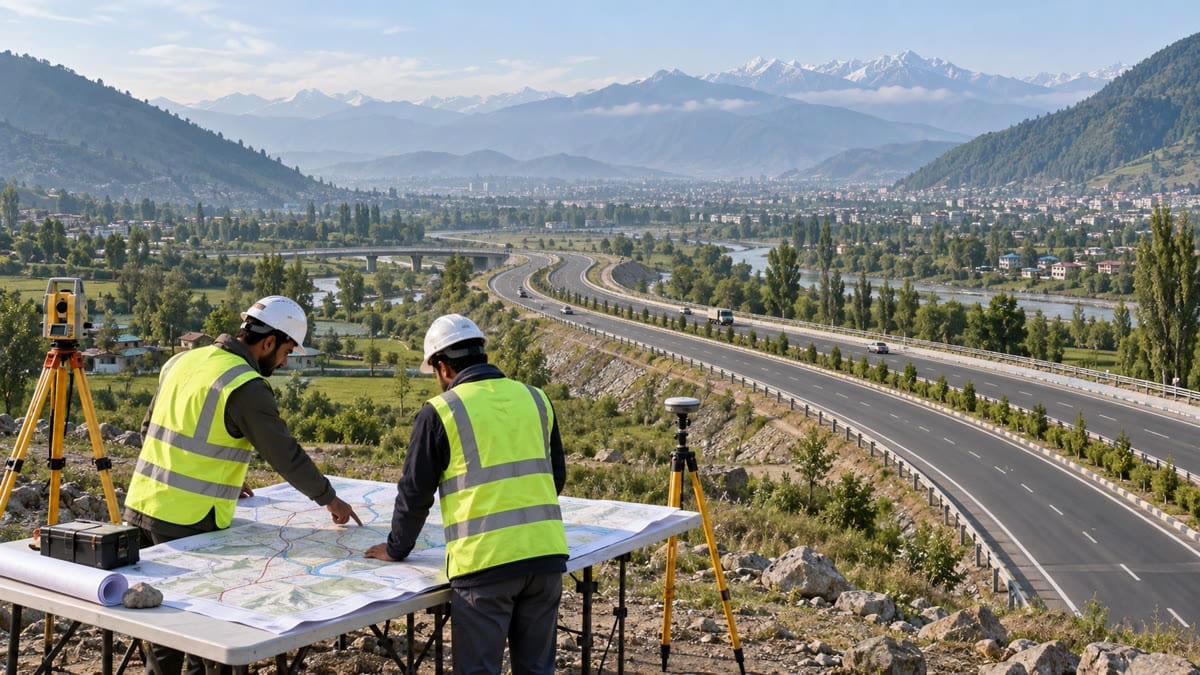 Editorial illustration of highway-alignment planning in a Kashmir valley setting. Credit: FuelPrice editorial illustration; not an official project photograph.
Key takeaways
- NHAI presented a revised Lasjan–Dalgate alignment designed to bypass the Cantonment area and the Jhelum Bank.
- Officials considered the first 8 km suitable and feasible for construction after the 26 Sep review.
- The Dalgate–Pandach stretch still has three proposed alignments; NHAI must submit a comparative analysis before route selection.
- The proposed Parimpora–Dalgate flyover alignment is to be revised so it does not affect M.A. Road.
- No opening date, construction schedule or toll revision was announced in the reports reviewed.
What officials reviewed
Divisional Commissioner Kashmir Anshul Garg chaired the review meeting on 26 Sep. It brought together the Srinagar district administration, Srinagar Municipal Corporation, traffic officials, the Airport Authority of India, NHAI and engineering agencies responsible for power, water, roads and flood-control work. That mix of departments matters because an urban highway alignment has to fit around existing roads, utilities, security-sensitive areas and city traffic.
The NHAI technical team presented the revised Lasjan–Dalgate route. The reports said the proposal was designed to bypass the Cantonment area and the Jhelum Bank. After discussion, participating departments observed that the alignment was suitable and feasible for construction of the first 8 km of Phase III. That wording records the outcome of the review; it should not be read as confirmation that the road is complete, open to traffic or fully sanctioned.
Dalgate–Pandach route remains undecided
The Dalgate–Pandach section is at an earlier decision point. Three alignments remain under consideration, and the Divisional Commissioner directed NHAI to carry out a detailed comparative analysis. The analysis is to be shared with the concerned departments so they can help select the appropriate route.
For people who regularly cross central Srinagar, this is the part of the update to watch. A final route can affect junction design, diversions, land and utility work, and how traffic is distributed between the city and the wider ring-road network. Until that comparison is completed, it would be premature to assume a fixed corridor or a firm travel-time benefit.
Flyover alignment to avoid M.A. Road
The meeting also discussed the proposed Parimpora–Dalgate flyover. Officials recommended revising its alignment to avoid affecting M.A. Road. This is a design recommendation, not a notification of a closure or a change to the current road layout. Any future construction activity would need separate project, traffic-management and execution details.
What this means for drivers and transport operators
The immediate effect is limited: motorists should continue to use current routes and rely on local traffic advisories for any active works. The Phase III alignment review does not itself change toll rates, FASTag rules or the availability of any road segment.
The longer-term value is potential network relief. If the proposed corridor is approved, built and connected effectively, it could give through traffic more options around Srinagar and reduce pressure on busy urban approaches. That is a possible future benefit, not a result that has been delivered by the review. Construction timing, final alignment, clearances, land or utility coordination and traffic plans will determine what travellers eventually experience.
For a trip that is happening now, use the toll-charge calculator to estimate route charges and the road-trip planner to compare the wider journey. Those tools are more useful for current planning than treating a proposed Phase III route as an available shortcut.
How this differs from the Phase I update
FuelPrice recently reported a separate update on the Srinagar Ring Road Phase I corridor and its internal completion target. That earlier report is available at Srinagar Ring Road Phase I completion update. The new report concerns Phase III alignment planning, so the two developments should not be combined into one completion schedule.
What to watch next
The next meaningful markers are the comparative analysis for the Dalgate–Pandach options, the selection or revision of a final route, and any subsequent approval, tender or construction information. A public opening date would require a later, specific announcement; none was given in the 26 Sep reports.
Until then, the useful takeaway is simple: Srinagar Ring Road Phase III has moved forward in technical planning on one stretch, while other connections remain under review. Drivers should watch for confirmed traffic notices and project updates before changing a regular route.