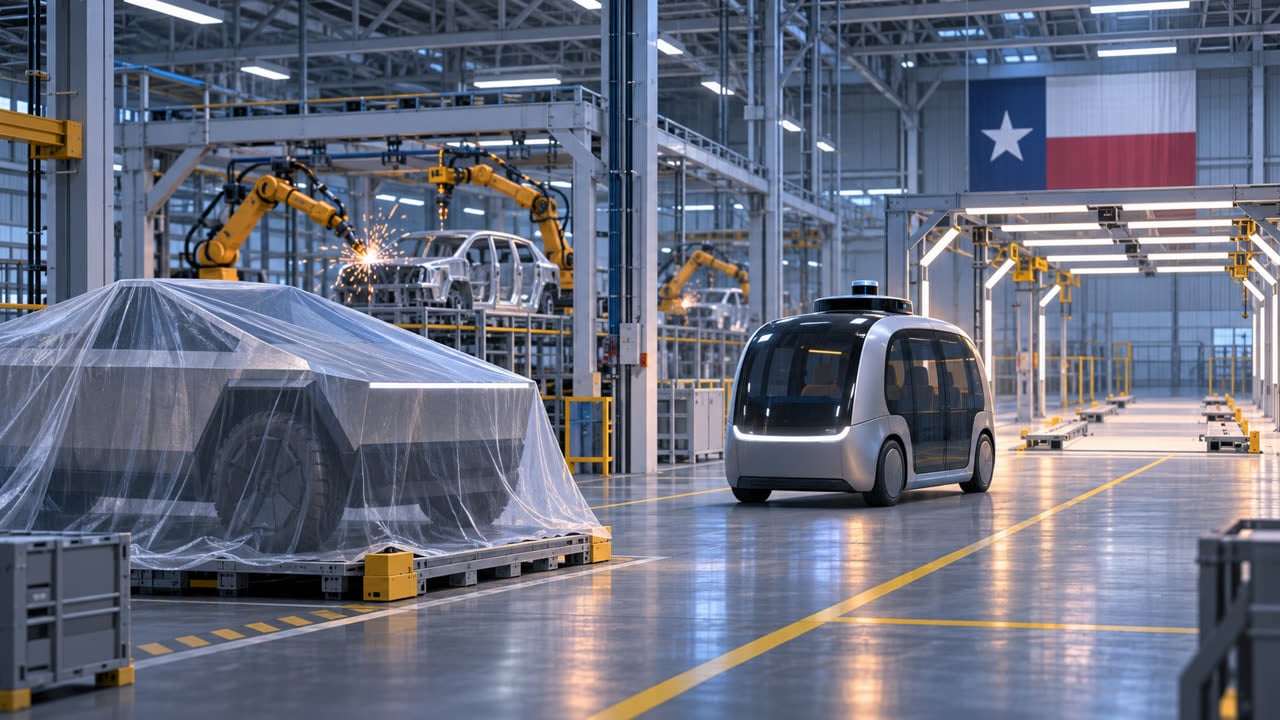
Tesla will wind down Cybertruck production at its Gigafactory Texas facility around mid-2027 to make room for more Cybercab robotaxis, Elon Musk said on 6 November 2026. The decision matters beyond a single model: it signals a shift in Tesla's factory priorities toward autonomous vehicles while the pickup's longer-term production path remains unsettled.
Key takeaways
- Cybertruck production at Gigafactory Texas is expected to wind down around mid-2027.
- Musk said the freed capacity will support higher Cybercab production.
- The announcement does not set a final last-build date or confirm whether the pickup will be assembled at another plant.
- Reuters, citing Kelley Blue Book, reported US Cybertruck sales of 20,237 vehicles in 2025, down 48% from 2024; AP reported the same 2025 estimate and described the decline as roughly half.
- For buyers and fleets, the next useful facts are Tesla's order commitments, service plans and evidence that Cybercab output is actually scaling.
What Tesla has confirmed
Musk's 6 November post said Tesla would be winding down Cybertruck production at Gigafactory Texas around the middle of 2027 so the company could increase Cybercab production. Both AP and Reuters reported the announcement and described it as a major retreat from a high-profile electric-pickup programme. The wording is important: it identifies a production wind-down at one factory, not a detailed global discontinuation plan.
Neither the AP report nor the Reuters report identified a final production day, a replacement Cybertruck plant or a revised Cybercab volume target. Reuters said the Texas site is the only known Tesla facility equipped to manufacture the pickup's specialised components. Until Tesla publishes more detail, it is therefore too early to say that every future Cybertruck build has been cancelled or that existing owners will lose support.
The move fits Tesla's own recent description of its strategy. In its Form 10-Q for the quarter ended 30 September 2026, Tesla said its Cybercab rollout began in September 2026 and linked the robotaxi to a more service-led business model. Tesla's support page currently says Cybercab rides are available only in limited areas of Austin, Texas, while other listed robotaxi operations use Model Y vehicles. That makes the factory decision a bet on scaling a newer service, not evidence that the service has already reached mass deployment.
Why the decision matters to the global EV market
The Cybertruck was a highly visible test of whether an electric pickup with an unconventional design could build sustained demand. Reuters reported that Kelley Blue Book estimated 20,237 Cybertrucks were sold in the United States during 2025, down 48% from 2024. AP independently reported the same 2025 estimate and said sales were down by about half from the previous year. Those figures do not describe all global deliveries, but they help explain why factory space is now being reassessed.
The broader signal is about capital allocation. A vehicle plant is a system of specialised tooling, labour, battery supply and logistics. Redirecting part of that system toward Cybercab suggests Tesla sees more strategic value in autonomous-vehicle capacity than in keeping Cybertruck output at its previous configuration. That is an inference from the stated factory move, not a published Tesla forecast of future sales.
It also gives competitors a clearer opening. Automakers developing electric pickups can read the decision as evidence that demand, pricing, body style, software capability and after-sales support matter as much as battery range. Companies pursuing robotaxis, meanwhile, will watch whether Tesla can convert a limited Austin service into reliable, regulated and economically repeatable operations across more cities.
What it means for buyers and existing owners
Existing Cybertruck owners
The announcement does not itself change a vehicle's warranty, registration status, charging access or service agreement. It also does not say that parts or software support will end. Owners should treat the statement as a manufacturing update and wait for Tesla's formal information on service coverage, recall work and future parts availability if production is moved or reduced.
For any EV owner planning long-distance use, charging access remains a separate practical question from factory strategy. FuelPrice's EV charging directory can help readers check available charging locations, while local network coverage, payment access and charger reliability still need to be verified for the intended route.
People considering a purchase
A production wind-down can create uncertainty around delivery timing and inventory, but it does not establish a future resale value or make a vehicle cheaper or more expensive by itself. Buyers comparing an available Cybertruck with another EV need to separate confirmed information from assumptions: the mid-2027 timing is reported, but Tesla has not published a final build schedule, a transfer plan or a new price policy tied to the announcement.
Running cost is another distinct comparison. Electricity tariffs, charging losses, insurance, tyres, maintenance and local taxes can change the ownership picture by market. Readers can use the fuel cost calculator to create a baseline for a petrol or diesel vehicle, then compare it with the charging costs available in their area.
Fleets and the wider industry
Fleet operators should not treat the Cybercab plan as a guaranteed supply promise. Tesla's official documents describe the product and the robotaxi rollout, but the 6 November announcement gave no delivery timetable for fleet customers. The useful indicators will be confirmed production milestones, regulatory permissions in each market, uptime, charging arrangements and the cost of maintaining vehicles in service.
What to watch next
- Tesla's next statement on whether Cybertruck production will be reduced only in Texas or moved elsewhere.
- Any confirmed change to Cybertruck orders, delivery windows, warranty support or parts logistics.
- Evidence that Cybercab production and paid service expand beyond the limited Austin operation described by Tesla.
- How other EV manufacturers respond in electric pickups, autonomous fleets and factory utilisation.
Reader takeaway
Tesla has confirmed a factory-level shift, not a fully specified global exit from the Cybertruck. The immediate story for drivers is uncertainty: the pickup's production runway is shortening at its Texas plant, while Tesla is placing more emphasis on robotaxis whose scale and regulatory path are still developing. Follow FuelPrice's worldwide fuel and mobility news for subsequent production, charging and transport updates.
Sources
- AP News — Tesla's Cybertruck heads for an exit after years of hype and division (6 Nov 2026)
- Reuters — Tesla to pull the plug on Cybertruck after years of poor sales (6 Nov 2026)
- Tesla — Form 10-Q for the quarter ended 30 September 2026 (30 Sep 2026)
- Tesla Support — Cybercab frequently asked questions (accessed 7 Nov 2026)