An Emkay report expects India's two-wheeler and commercial-vehicle segments to outperform passenger vehicles in FY27, with September retail momentum strongest in the first two categories. The outlook matters to riders, fleet operators and vehicle buyers because segment demand can affect model availability, launch timing and the cost assumptions behind a purchase.
Key takeaways
- Emkay's reported FY27 view favours two-wheeler and commercial-vehicle original equipment manufacturers over passenger-vehicle makers.
- Two-wheeler retail sales were up 33% year on year in September 2026, while medium and heavy commercial vehicle retail sales rose about 50%.
- The report points to strong demand, better pricing flexibility, rising commodity costs and a limited passenger-vehicle launch pipeline.
- Festive timing and a high September 2025 base can make the next year-on-year comparisons look softer or more volatile.
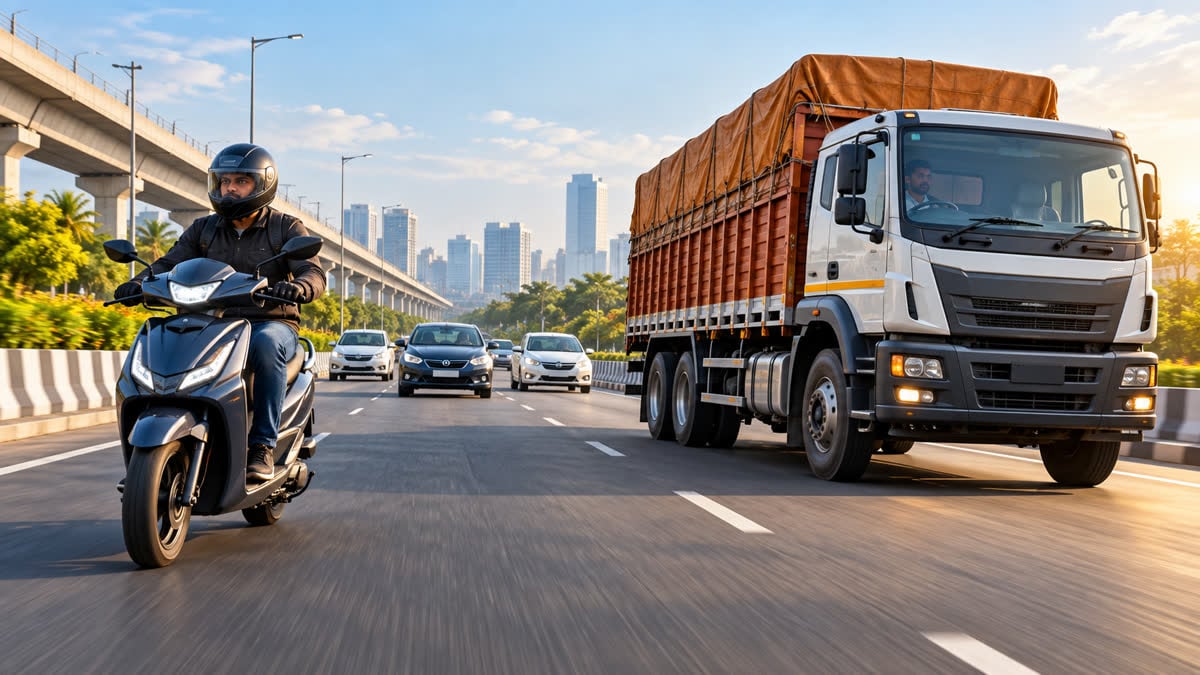
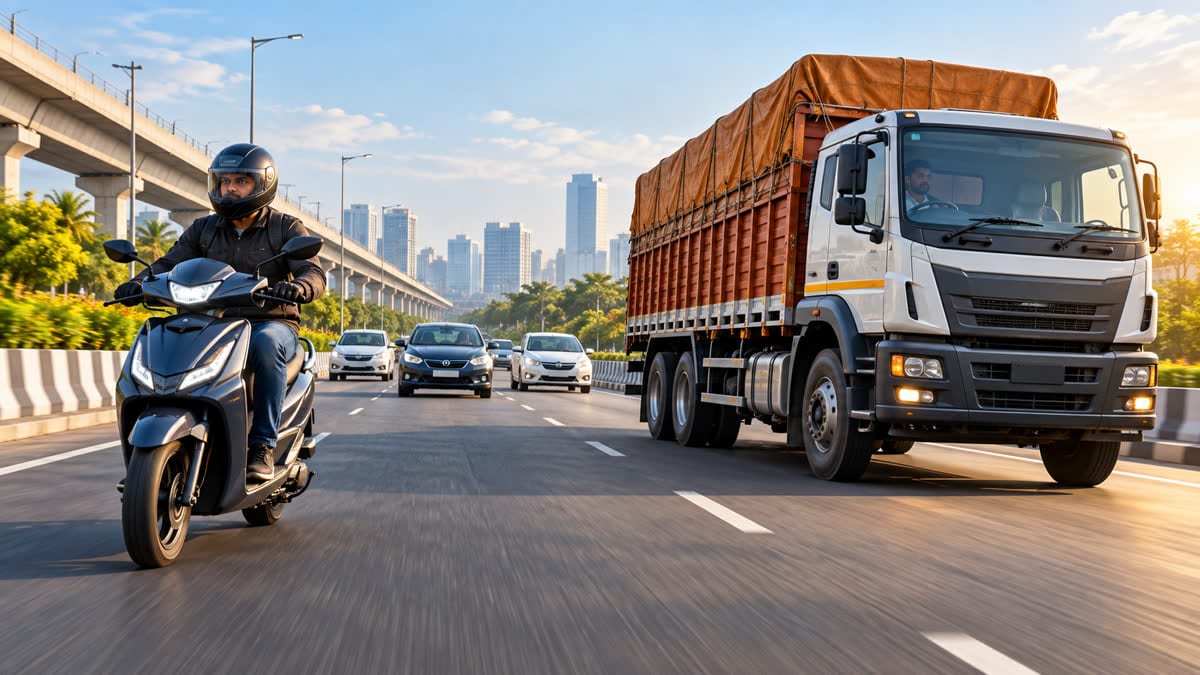 Editorial illustration of two-wheeler and commercial-vehicle demand in India; no specific brand or model is shown. Credit: FuelPrice illustration.
What the Emkay outlook says
The FY27 forecast was reported separately by The Economic Times and ABP Live on 04 Oct 2026. Both reports attribute the view to Emkay, which expects two-wheelers and commercial vehicles to have a better relative growth profile than passenger vehicles. That is an outlook, not a confirmed industry result: it describes what the research house expects to happen, rather than a promise that every model will sell faster or become cheaper.
The retail figures cited in both reports show why the view has drawn attention. Two-wheeler retail sales rose 33% year on year in September 2026, compared with 22% in the second half of FY26, 29% in July and 21% in August. Medium and heavy commercial vehicle retail sales rose about 50% year on year in September, against 30% in July and 29% in August.
Emkay linked its preference to demand strength, better pricing flexibility, higher commodity costs and the limited number of new passenger-vehicle launches expected in the period. For readers, the important distinction is between a segment-level direction and a specific purchase recommendation. A strong category can still contain models with different waiting periods, discounts, fuel costs and after-sales support.
Why the September numbers need context
The year-on-year comparison is being shaped by the calendar. Diwali falls in November in 2026 rather than October in 2025, and the September 2025 base was unusually high after some purchases were deferred around the GST-rate cut and then released into the market. Emkay therefore expects growth comparisons to become less straightforward as the festive season moves through the quarter.
That timing point matters for anyone reading monthly sales headlines. A softer percentage in one month will not automatically mean that demand has broken, just as a sharp increase will not prove that the entire year will repeat the same pace. Retail registrations, dealer inventory, dispatches and factory production also measure different points in the vehicle chain.
Retail momentum is not the same as wholesale volume
An independent ICICI Direct Research note published on 01 Oct 2026 found healthy September volume prints across India's original equipment manufacturers, with passenger vehicles and commercial vehicles growing at double-digit rates. It described commercial vehicles as the segment that outshone the others, while calling two-wheeler and tractor volumes more muted in its wholesale reading.
That does not necessarily contradict the Emkay figures. The Emkay numbers cited by ET and ABP are retail figures, while the ICICI Direct note discusses OEM volumes. Retail activity can reflect registrations and customer deliveries; OEM volume can reflect dispatches and production. Inventory and festive timing can make the two measures move at different speeds. Buyers and operators should therefore compare like with like before treating one monthly percentage as the market's complete picture.
What this means for two-wheeler buyers
For a commuter or household, the outlook is a reason to watch availability and running cost, not a reason to assume that a price cut is coming. Stronger demand can change the mix of stock that dealers carry, while a limited car launch pipeline may leave more attention on two-wheelers and their upgrades. The actual decision still depends on daily distance, passenger load, safety equipment, service access and the ownership period.
A realistic monthly fuel estimate is more useful than a segment headline. Compare the expected mileage and distance in a fuel cost calculator, then check current rates through the live fuel prices hub. Petrol, electric and other powertrain choices should be compared using the same distance and usage assumptions.
What this means for fleet and commercial-vehicle operators
The roughly 50% September MHCV retail increase is a strong signal to monitor, but it does not establish that every freight route or truck application has become more profitable. Operators need to test the vehicle against payload, utilisation, tolls, fuel, maintenance, driver availability and financing terms. A vehicle that looks attractive in an industry-growth story can still be unsuitable for a route with low load factors or long empty-return legs.
Route assumptions should be made explicit. The road-trip planner can help frame distance and stop requirements before an operator compares vehicle capacity or replacement timing. The result should be a route-level calculation, not a decision based only on a national sales percentage.
Where passenger vehicles fit
The Emkay view is a relative ranking, not a prediction that passenger-vehicle sales will stop. The reporting also describes passenger-vehicle demand as healthy, while suggesting that two-wheelers and commercial vehicles may grow faster in FY27. That distinction matters to car buyers: a slower expected growth rate for the segment does not automatically mean a specific car will receive a discount, have immediate stock or suit a particular family.
Passenger-vehicle shoppers should watch the same factors that determine value at the dealership: the exact variant, on-road price, delivery date, safety equipment, warranty terms and expected use. Industry forecasts can provide context, but they cannot replace a model-level comparison.
What to watch next
- October and November retail data, when the Diwali timing will make year-on-year comparisons especially important.
- Whether commercial-vehicle demand remains visible in both retail registrations and OEM dispatches.
- Commodity costs, dealer inventory and pricing flexibility across the three segments.
- New passenger-vehicle launches and whether they broaden the choice available to buyers.
- Whether two-wheeler and commercial-vehicle demand holds after the festive period rather than only during it.
For now, the clearest reader takeaway is measured: the latest reported Emkay outlook favours two-wheelers and commercial vehicles, and recent retail data gives that view a strong starting point. It remains a forecast, so buyers and operators should use their own fuel, route and ownership calculations alongside the next few months of confirmed sales data.
Sources
- The Economic Times — Two-wheelers, commercial vehicles set to outperform passenger cars in FY27: Report — 04 Oct 2026
- ABP Live — Cars may slow down in FY27, will bikes or trucks take the lead? — 04 Oct 2026
- ICICI Direct Research — Auto Volumes-September 2026: Broadly good show as base effect kicks in, CV outshines! — 01 Oct 2026