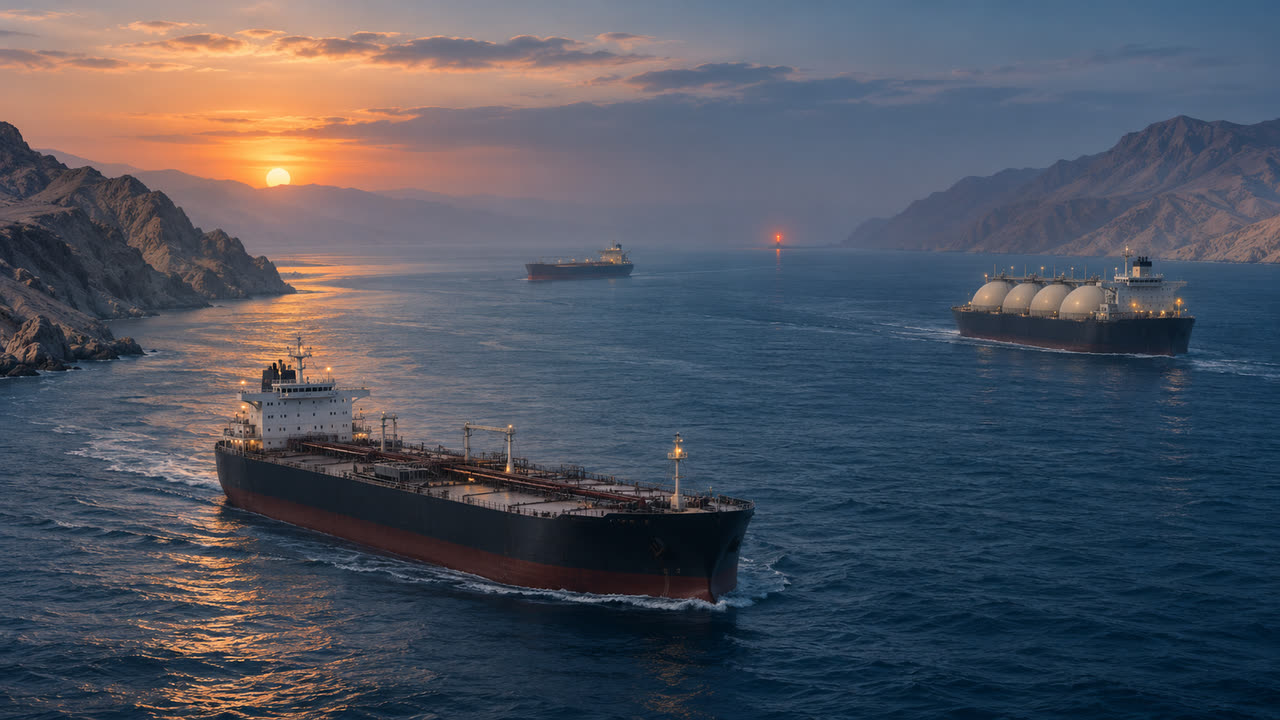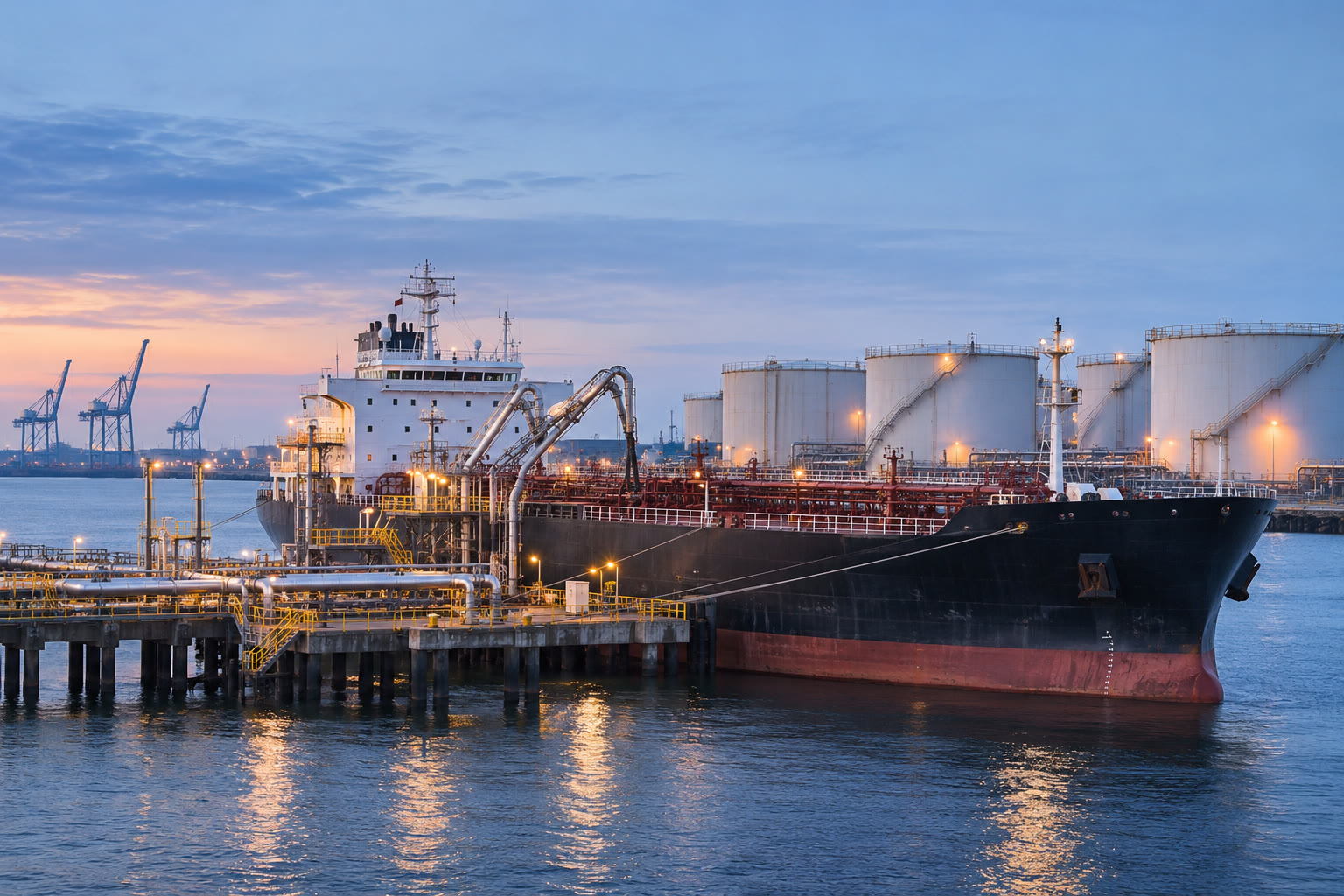
U.S. Customs and Border Protection (CBP) says a temporary Jones Act waiver for eligible oil and fuel cargoes will continue for 90 days from 16 Nov 2026. The extension keeps an approved route open for foreign-flagged vessels to move listed energy products between U.S. ports while fuel logistics remain under pressure, but it does not set retail prices or guarantee cheaper petrol or diesel.
Key takeaways
- CBP says the extension begins at 12:00 a.m. Eastern Time on 16 Nov 2026; covered cargo must be loaded before 11:59 p.m. Eastern Time on 14 Feb 2027.
- The measure applies to approved individual voyages, not an unrestricted suspension of the Jones Act. Vessel availability still has to be checked before a foreign-flagged ship can carry qualifying cargo between U.S. ports.
- Reported eligible products include gasoline, jet fuel, crude oil, naphtha, liquefied natural gas and fertilizers, alongside other items listed by CBP.
- The immediate effect is mainly U.S. domestic: the policy can add routing flexibility, but it does not reopen international chokepoints or change global crude supply by itself.
What changed on 16 November
CBP's Cargo Systems Messaging Service bulletin issued on 13 Nov 2026 says the Department of Homeland Security approved a further extension of the waiver originally issued on 17 Mar 2026. The new period starts at midnight Eastern Time on 16 Nov and runs for 90 days. CBP's notice sets 14 Feb 2027 as the loading deadline for covered products, so the deadline applies to when cargo is put on the vessel rather than necessarily when a voyage is completed.
The official notice also makes clear that the waiver is conditional. A company seeking to use a foreign-flagged vessel must send a vessel-availability request to the Department of War and the U.S. Maritime Administration (MARAD), with CBP copied for situational awareness. The request has to identify the vessel, owner, operator, carrier, ports, voyage dates and cargo, and explain why the voyage is in the interest of national defence.
Transport Topics, reporting for Bloomberg News, and WorkBoat independently reported the same 90-day continuation and its 16 Nov start date. Both also said the case-by-case vessel review introduced earlier in 2026 remains in place.
Why the Jones Act matters to fuel movements
The Jones Act, formally part of the Merchant Marine Act of 1920, generally requires merchandise moved between points in the United States by water to travel on a vessel that is U.S.-built, U.S.-owned and coastwise endorsed by the U.S. Coast Guard. MARAD says the law can be waived under national-defence authorities when the statutory conditions are met.
That rule matters because the United States has large distances between refining, storage and consumption centres. A Gulf Coast refinery may have product available while a different region needs gasoline, diesel, jet fuel or propane. Pipelines, railways, barges and tankers each offer different capacity and timing. If an eligible U.S. vessel is not available, the waiver creates another possible route, subject to the government's review of that specific voyage.
The extension is therefore best understood as a logistics measure rather than a new source of oil. It may help move fuel that already exists to a constrained U.S. destination, but it cannot manufacture refinery capacity, remove a port closure or lower the international crude benchmark on its own.
How much fuel has moved under the policy
Transport Topics and WorkBoat, citing government or White House data, reported on 13 Nov that the current waiver had supported about 13 million barrels of products. The same reports said gasoline accounted for more than one-third of that volume and crude oil about 28%. Those figures describe movements already enabled under the waiver; they are not a promise about how much will move during the new period.
The distinction is important for anyone watching fuel prices. A larger pool of possible vessels can reduce a transport bottleneck, but the final cost of petrol or diesel still depends on wholesale product prices, refinery margins, storage, local distribution, taxes and currency movements. The waiver also requires a review of U.S.-flagged vessel availability, so a foreign-flagged ship is not automatically approved for every cargo or route.
What it means for drivers and fleets
For drivers in the United States, the announcement is not a pump-price notice. It gives energy companies and traders an additional mechanism for moving certain cargoes, but there is no official promise of a specific saving per gallon or litre. Drivers elsewhere should treat the U.S. measure as market context, not as evidence that local fuel prices will fall.
When budgeting a journey, use the live fuel prices hub for a dated local input and the fuel cost calculator to estimate the route cost. An international shipping-policy headline is too far upstream to replace the fuel price actually available in a city or region.
Fleet and freight operators have a more direct reason to watch the extension. More possible coastal movements can affect regional availability and delivery timing, especially for fuel-intensive transport, agriculture and industrial users. But each operator still has to check whether the product is covered, whether a qualifying U.S. vessel is available, whether the proposed voyage receives approval and whether the commercial freight cost makes sense. The policy itself is not a shipping quote or a guarantee of supply.
Why the story matters outside the United States
The waiver's legal effect is domestic, so its global importance is limited compared with an OPEC+ decision or a change in international sanctions. Its wider relevance comes from the setting: a major energy market is using temporary shipping flexibility to manage regional fuel pressure while international routes and refined-product balances remain unsettled.
Any global spillover would be indirect. If U.S. coastal routing works more smoothly, it could change where some U.S. refined products are available and how much the country needs to import or export in a given period. That is a possible market effect, not a confirmed forecast. The CBP bulletin does not change foreign trade rules, international tanker insurance or the safety of any overseas route.
What happens next
Companies seeking an approved voyage must follow the process in CBP's 13 Nov bulletin. MARAD conducts a market survey for coastwise-qualified vessels before the proposed foreign-flagged movement can proceed, and the waiver holder must report the vessel, owner, dates, ports, cargo and national-defence explanation to MARAD no later than 10 days after the voyage concludes. The agencies publish the reports as part of their oversight.
The extension also leaves the policy debate open. WorkBoat reported that maritime groups oppose continuing the relief because they say it can displace U.S. ships and crews, while oil and chemical companies say the flexibility has helped move cargo more efficiently during the energy disruption. Those are competing positions; the confirmed change is the 90-day extension and its case-by-case approval process.
Unless another decision changes the timetable, the current CBP notice allows covered cargo to be loaded through 14 Feb 2027. The next useful signals will be the number and type of approved voyages, the agency's published reports, regional fuel availability and whether the administration extends, narrows or ends the waiver after that period.
Reader takeaway
The Jones Act waiver is a temporary logistics relief valve for the U.S. fuel system. It may make some domestic movements easier during a period of energy-market stress, but it is not a global oil-supply measure and it does not guarantee a lower pump price. For actual trip planning, local fuel rates and vehicle consumption remain the numbers that matter.
Sources
- U.S. Customs and Border Protection, “CSMS #70435180 - Updated Guidance #5: Implementation of Jones Act Waiver issued to the Department of War, dated March 17, 2026,” 13 Nov 2026
- U.S. Maritime Administration, “Domestic Shipping: The Jones Act and Waiver of the Navigation Laws,” accessed 16 Nov 2026
- Transport Topics / Bloomberg News, “Trump to extend shipping waiver for oil, fertilizer,” 13 Nov 2026
- WorkBoat, “Jones Act waiver extended again,” 13 Nov 2026
This article is for general information only and is not financial, insurance or legal advice.