U.S. Pitches 15-Point Ceasefire Plan; Iran Shrugs and Keeps the Region Guessing

Washington has put forward a detailed ceasefire proposal, but Tehran has dismissed the idea of negotiating directly while the conflict continues.

U.S. Pitches 15-Point Ceasefire Plan; Iran Shrugs and Keeps the Region Guessing

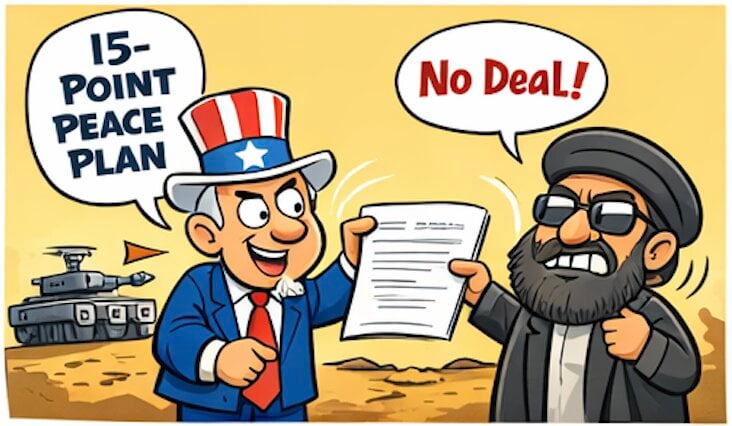
The United States has floated a 15-point ceasefire proposal aimed at cooling the war and restoring safer energy flows, including wider shipping access through the Strait of Hormuz. The problem is that Iran has publicly dismissed the idea of direct talks with Washington, while military and regional tensions continue in parallel. So yes, there is a peace plan. No, nobody sensible is ordering the celebratory cake yet.

The proposal matters because even the rumor of real diplomacy has moved oil and equities. But as long as Iran rejects the premise and fighting continues, the market is stuck in a cycle of hope, denial and expensive nervousness. For consumers, that means fuel risk remains more political than mathematical. It is not just about barrels; it is about whether the next headline comes from diplomats or missiles.

  • The U.S. sent a 15-point framework.
  • Iran rejected direct negotiations.
  • Markets still react to every diplomatic hint.

Watch: U.S. Drafts Plan to End Iran War; Stocks Rise, Oil Slips

Related Fuel News

More updates you might want to read next.

Kanpur-Kabrai NH-34 Highway Cleared At Rs 7,145 Crore: Why The BOT Toll Corridor Matters For Freight

The Cabinet has approved a Rs 7,145.14 crore, 117.7-km access-controlled greenfield highway between Kanpur and Kabrai on NH-34 in Uttar Pradesh. The BOT toll project is designed to cut travel time from 3.5 hours to 1.5 hours, strengthen links to the Kabrai mining belt and Bundelkhand corridor, and lower logistics friction for freight, construction material and agricultural movement.

India Resets Export Duty On Petrol, Diesel And ATF From July 1: Why Refiners, Airlines And Fuel Users Should Watch It

India has reset windfall-linked export duties from July 1, 2026 by raising the levy on petrol exports to Rs 4 per litre while cutting diesel and aviation turbine fuel export duties to Rs 8.50 and Rs 7.50 per litre respectively. The move matters because it changes refining economics, export incentives and the downstream pressure points that can eventually shape domestic fuel availability, airline costs and broader transport pricing.

Commercial LPG Down Rs 183.50, ATF Cheaper By Rs 5: What July Relief Means

State-run oil companies cut the 19-kg commercial LPG cylinder price by Rs 183.50 from July 1, 2026 and reduced aviation turbine fuel by Rs 5 per litre to about Rs 110 in Delhi. The move offers relief to restaurants, hotels and airlines, but household LPG, petrol and diesel users are still waiting.