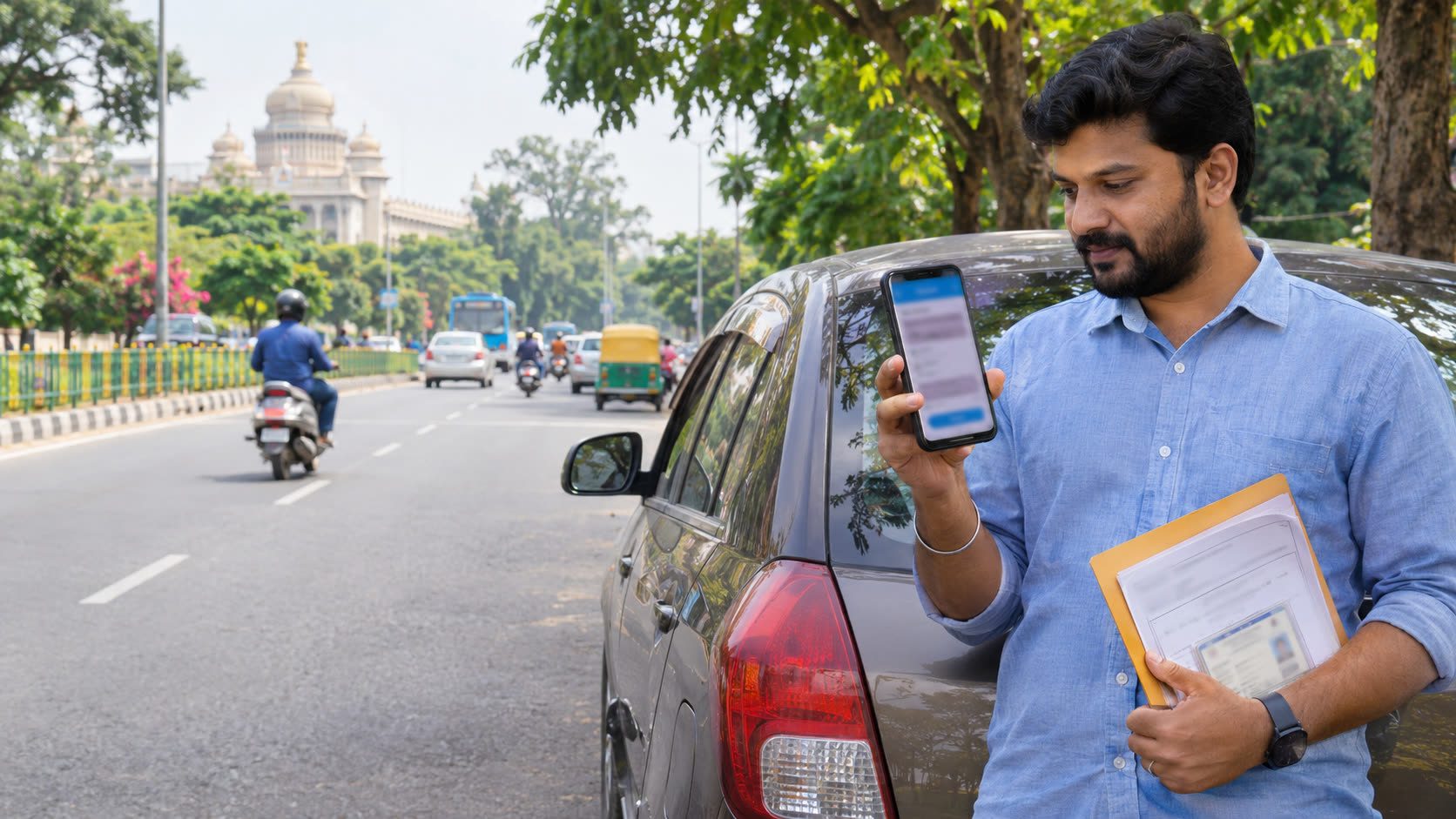
Vehicle owners who move need to update the address on their Registration Certificate (RC) through Form 33 and the VAHAN/Parivahan service; a fresh Autocar India guide dated 21 Nov 2026 sets out the online route. The important caution is a timeline mismatch: Section 49 of the Motor Vehicles Act, 1988 says within 30 days, while the official mParivahan service page currently tells applicants to apply within 14 days.
This is not a new nationwide fee or a same-day registration-number change. It is a current compliance and service-process issue that matters when a driver moves house, changes city or shifts the vehicle to another state.
Key takeaways
- Form 33 is the prescribed form for recording a changed residential address on an RC.
- India Code's Section 49 text gives a 30-day window for intimating the new address; the law also allows electronic submission.
- The official mParivahan address-change page currently carries a 14-day instruction, creating a mismatch that applicants should not ignore.
- Keep the RC, new address proof, valid insurance, PUC and any required financier NOC ready before starting the VAHAN application.
- Online submission does not always remove the need for a slot or RTO verification; the state and the application details decide that part.
Why the deadline needs careful reading
Section 49(1) of the Motor Vehicles Act, 1988 applies when the owner ceases to reside or have a place of business at the address recorded in the RC. It says the new address should be intimated to the registering authority within 30 days, with the prescribed documents and the RC. If the new address is in another state, the provision also permits intimation to a registering authority in that state.
The same section includes an electronic route for the intimation and says that failure to update within the specified period can lead to an amount of up to ₹500 under Section 49(2), subject to the applicable process. The statutory wording is therefore important for understanding the legal window.
The operational instruction on the current mParivahan Change of Address page is different: it says to apply within 14 days of the address change. That page cites Section 49 and Rule 59, but it does not explain why its service instruction is shorter than the 30-day period shown in the Act. The two figures are reported here as a conflict between official sources, not as interchangeable deadlines.
Until the registering authority or portal clarifies the mismatch, the safer practical course is to begin the application promptly and check the live instruction for the vehicle's state and RTO. A driver should not wait for the outer statutory window merely because one official page displays it.
Documents to keep ready
Rule 59 of the Central Motor Vehicles Rules, 1989 says the application for a change of residence should be made in Form 33 and accompanied by the RC, proof of address and the appropriate fee under Rule 81. The official mParivahan checklist adds the documents commonly used to complete the service.
- Form 33: the address-change application issued under the Central Motor Vehicles Rules.
- Existing RC: keep the certificate or its accepted digital record available for the application.
- New address proof: use a document accepted by the registering authority and ensure the address is complete and current.
- Vehicle records: mParivahan lists a valid insurance certificate and Pollution Under Control certificate.
- Financier consent: a No Objection Certificate may be required when the RC carries hire-purchase, lease or hypothecation details.
Some items on the official checklist are marked as state-dependent, including chassis or engine pencil prints, signature identification and additional identity documents. The portal or the concerned RTO can therefore ask for more than the basic national checklist.
How the online VAHAN process works
- Open vehicle-related services: go to the VAHAN/Parivahan service and select the registration state.
- Validate the vehicle: enter the registration number and the last five digits of the chassis number, then complete OTP verification using the registered mobile number.
- Select the service: choose Change of Address in RC and enter the new residential address.
- Upload the record: submit Form 33, the existing RC, address proof and any documents requested by the portal. The VAHAN workflow also asks the applicant to update insurance details.
- Review and pay: check the fee panel, pay the amount shown for the vehicle and state, and save the receipt and application acknowledgement.
- Complete verification if required: some services can be completed online, while others require an appointment, original-document check or RTO visit before approval.
The Odisha Motor Vehicle Department's published workflow follows the same broad sequence but explicitly includes booking a slot and producing the form at the RTO for document verification and approval. That is why “online application” should not be read as a guarantee that every case is fully faceless.
If you move to another state or have a vehicle loan
An address change and a change of registration mark are separate processes. Updating the residential address does not automatically give the vehicle a new number. A move across state borders can involve a No Objection Certificate and separate re-registration or reassignment requirements, depending on how long the vehicle is kept in the new state and the rules applied by the destination authority.
Financed vehicles need an additional check because Form 33 includes a financier-consent section. An address update does not remove the hypothecation entry from the RC; that entry remains until the loan is settled and the hypothecation is formally terminated. Owners should therefore confirm the document route with the financier and the registering authority when the RC carries a loan or lease endorsement.
What owners should check after submission
Save the application number, payment receipt and any appointment slip. Once the application is approved, verify that the new address appears in the vehicle record and that the insurance and PUC details shown in the service flow are accurate. Keeping the RC, insurance and pollution records aligned reduces friction when using other RTO services or receiving official communication.
If the move changes a daily commute or a planned inter-city drive, the road-trip planner can help organise the route and stops. A separate fuel-cost calculator can estimate the fuel effect of a longer commute, while the road-trip document checklist covers the other papers commonly checked before a journey.
Bottom line
The current record supports a clear, limited conclusion: Form 33 and VAHAN are the route for changing the address on a vehicle RC, but the official material presents two timelines. India Code shows 30 days in Section 49, while mParivahan displays 14 days on its service page. Because the figures are not the same, owners should start the process promptly, keep the evidence of submission and confirm any state-specific requirement with the registering authority.
Sources
- Autocar India — How to change your address on your vehicle's RC in India — 21 Nov, 2026
- India Code — The Motor Vehicles Act, 1988, Section 49 — accessed 22 Nov, 2026
- mParivahan, Ministry of Road Transport and Highways — Change of Address — accessed 22 Nov, 2026
- Ministry of Road Transport and Highways — Central Motor Vehicles Rules, 1989, Rule 59 — accessed 22 Nov, 2026
- Odisha Motor Vehicle Department — Change of Address workflow — accessed 22 Nov, 2026
- Parivahan — Form 33: Intimation of Change of Address — accessed 22 Nov, 2026