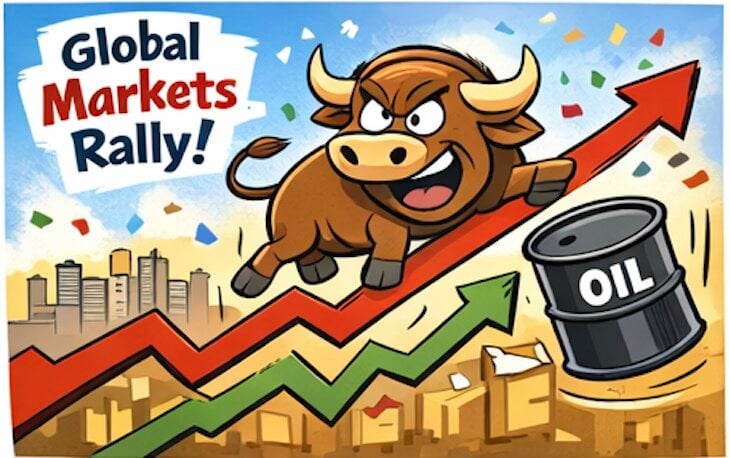
World Stocks Rally as Oil Falls, But War Risk Keeps Markets Honest

Global shares gained and oil fell more than 5% on de-escalation hopes, though the wider conflict still leaves markets vulnerable to sudden reversal.

World Stocks Rally as Oil Falls, But War Risk Keeps Markets Honest

Global markets staged a relief rally as oil fell more than 5% on signs that the war with Iran might cool. Equities in Asia and Europe climbed, and traders briefly acted like diplomacy had become a reliable asset class. That enthusiasm may be understandable, but it also looks a little early.

The same conflict that knocked crude lower on hope can just as easily drive it higher on disappointment. Iran has denied direct talks even as ceasefire chatter moved markets, and shipping conditions around Hormuz remain far from normal. That means this rebound is real, but fragile. For fuel watchers, the lesson is brutally simple: a softer crude chart today does not guarantee cheaper energy tomorrow. Volatility has merely changed outfit, not left the room.

  • World shares rose on de-escalation hopes.
  • Oil fell sharply as panic eased.
  • Markets remain exposed to renewed conflict headlines.

Watch: Market Talk: Iran Has a Strong Hand

Related Fuel News

More updates you might want to read next.

Kanpur-Kabrai NH-34 Highway Cleared At Rs 7,145 Crore: Why The BOT Toll Corridor Matters For Freight

The Cabinet has approved a Rs 7,145.14 crore, 117.7-km access-controlled greenfield highway between Kanpur and Kabrai on NH-34 in Uttar Pradesh. The BOT toll project is designed to cut travel time from 3.5 hours to 1.5 hours, strengthen links to the Kabrai mining belt and Bundelkhand corridor, and lower logistics friction for freight, construction material and agricultural movement.

India Resets Export Duty On Petrol, Diesel And ATF From July 1: Why Refiners, Airlines And Fuel Users Should Watch It

India has reset windfall-linked export duties from July 1, 2026 by raising the levy on petrol exports to Rs 4 per litre while cutting diesel and aviation turbine fuel export duties to Rs 8.50 and Rs 7.50 per litre respectively. The move matters because it changes refining economics, export incentives and the downstream pressure points that can eventually shape domestic fuel availability, airline costs and broader transport pricing.

Commercial LPG Down Rs 183.50, ATF Cheaper By Rs 5: What July Relief Means

State-run oil companies cut the 19-kg commercial LPG cylinder price by Rs 183.50 from July 1, 2026 and reduced aviation turbine fuel by Rs 5 per litre to about Rs 110 in Delhi. The move offers relief to restaurants, hotels and airlines, but household LPG, petrol and diesel users are still waiting.