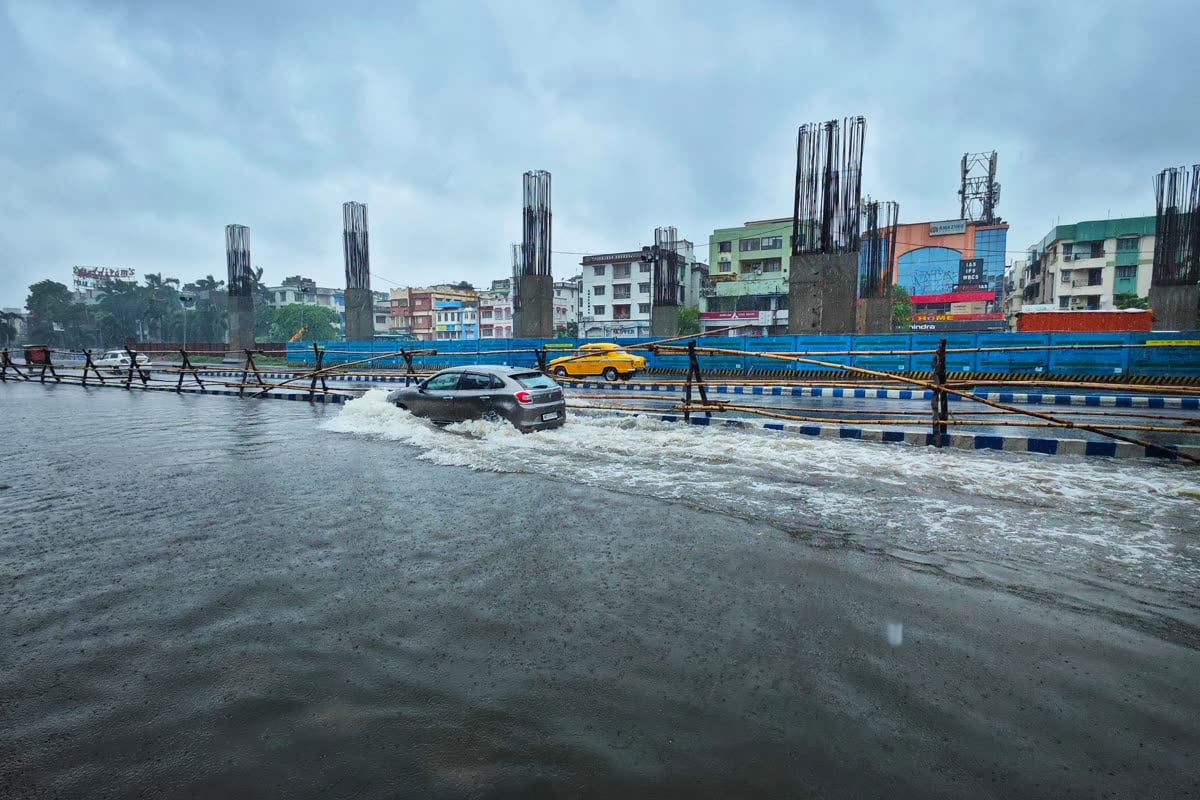
A flooded car can create two separate insurance questions: whether the vehicle has own-damage cover, and whether the policy covers water-related engine damage. This guide explains the difference, shows a dated rupee example, and gives a claim checklist that can be used after a waterlogging incident. It is especially relevant after the recent report on motor insurance add-ons for flooded roads, but it is written as a lasting guide rather than a rewrite of that news item.
- Third-party-only insurance pays for covered legal liability to other people; it does not repair your own flood-damaged car.
- Package, comprehensive or standalone own-damage cover can respond to eligible flood and natural-calamity damage, subject to the policy wording.
- Water entering the engine can be treated as consequential damage or hydrostatic lock, so a base policy does not automatically settle every engine bill.
- An engine-protection add-on and roadside assistance solve different problems: one addresses eligible internal-part damage, while the other generally helps with breakdown response or towing.
- Do not restart a stalled vehicle. Photograph the water level and damage, notify the insurer, and wait for inspection or written repair approval.
Start with the cover shown on your policy schedule
IRDAI says third-party liability insurance is mandatory for vehicles used on public roads. That cover is for legal liability arising from injury, death or property damage caused to a third party. It is not the same as cover for damage to the insured vehicle.
The India Motor Tariff describes a liability-only policy as third-party cover and a package policy as cover for loss or damage to the insured vehicle in addition to third-party liability. In current retail language, the own-damage part may appear inside a comprehensive or package policy, or as a standalone own-damage policy alongside a separate third-party policy.
- Find the words Section I, Own Damage, Package or Standalone Own Damage in the schedule.
- Check whether flood, inundation, storm or natural calamity appears among the insured perils and whether any exclusion narrows it.
- Confirm the vehicle's IDV, compulsory excess, voluntary excess and any lender or hypothecation details.
- Read the add-on list rather than relying on a sales label such as comprehensive.
| Policy position | Flood damage to your car | Engine water ingress | What it is meant to do |
|---|---|---|---|
| Third-party only | Not covered for your own vehicle | Not covered | Protects against covered liability to others |
| Package or comprehensive | Eligible accidental or natural-calamity damage may be covered | Depends on the base wording and exclusions | Combines third-party liability with own-damage cover |
| Own-damage plus engine protection | Eligible flood damage remains subject to the base policy | Eligible internal-part damage may be covered if the add-on is shown on the schedule | Closes a specific coverage gap; it is not a blank cheque |
| Constructive total loss | The standard tariff uses more than 75% of IDV as the threshold, subject to policy terms | Settlement depends on the loss assessment and applicable cover | Used when retrieval and repair costs cross the policy threshold |
The 75% threshold, as of October 2026, comes from the India Motor Tariff's IDV provisions and should be read with the actual policy conditions. A surveyor's assessment, the vehicle's IDV and the cause of damage all matter; the table is not a promise of settlement.
Why the engine is treated differently
A car can have flood damage to its body, upholstery, wiring, lights or other insured parts while also suffering internal engine damage. Hydrostatic lock occurs when water enters the combustion chamber and stops the piston from moving normally. Trying to crank a waterlogged engine can aggravate the loss and create a dispute about avoidable or consequential damage.
The Insurance Institute of India explains that standard comprehensive cover may handle eligible flood damage to many parts but may not cover engine damage caused by water ingress or hydrostatic lock. BusinessToday reported the same practical distinction on 26 October 2026, quoting an insurer executive who described water ingress and hydrostatic lock as typically excluded from the base policy.
There is an important qualification. An IRDAI working-group document recorded a recommendation that damage to engine parts caused by water ingress be part of the basic motor cover. That document is a recommendation, not a universal wording for every current product. The schedule, exclusions and endorsements issued with your policy control the claim. This is why the same word, “comprehensive”, cannot answer the engine question by itself.
What the common add-ons actually address
Engine protection
Engine protection is normally an additional cover that must appear on the schedule. A current Shriram General policy wording lists water ingression and certain consequential damage to internal engine or gearbox parts as covered events, while also requiring evidence of inundation and excluding losses caused by delay, lack of reasonable care or unauthorised repairs. Other insurers can use different names, limits, age conditions and exclusions.
- Look for coverage of internal engine, gearbox, differential or transmission parts, not only “engine assistance”.
- Check whether flushing, oil, lubricants, consumables, labour and towing are included or excluded separately.
- Note any limit on the number of claims, authorised-garage requirement, waiting period or vehicle-age condition.
Zero depreciation and consumables
Zero depreciation generally changes how depreciation is deducted from eligible replacement parts. Consumables cover can address items such as oils, coolants or small repair materials when the wording allows it. Neither add-on automatically converts an excluded engine-water-ingress event into a payable claim. Engine protection, zero depreciation and consumables are separate questions.
Roadside assistance
Roadside assistance is about the immediate breakdown: towing, help at the location or transport support, depending on the selected plan. BusinessToday notes that service limits vary. RSA can help move a stranded vehicle safely, but it is not the same as paying for engine rebuilding, wiring replacement or a total-loss settlement.
Return to invoice and total-loss covers
These covers are relevant when the car is stolen or treated as a total loss, subject to the schedule. They do not replace an engine-protection add-on for a repairable car. For a vehicle that may be unavailable for days, the practical financial question can also include alternative transport; the fuel cost calculator can help estimate a temporary commute budget if another vehicle is used.
Worked rupee example: how the owner's share can change
Illustration only, not a quote: as of October 2026, suppose a 1,200 cc private car has an eligible partial-loss repair estimate of ₹60,000. Assume the policy schedule shows a ₹1,000 compulsory deductible and the assessed depreciation or non-covered items total ₹8,000. The illustrative insurer payment is ₹60,000 − ₹8,000 − ₹1,000 = ₹51,000, leaving ₹9,000 with the owner.
If an eligible part falls under a valid zero-depreciation clause, the same illustration could remove the ₹8,000 deduction for that part, subject to the wording. If ₹25,000 of the estimate is an engine water-ingress repair excluded by the base policy, that amount remains outside the base calculation unless a valid engine-protection cover accepts it. Actual payment depends on the survey, policy limits, depreciation schedule, deductible and excluded items; the example is a way to read the math, not an estimate of any insurer's price.
Flood-damage claim checklist: what to do in order
- Make the scene safe. Move people away from moving water and electrical hazards. Do not enter a flooded road merely to retrieve the car.
- Do not restart the vehicle. If it stalled or was submerged, do not crank, push-start or drive it after the water recedes. Ask for professional recovery.
- Record evidence before cleaning. Take wide and close photographs of the location, water level, number plate, cabin, dashboard warnings, engine bay if safe to view, and visible damage. Note the date, time and location. Keep towing and emergency receipts.
- Notify the insurer promptly. Use the claim channel shown in the policy and ask for a claim number, towing instructions and the survey process. Also follow any time condition written in the policy.
- Wait for inspection and approval. Do not dismantle, flush, repair or authorise a garage to begin major work before the insurer or surveyor gives the required approval. The Shriram engine-protection wording expressly excludes repairs carried out without prior approval.
- Submit the document set. Keep the policy schedule, RC, driving licence, claim form, photographs, repair estimate, towing bill and payment details ready. A police report may be requested for theft, a missing vehicle or a particular loss; do not assume it is required for every parked-car waterlogging claim.
- Read the assessment line by line. Separate body, electrical, interior, engine, towing, depreciation, deductible and excluded items. If the decision is unclear, request the clause and calculation in writing and use the insurer's grievance channel before escalating through IRDAI's policyholder grievance system.
What to check before the next renewal
Use this five-minute policy audit before a high-rain period or renewal:
- Is own-damage cover active, or is the policy third-party only?
- Does the schedule list engine protection, and what parts, limits and exclusions does its wording contain?
- What are the IDV, compulsory excess, voluntary excess, repairer conditions and total-loss provisions?
- Does roadside assistance include towing from a waterlogged location, and is there a distance or incident limit?
- Are flood, inundation, hydrostatic lock, corrosion, consequential loss and delayed intimation addressed clearly?
For a broader explanation of zero-depreciation, engine protection and roadside assistance, see the car insurance add-ons guide. If heavy rain changes a planned drive, the road-trip planner can help review the route before setting out. A policy review is also a good time to keep digital copies of the schedule and claim contact details offline.
FAQ
Does third-party car insurance cover flood damage to my own car?
No. Third-party insurance is designed for covered legal liability to other people. Damage to the insured car requires an own-damage section, package/comprehensive cover or a standalone own-damage policy, subject to its terms.
Does comprehensive insurance always cover a flooded engine?
No. Eligible flood damage to insured parts may be covered, but water ingress, hydrostatic lock and consequential engine damage can be excluded or handled only through an engine-protection add-on. The policy schedule and wording are more important than the label “comprehensive”.
Should I start my car after it has stalled in floodwater?
No. Restarting can worsen internal damage and make the cause harder to assess. Photograph the scene, notify the insurer and arrange professional towing or inspection.
Is roadside assistance the same as engine protection?
No. Roadside assistance generally deals with breakdown response or towing, while engine protection addresses eligible internal-part damage under its own conditions. A policy can have one without the other.
Sources
- IRDAI — Motor Insurance: Policy Holder (accessed 26 Oct 2026)
- New India Assurance — India Motor Tariff, including package policy, IDV and constructive-total-loss provisions (2002 tariff; accessed 26 Oct 2026)
- IRDAI — Summary recommendations of the Working Group on Motor Own Damage cover, including the clarificatory note on water ingress (2019; accessed 26 Oct 2026)
- BusinessToday — Sudden rains, flooded roads: Which motor insurance add ons can protect your car from expensive repairs? (26 Oct 2026)
- Shriram General Insurance — Engine Protector: 3 Year Motor Private Car Package Policy wording (accessed 26 Oct 2026)
- Insurance Institute of India — INSUNEWS, Motor Insurance section, 19–25 June 2021
- Pexels — Cars Driving through a Flooded Street, Dibakar Roy (photograph; accessed 26 Oct 2026)
This article is for general information only and is not financial, insurance or legal advice.