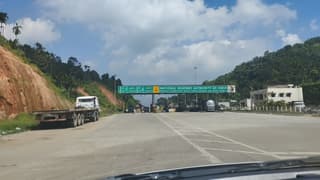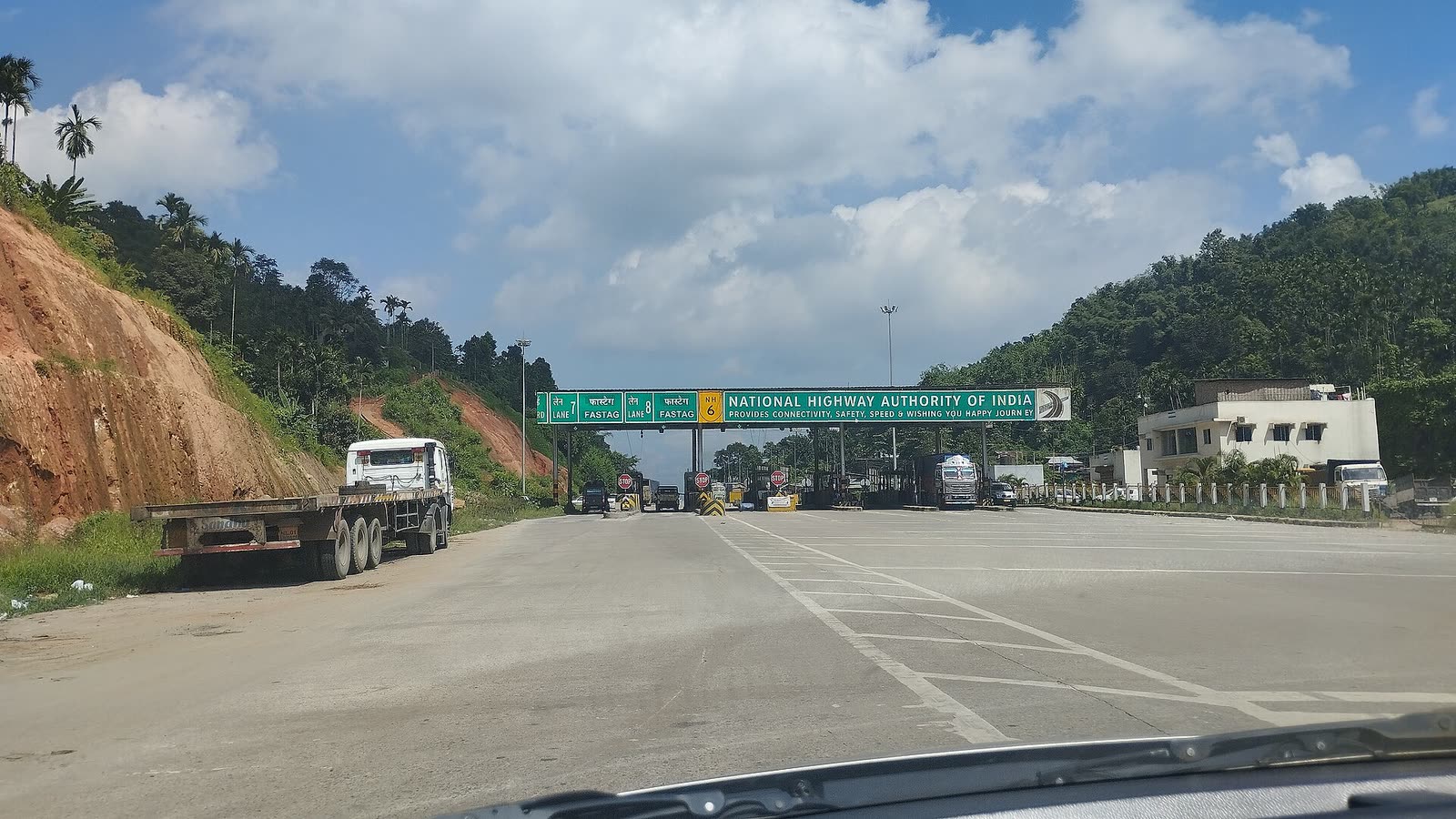
What drivers commonly call toll tax is a user fee for a particular road section, bridge, tunnel or expressway. The amount is not one nationwide price per kilometre: it depends on the tolled section, vehicle class, applicable fee rules and the concession or project arrangement. This guide explains the calculation, shows why FASTag deductions can differ from a quick estimate, and gives a practical way to budget tolls with fuel before leaving.
As of October 2026, NHAI's digital Local Pass and MargMitra services make it easier to check toll information, pass eligibility and complaints. The underlying calculation still begins with the same basics: route, plaza, vehicle category and the fee schedule in force on the date of travel.
Key takeaways
- FASTag is the payment and identification layer; it does not set the toll amount.
- Open tolling can charge a fixed fee for a project section, while closed systems use an entry-and-exit pair.
- Vehicle category, road width, bridges, tunnels, bypasses and concession terms can change the amount.
- NHAI user fees are revised periodically, so an old screenshot or receipt is not a live quote.
- Before a trip, check the exact entry and exit, vehicle class, one-way or return direction, and pass coverage.
What “toll tax” means in the Indian system
In official documents, the charge is generally called a user fee. NHAI's Toll Information System explains that India commonly uses an open tolling system: a fixed amount is charged for the project stretch covered by a plaza, normally for a section that can be around 60 km, rather than metering every kilometre driven. Where the tolled section is shorter, the fee can be based on the actual length. A closed system can instead calculate the fee from the entry and exit points.
- Road asset: a national highway, expressway, bridge, tunnel, bypass or other notified facility can have its own fee schedule.
- Vehicle class: a car, jeep or van is priced differently from an LCV, bus, two-axle truck or multi-axle vehicle.
- Project terms: a public-funded section and a BOT or concession-operated section may have different schedules and recovery conditions.
- Payment method: FASTag reads the vehicle and deducts the applicable amount from the linked account. It does not turn different plazas into one flat national rate.
How a toll amount is built
The National Highways Fee rules use base rates and the length of the applicable road section as important inputs for public-funded projects. NHAI's guidance also makes clear that a plaza fee can reflect the length of the section, structures such as bridges or tunnels, the highway width, the applicable rules and the concession agreement. The practical calculation therefore follows this sequence:
- Map the trip: identify the route, entry point, exit point and each toll plaza or fee point.
- Identify the fee section: determine which road project or structure the vehicle is using. Two roads between the same cities can have different tolls.
- Apply the vehicle category: use the car/jeep/van, commercial light vehicle, bus or truck schedule that matches the vehicle's registration and use.
- Apply the current revision: fee schedules are revised under the applicable rules, so the effective date matters.
- Apply the payment or pass rule: the final deduction may reflect a valid Annual Pass, Local Pass, return concession or another notified provision.
PIB's 7 August 2024 explainer shows how the base-rate inputs changed in the revision effective 3 June 2024. These are rule-based base rates, not a promise that every plaza will charge the same amount per kilometre.
| Vehicle category | FY 2023–24 base rate (₹/km) | FY 2024–25 base rate (₹/km) | Change |
|---|---|---|---|
| Car, jeep or van | 1.4301 | 1.4666 | 2.55% |
| LCV, LGV or mini bus | 2.3102 | 2.3691 | 2.55% |
| Bus or truck, two axle | 4.8403 | 4.9639 | 2.55% |
| Three-axle commercial vehicle | 5.2804 | 5.4151 | 2.55% |
The figures above are dated to the 3 June 2024 revision reported by PIB on 7 August 2024. They help explain the mechanism, but a driver should use the current plaza-level schedule for an actual October 2026 journey. The final amount may also be rounded according to the fee rules and the plaza's notification.
Why a FASTag deduction can differ from a quick estimate
A toll calculator is useful only when its inputs match the road actually used. Differences usually come from one of these points:
- Wrong vehicle class: selecting private car when the tag or registration is treated as a commercial vehicle can produce a different rate.
- Different route: a navigation app may choose an expressway, bypass or state-operated road with a separate fee from the national-highway route you expected.
- One-way versus return: some schedules publish single, return or multiple-journey amounts. A one-way estimate should not be doubled unless the same plazas and conditions apply on the return.
- Structure charge: a bridge, tunnel or elevated section can be priced under a special rule instead of a simple road-length assumption.
- Pass status: an Annual Pass or Local Pass has eligibility and coverage limits. A valid FASTag by itself does not mean every toll is free.
- Old data: annual revisions or a new fee notification can make a saved screenshot stale even when the route has not changed.
For a route-level estimate, enter the exact start and end points in FuelPrice's toll charge calculator and check the plaza list before you treat the result as a budget figure.
Worked rupee example: separate toll from fuel
Consider a dated plaza example rather than a generic national average. NHAI's Toll Information System lists the Chhajarsi plaza on the Delhi–Hapur section with a car/jeep/van fee effective 1 April 2025 of ₹175 for a single journey and ₹260 for a return journey. If a planned one-way trip crosses that plaza, the toll line is ₹175. If the journey qualifies for the published return condition, the return amount is ₹260; if it does not, two single journeys would total ₹175 + ₹175 = ₹350.
The difference is why a calculator should be checked against the exact plaza and date. DD News also reported on 2 April 2025 that the car toll at Chhijarsi rose from ₹170 to ₹175, corroborating the dated single-journey figure. These are a worked method and a historical schedule, not a current quote for every Delhi–Meerut journey.
Fuel is a separate line in the budget: distance ÷ real-world mileage × the live fuel price. Use FuelPrice's fuel cost calculator for that part, then add the toll estimate. This prevents a common mistake where a driver compares only the toll deduction and forgets that a longer route can add both fuel and time.
Annual Pass and Local Pass: when the fixed payment applies
Passes change how an eligible vehicle pays, but they do not change the underlying toll calculation for every road. The table below uses the official rules and announcements available as of October 2026.
| Option | Dated amount or limit | What it covers | What to verify |
|---|---|---|---|
| Pay per trip | No fixed pass fee | Applicable fee at each toll point on the route | Plaza, direction, vehicle class and current schedule |
| FASTag Annual Pass | ₹3,075 for FY 2026–27 from 1 April 2026; one year or 200 crossings, whichever comes first | Eligible non-commercial car, jeep or van travel at covered National Highway and National Expressway fee plazas | Eligibility, activation, covered plaza and remaining crossing count |
| Digital Local Pass | Monthly validity; fee is plaza-specific | Unlimited travel through the selected eligible plaza for residents within 20 km, subject to applicable provisions | Registered address, linked FASTag and whether that plaza is enabled |
NHAI's Annual Pass announcement set the FY 2026–27 fee at ₹3,075 from 1 April 2026, with one-year or 200-crossing validity. Its terms specify the eligible private-vehicle categories and covered fee-plaza scope. The pass is not a universal replacement for checking a route: a journey can include state, private or other charges that are outside the covered network.
NHAI launched the Digital Local Pass in July 2026 and said eligible residents within 20 km of a plaza could use unlimited passage through that selected plaza during the month. PIB reported on 18 August 2026 that online Local Pass availability had expanded to 121 toll plazas. For the detailed activation steps, see FuelPrice's guide to the FASTag Annual Pass eligibility and status and the separate FASTag Local Pass rules.
What to check before a road trip
Use this checklist before relying on a toll estimate:
- Confirm the vehicle category: use the vehicle's actual private or commercial status, not just its body style.
- Set the exact route: record the entry and exit cities, expressway choice and any planned bypass.
- Check the plaza schedule: compare the calculator result with the official NHAI toll information for each plaza where possible.
- Mark one-way and return separately: confirm whether a return or multiple-journey rate is offered and whether the return is within its validity.
- Check pass coverage: confirm Annual Pass or Local Pass eligibility, activation and the roads included before assuming a zero deduction.
- Budget fuel and time: combine toll, fuel and likely stops in FuelPrice's road-trip planner.
- Save the transaction trail: retain the FASTag SMS, receipt, route and date so a wrong deduction can be compared with the plaza record.
Frequently asked questions
Is toll calculated only by distance?
No. Distance or the length of a tolled section is one input. Vehicle class, highway width, bridges, tunnels, bypasses, project terms and the applicable fee notification can all affect the final amount.
Why can two toll plazas on the same highway charge different amounts?
Each plaza can serve a different project section or structure, and its fee can be based on different length, concession or notification terms. The route's total is the sum of the applicable fee points, not necessarily one uniform rate.
Does the FASTag Annual Pass cover every toll in India?
No. The FY 2026–27 Annual Pass is for eligible non-commercial cars, jeeps and vans at covered National Highway and National Expressway fee plazas, with one year or 200 crossings as the stated limit. Check the planned route and plaza coverage before relying on it.
What should I do if the FASTag amount looks wrong?
First compare the deduction with the plaza, date, direction and vehicle category shown in the receipt or message. Keep the transaction reference and raise the issue through the FASTag issuer or the relevant NHAI service channel; the digital MargMitra service is also intended to help with refund status, blacklisting and complaints.
Sources
- NHTIS, “FAQs” on tolling, accessed 17 Oct 2026
- PIB, “Formula for Toll Collection”, 6 Dec 2023
- PIB, “Toll Collection on Highways”, 7 Aug 2024
- NHTIS, “Chhajarsi Toll Plaza Information”, fee effective 1 Apr 2025
- DD News, “NHAI hikes toll charges on highways and expressways across country”, 2 Apr 2025
- PIB, “NHAI to Revise FASTag Annual Pass Fee from 1st April 2026 for FY 2026–27”, 15 Mar 2026
- NHAI RajmargYatra, “Annual Toll Pass: Terms and Conditions”, accessed 17 Oct 2026
- PIB, “NHAI Enhances Digital Services on RajmargYatra Mobile App with Launch of Digital Local Pass and MargMitra Help Centre”, 20 Jul 2026
- PIB, “NHAI Extends Digital FASTag Local Pass Facility to 121 Toll Plazas Across the Country”, 18 Aug 2026
- Wikimedia Commons, “National Highway 6 Toll Plaza”, CC BY-SA 4.0, 6 Oct 2022