India's motor-insurance penalty rule changed on 15 August 2026, and the change matters whenever a car or bike is used on a public road without valid third-party cover. This guide explains the current formula, what third-party insurance does and does not cover, how the reported NHAI toll-plaza alert pilot fits into enforcement, and the documents to check before a trip.
The practical takeaway is simple: an NHAI alert is a prompt to verify your records, not a nationwide toll fine. The legal starting point is still an active third-party policy, while own-damage protection and add-ons must be checked separately in the policy schedule.
Key takeaways
- Section 146 of the Motor Vehicles Act requires third-party motor insurance to be in force when a vehicle is used in a public place.
- From 15 August 2026, the first uninsured-driving contravention carries three times the applicable base premium or ₹5,000, whichever is higher.
- A subsequent contravention uses five times the applicable base premium or ₹10,000, whichever is higher.
- The reported NHAI SMS system is being tested at Delhi's Mundka toll plaza; current reports do not establish a nationwide rollout at every plaza.
- Third-party cover protects against specified liability to others. It does not automatically pay for damage to the policyholder's own vehicle.
- Before driving, match the policy schedule, RC, insurer record and vehicle-status record, and keep proof of active cover available.
What changed from 15 August 2026
The Jan Vishwas (Amendment of Provisions) Act, 2026 amended Section 196 of the Motor Vehicles Act for driving an uninsured vehicle. MoRTH's S.O. 4100(E), dated 24 July 2026, appointed 15 August 2026 as the commencement date for the relevant Motor Vehicles Act amendments. The Gazette wording replaces the earlier fixed-amount formulation with a comparison linked to the vehicle's applicable base premium.
This is why a headline that says an uninsured vehicle can attract a ₹10,000 penalty needs context. The figure is the minimum comparison for a subsequent contravention; the law also uses a multiple of the applicable base premium. The amount is not a new toll charge, and the reported NHAI pilot does not by itself mean that every vehicle crossing a toll plaza is automatically fined.
What third-party motor insurance covers
Section 146 requires a policy covering third-party risks before a motor vehicle is used in a public place. Section 147 describes the required policy protection for specified liability arising from death, bodily injury or damage to third-party property, subject to the Act and policy terms.
Third-party cover
- It is the mandatory legal base cover for ordinary use of a vehicle on public roads.
- It is designed around liability to another person or third-party property, not routine repair costs for the policyholder's own car or bike.
- The certificate or policy schedule should show the vehicle identity, insurer, policy period and the relevant third-party cover.
Own-damage cover is separate
Own-damage cover deals with loss or damage to the insured vehicle under the policy terms. Zero depreciation, engine protection, roadside assistance and return-to-invoice are separate features or add-ons. A vehicle can have a valid third-party record while the owner still needs to check whether own-damage cover is active, what deductible applies and which exclusions are listed.
Do not infer the whole protection package from a short status message. Read the policy schedule and wording, especially after a renewal, vehicle transfer, insurer change or claim.
Penalty formula, with a worked rupee example
| Situation | Rule as of November 2026 | Effective date or source |
|---|---|---|
| Vehicle used in a public place | Third-party insurance must be in force. | Motor Vehicles Act, Section 146 |
| First uninsured-driving contravention | Three times the applicable base premium or ₹5,000, whichever is higher. | Section 196 amendment in force 15 August 2026 |
| Subsequent contravention | Five times the applicable base premium or ₹10,000, whichever is higher. | Section 196 amendment in force 15 August 2026 |
| NHAI alert pilot | Reported insurance-status SMS testing at Mundka toll plaza on Delhi's UER-II. | Reports dated 17 and 18 November 2026 |
Illustration: assume the applicable base premium for a vehicle is ₹1,500. This is a worked example, not an insurer quote. For a first contravention, three times ₹1,500 is ₹4,500; the comparison is ₹4,500 versus ₹5,000, so the higher figure is ₹5,000. For a subsequent contravention, five times ₹1,500 is ₹7,500; the comparison is ₹7,500 versus ₹10,000, so the higher figure is ₹10,000.
The base premium in this example is not the same as the owner's total insurance bill. A real quote can contain own-damage premium, add-ons, taxes and other components. The legal comparison must be read against the applicable base premium for the vehicle and the law in force on the relevant date.
How the NHAI toll-plaza pilot fits in
ET Auto reported on 17 November 2026 that NHAI was testing a system at the Mundka toll plaza on Urban Extension Road-II. According to that report, toll-plaza vehicle details are matched with insurance information in the VAHAN database and an SMS can be sent when the record shows expired or missing third-party insurance. NDTV reported the pilot on 18 November 2026 and said the message can include the registration number, crossing time and recorded expiry date.
The reports describe a reminder and awareness mechanism at a pilot location. They do not establish that every NHAI plaza has the system, that a message is a toll deduction, or that the message alone is a completed challan. For the event background, read FuelPrice's reported NHAI toll-plaza insurance-alert update.
What to check when an alert arrives
- Compare the registration number in the message with the RC and the policy schedule.
- Compare the stated expiry date with the insurer-issued certificate and renewal receipt.
- Open the insurer or government website separately rather than using an unverified SMS link.
- Do not share an OTP, card number or account password to resolve an insurance alert.
- If the policy is active but the vehicle record is stale, ask the insurer to reconcile the record through its official support channel.
Compliance checklist before driving
- Check the policy period: confirm that third-party cover is active on the day of departure and for the planned journey.
- Match the vehicle: compare the registration number in the policy with the RC, number plate and insurer account.
- Separate the covers: note whether own-damage protection and any important add-ons have the same active dates.
- Keep the documents: save the current policy PDF, renewal receipt and RC where the driver can retrieve them offline.
- Resolve a mismatch: share the policy schedule and vehicle record with the insurer and retain its correction confirmation.
- Check after a transaction: a payment receipt is not the same as an issued policy; verify the certificate and period of cover.
- Review before a highway trip: use FuelPrice's road-trip document checklist, then use the road-trip planner to organise the route.
- Budget separately: insurance compliance does not calculate tolls or fuel. Use the toll-charge calculator hub for the route's user-fee estimate.
What fleet and commercial owners should record
- Maintain one record per vehicle for registration number, policy number, insurer, third-party expiry and own-damage expiry.
- After a renewal, store the issued certificate and check that the vehicle and insurer details are identical across documents.
- When a vehicle changes owner, driver, route or registration details, add a document review to the handover process.
- Keep an escalation path for an alert that conflicts with an active policy, rather than asking a driver to ignore it.
These controls reduce the chance that an old PDF, a forwarded screenshot or a renewal payment is mistaken for current proof of cover. They also make it easier to explain a mismatch to the insurer or transport authority.
Frequently asked questions
Is third-party insurance mandatory for a car and a bike?
Yes. Section 146 applies the public-place insurance requirement to motor vehicles, subject to the Act's provisions and exemptions. The policy must satisfy the third-party requirements; own-damage protection is a separate choice under the policy.
What is the uninsured-vehicle penalty after 15 August 2026?
As of November 2026, Section 196 uses three times the applicable base premium or ₹5,000, whichever is higher, for a first contravention. For a subsequent contravention, it uses five times the base premium or ₹10,000, whichever is higher.
Does the NHAI SMS mean I have already received a fine?
Not automatically. The November 2026 reports describe a pilot that sends an insurance-status alert after a toll crossing. Verify the vehicle and policy details and use official enforcement channels for any separate notice.
Does third-party insurance pay for damage to my own vehicle?
Not as a general rule. Third-party cover addresses specified liability to others, while damage to the policyholder's own vehicle depends on own-damage cover and its terms. Check the policy schedule, deductible and exclusions.
Sources
- ET Auto, NHAI to send SMS alerts to vehicle owners with expired insurance at toll plazas — 17 November 2026
- NDTV, NHAI's New Toll System Can Flag Uninsured Vehicles; Fine May Reach Rs 10,000 — 18 November 2026
- India Code, The Motor Vehicles Act, 1988 — official Act text
- MoRTH, S.O. 4100(E) notification on the 15 August 2026 commencement date — 24 July 2026
- Gazette of India, Jan Vishwas (Amendment of Provisions) Act, 2026 — 7 April 2026
- IRDAI, Bima Bemisaal motor-insurance awareness booklet — official guidance
- PIB, Plying motor vehicles without valid motor third-party insurance is a punishable offence — 11 June 2024
- Parivahan Analytics, Know Your Vehicle Details — accessed 19 November 2026
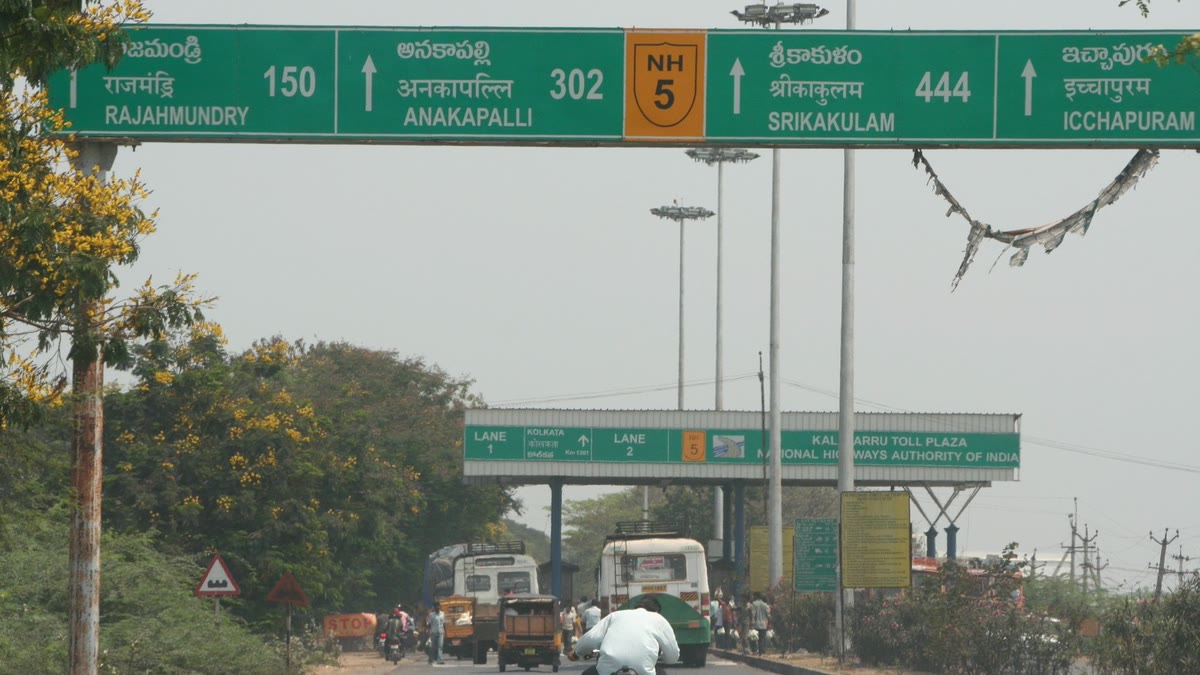
- Image: Wikimedia Commons, Toll gate on Vijayawada to Visakhapatnam highway — CC BY 2.0 photograph by vijay chennupati, 17 March 2010
This article is for general information only and is not financial, insurance or legal advice.