Usage-based car insurance links part of your own-damage premium to how far a car is driven or how it is driven, using telematics data from a connected car, device or app. This guide explains Pay-As-You-Drive and Pay-How-You-Drive, shows current Indian terms, and gives a renewal checklist so the discount, coverage and data-sharing conditions are clear.
Key takeaways
- IRDAI allowed insurers to file Pay-As-You-Drive and Pay-How-You-Drive add-ons for motor own-damage cover from 05 Jul 2022; the circular did not create one identical product for every insurer.
- PAYD primarily measures distance or usage. PHYD measures behaviour such as acceleration, braking, speed control, cornering or idling, depending on the policy wording.
- As of November 2026, a Hyundai Bluelink programme uses three months of driving data, a 90-day renewal window and a score of 70 or above as possible eligibility signals; a benefit can reach 15% of the own-damage premium in certain cases, subject to insurer terms.
- A usage-based benefit generally changes the own-damage part of the quote. It does not automatically remove third-party liability, taxes, add-ons, deductibles or exclusions.
- Read the score calculation, kilometre limit, data recipients, consent language, device-failure rules and claim conditions before treating a lower renewal quote as a saving.
- For a complete ownership view, compare the insurance number with your fuel and trip budget using the Fuel Cost Calculator.
What usage-based car insurance means
Traditional motor insurance pricing uses information about the vehicle, its insured value, location, use and claims history. A usage-based product adds measured information about the vehicle's mileage or driving pattern. The insurer then uses that information to calculate a discount, a loading, a kilometre-based benefit or another own-damage pricing adjustment stated in the policy schedule.
IRDAI's circular dated 05 Jul 2022 permitted general insurers to introduce Pay-As-You-Drive and Pay-How-You-Drive concepts as add-ons to the basic Motor Own Damage policy. The circular created room for products, but eligibility, data methods, score bands, pricing and exclusions still come from each filed product and its policy wording.
- Pay-As-You-Drive (PAYD): the pricing or cover condition is linked mainly to kilometres driven or declared usage. A low-use owner may see a different own-damage quote, while a kilometre limit can trigger a top-up or revised condition.
- Pay-How-You-Drive (PHYD): the score is linked to measured driving behaviour. A policy wording may consider acceleration, deceleration, hard braking, speeding, cornering, idling or distance.
- Connected-car UBI: the manufacturer or service provider may calculate a score from factory-fitted vehicle data and pass it to a participating insurer with the customer's consent.
Usage-based cover is not a replacement name for comprehensive insurance. It is a way of pricing or adding to the own-damage side of a motor policy. The base policy schedule tells you what is covered, for how long and subject to which exclusions.
How telematics turns driving into an insurance score
A telematics arrangement normally follows a chain.
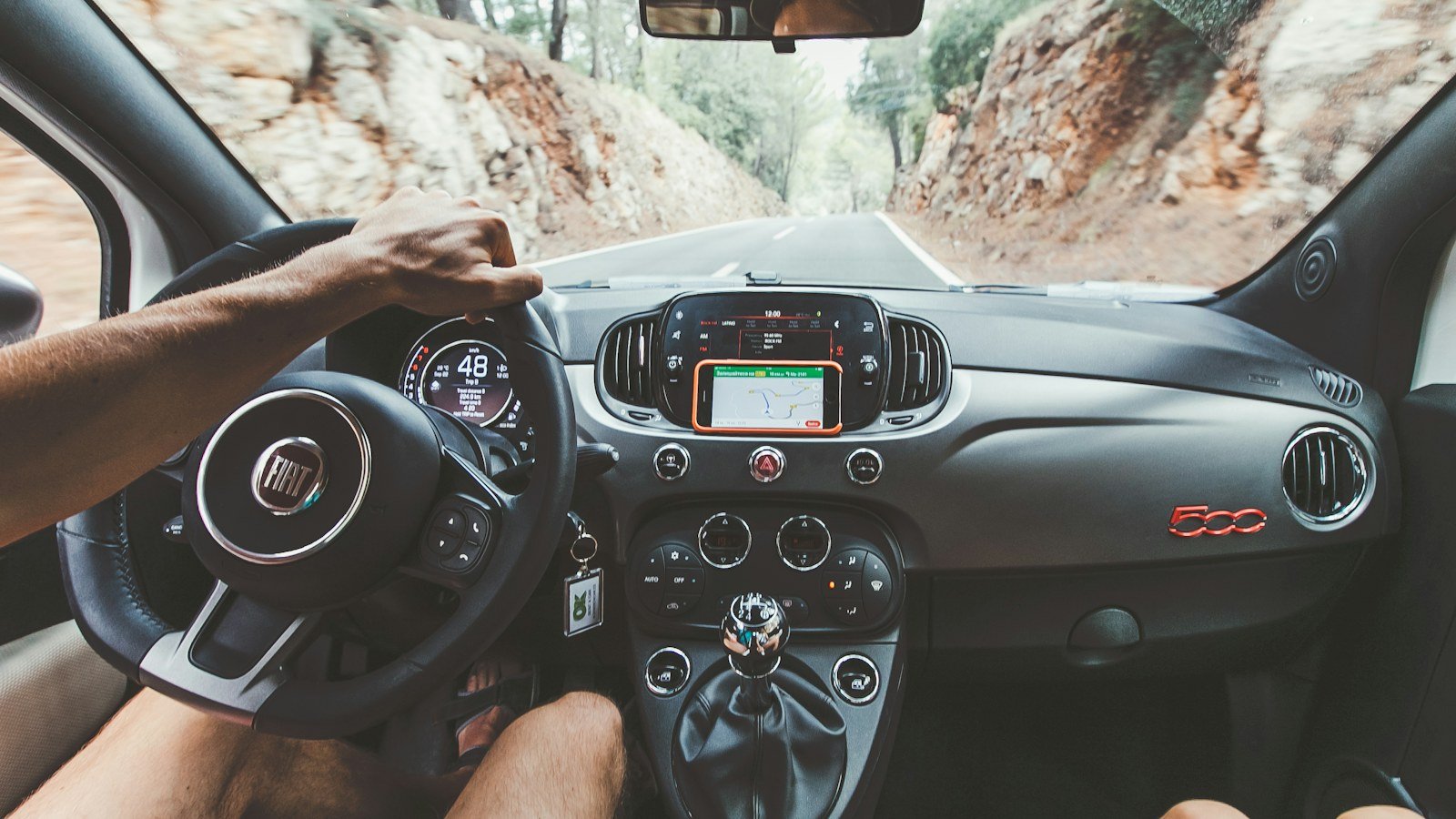
- Data capture: a connected-car module, an OBD device, a mobile app or another approved device records vehicle-use signals. The data may be generated by the vehicle, an OEM, a service provider or the insurer.
- Trip processing: the system converts raw signals into measures such as distance, speed control, acceleration, braking, cornering or idling. An event such as a hard brake is a measured event, not automatically proof that a driver was at fault.
- Scoring or kilometre matching: the provider applies its method to produce a score or compare actual use with a selected distance plan. One product may reward a band; another may change the available benefit when the declared limit is exhausted.
- Underwriting: the insurer considers the score with the normal proposal and vehicle information. The score is an input, not a promise that the policy will be issued at a particular price.
- Renewal: the discount or loading is normally applied to the own-damage premium at renewal, while third-party liability, taxes, add-ons and other charges continue under their applicable terms.
One current IFFCO-Tokio Pay-How-You-Drive wording defines the behaviour score using information from a data-tracking device and says the data is collected with the insured's consent. It also illustrates why the policy schedule matters: a score can affect the own-damage premium, and device tampering or non-functioning technology can affect the add-on benefit.
PAYD vs PHYD vs a conventional policy
| Option | Main input | Dated Indian evidence | What to check |
|---|---|---|---|
| Conventional motor policy | Vehicle, use, insured value and other underwriting information | No UBI score is required by the product itself | Own-damage cover, third-party term, IDV, deductible, add-ons and exclusions |
| PAYD add-on | Distance, odometer reading or selected usage plan | IRDAI permission effective 05 Jul 2022; a current Shriram wording uses an agreed kilometre plan | How kilometres are measured, what happens after the limit, top-up price and claim treatment |
| PHYD add-on | Driving behaviour score | IRDAI permission effective 05 Jul 2022; an IFFCO-Tokio wording uses acceleration, braking, cornering, speeding and kilometres | Score bands, discount or loading, data source, device rules and renewal formula |
| Hyundai Bluelink UBI example | Connected-car driving behaviour | As of 05 Nov 2026: three months of data, renewal due within 90 days, score of 70 or above may qualify, and up to 15% own-damage savings in certain cases | Eligible vehicle and insurer, consent, final underwriting terms and the fact that 15% is not the whole bill |
What the current Hyundai example tells car owners
The recent Hyundai Bluelink insurance report is a useful real-world example of how UBI is moving from an abstract concept to a renewal workflow. As reported on 05 Nov 2026, eligible Bluelink-connected customers can view a score in the app when their insurance renewal is due within the next 90 days and choose whether to share it with participating insurers.
- The preceding three months of driving behaviour are used for the score.
- The reported signals include rapid acceleration, rapid deceleration, braking, speed control and idling behaviour.
- The programme uses existing vehicle connectivity, so an additional tracking device is not required for this example.
- A score of 70 or above may make a customer eligible for an insurance benefit, but the insurer's underwriting policy and terms still control the result.
- Reports say savings can reach up to 15% of the own-damage premium in certain cases. That is a ceiling for the own-damage component, not a blanket 15% reduction in the final bill.
Separate the headline percentage from the quote: the policy schedule should show the OD premium, benefit, third-party charge, taxes, add-ons and deductible. The reported first phase includes three participating insurers, but availability and terms can change.
Worked rupee example: why the headline percentage is not the bill
Assume, only for illustration, that a renewal quote has an own-damage premium of ₹10,000 and the customer is offered the full 15% benefit described above. The calculation is:
- Own-damage premium: ₹10,000
- Illustrative benefit: 15% of ₹10,000 = ₹1,500
- Illustrative own-damage premium after that benefit: ₹8,500
That ₹1,500 is not a guaranteed saving and ₹10,000 is not a market quote. It is a worked example showing the base to which the percentage applies. If the policy also has third-party liability, taxes, roadside assistance, zero-depreciation cover or other add-ons, the final amount will not fall by 15% unless the policy document says every component is reduced.
When comparing a renewal, record the old and new figures line by line. The four-layer motor insurance guide explains how to separate the main cover components before comparing a new quote.
Who needs to look closely at the trade-off
Usage-based insurance can be relevant to different owners for different reasons. A lower premium should not be treated as the only decision factor.
- Low-use owners: a PAYD structure may be worth examining when the car spends long periods parked, but the kilometre estimate and top-up rule are critical.
- Predictable, smooth driving: a PHYD structure may be easier to evaluate when the score shows how events are counted and how the benefit is calculated.
- Shared vehicles: if more than one person drives, check whether the score belongs to the vehicle, the enrolled driver or every recorded trip. A score may not identify who was driving during an event.
- Connected-car owners: check whether the vehicle, variant and software version are eligible, whether the feature is active for the entire scoring period and whether a service lapse affects the score.
- Privacy-conscious owners: identify the data collected, the parties receiving it, the purpose, retention period and the process for withdrawing or changing consent.
IRDAI's 2024 policyholder-protection regulations require insurers and distribution channels to keep policy information confidential and say it should not be shared with a third party without the policyholder's explicit consent, subject to stated exceptions such as underwriting, claims or authority-approved use. That makes the consent screen and data notice part of the insurance decision.
What to check before choosing or renewing a UBI policy
- Separate the cover: write down the own-damage premium, third-party premium, taxes, add-ons and deductible separately.
- Ask what is measured: confirm whether the product tracks kilometres, speed, time, location, braking, acceleration, cornering, idling or another signal.
- Read the scoring period: note the start date, minimum data needed, renewal window and whether a new driver or vehicle transfer changes the calculation.
- Find the formula: check the score bands, maximum discount, any loading, and whether the benefit is applied only at renewal.
- Check the distance rule: for PAYD, find the declared kilometre limit, odometer process, top-up price and the claim position after the limit is exhausted.
- Review consent: identify the service provider, insurer, broker or OEM receiving the data, the purpose of sharing and how consent can be changed or withdrawn.
- Check device failure and tampering: understand what happens if the device, app, phone permission or connected-car service stops recording.
- Compare protection, not just price: compare IDV, deductibles, exclusions, repair scope and add-ons. For claims-related metrics, use the claim settlement ratio guide as background, but read the actual policy wording.
- Budget the full ownership cost: combine the renewal quote with fuel, tolls and planned travel using the road-trip planner when the car is used for longer trips.
Frequently asked questions
Is usage-based insurance the same as comprehensive car insurance?
No. Usage-based insurance is a pricing or add-on approach that can sit with own-damage cover. Whether the policy is comprehensive, what third-party cover is included and which losses are excluded are determined by the policy schedule.
Can a low driving score increase the premium?
It depends on the product. Some policy wordings describe both discount and loading bands, while a particular manufacturer programme may only describe eligibility for a benefit. The quote and wording should say whether a low score removes a discount, adds a loading or simply produces no benefit.
Does sharing a driving score share my entire journey history?
There is no single answer across products. The app or policy notice should state the data fields, purpose, recipients and retention terms. Check the consent language before selecting share, and keep a copy of the policy schedule and consent confirmation.
Does UBI remove the need to compare insurance at renewal?
No. A score-based benefit is only one part of the quote. Compare the full payable amount, coverage limits, IDV, deductibles, exclusions, add-ons, claims process and the terms attached to the telematics benefit.
Sources
- IRDAI, Sophisticated Add-Ons to Motor - Own Damage policy, 06 Jul 2022
- IRDAI circular IRDAI/NL/CIR/Motor/136/07/2022, Introduction of New Add-ons in Motor Insurance, 05 Jul 2022
- Government of India, IRDAI Protection of Policyholders' Interests, Operations and Allied Matters Regulations, 2024, 22 Mar 2024
- Autocar India, Hyundai introduces usage-based insurance benefits for Bluelink customers, 05 Nov 2026
- ETAuto, Hyundai introduces usage-based insurance for Bluelink customers, offers up to 15% savings, 05 Nov 2026
- The Economic Times and Reuters, Hyundai to offer up to 15% savings on car insurance for safe drivers, 05 Nov 2026
- IFFCO-Tokio General Insurance, Pay How You Drive motor add-on wording, UIN IRDAN106RP0010V01201819/A0022V01202425, accessed 07 Nov 2026
- Shriram General Insurance, Shri Pay As You Drive motor private car policy wording, accessed 07 Nov 2026
This article is for general information only and is not financial, insurance or legal advice.