The Automotive Research Association of India (ARAI) inaugurated a ₹55-crore Advanced Battery Laboratory and a two-dynamometer EV powertrain test facility in Pune on 31 October 2026. The development matters because it expands domestic capacity to test, validate and certify batteries and electric powertrains, but it is an infrastructure milestone—not a new car launch or an immediate change to EV prices and range.
For Indian EV buyers, the practical value will emerge over time. Better testing can support safer and more consistent products, but the existence of a new laboratory does not by itself certify every battery, raise a model's safety rating or guarantee a particular ownership outcome.
Key takeaways
- ARAI's Advanced Battery Laboratory was inaugurated in Pune with an approximate investment of ₹55 crore, according to the Ministry of Heavy Industries and Hindustan Times.
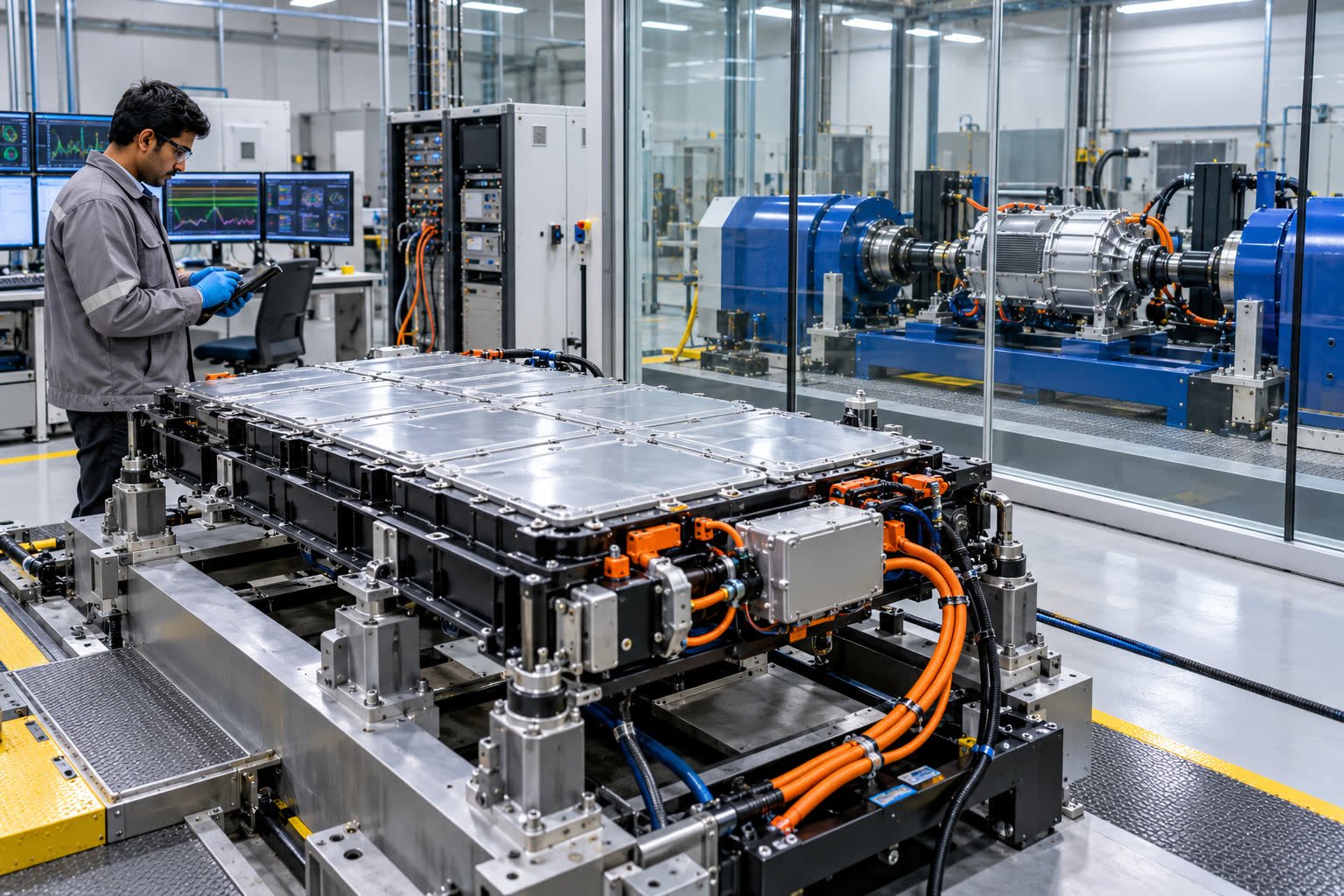
- The laboratory is intended for battery testing, validation, safety assessment, performance evaluation, design validation, certification and export-compliance work for electric and hybrid vehicle applications.
- A separate two-dynamometer e-axle and EV powertrain facility will support the design, development, validation and optimisation of electric powertrains and e-axles.
- ARAI and Skoda Auto Volkswagen India also exchanged an MoU linked to a proposed crash-test facility; that project is separate from the facilities inaugurated on 31 October.
- Nothing in the announcement changes the price, charging time, range or warranty of an EV already on sale in India.
What ARAI has opened
The Ministry of Heavy Industries said the Advanced Battery Laboratory was developed under the second phase of its scheme for enhancing competitiveness in the Indian capital-goods sector, with support from the ministry and ARAI. The ministry said the laboratory will strengthen India’s ability to evaluate batteries for electric and hybrid vehicles across testing, validation, safety and performance.
Hindustan Times independently reported the same-day inauguration and the approximate ₹55-crore investment. It also described the second facility as an advanced two-dynamometer e-axle and EV powertrain test facility. The two reports agree on the central event and the purpose of the infrastructure; neither announces a particular vehicle, battery supplier, retail product or buyer-facing price.
ARAI’s own drivetrain-development documentation describes EV powertrain and e-axle work such as performance mapping, range estimation, durability assessment, regenerative-operation validation and charging-related testing. That helps explain the industry role of the new facility: it is a development and validation platform for manufacturers and component companies, rather than a public charging station or a consumer service centre.
Why battery testing matters to EV buyers
Testing supports product claims, but does not replace them
An EV battery has to work across temperature, charging, load and ageing conditions. Testing can help identify whether a battery pack, battery-management system or powertrain performs as designed and whether it meets the requirements for certification or export. It can also give automakers a controlled environment to investigate efficiency, durability and thermal behaviour before a vehicle reaches production.
That process can improve the evidence behind a vehicle’s specifications, but it does not make every EV identical. The final customer experience still depends on the specific battery chemistry, pack design, software calibration, cooling system, charging equipment, road conditions and service support. A laboratory’s inauguration is therefore an upstream signal; it is not a substitute for the specification and certification information of the model being considered.
Domestic capacity may make development easier
ARAI says the laboratory can support design validation, certification and export-compliance testing against current and emerging standards. More testing capacity in India may help manufacturers and component suppliers coordinate development work closer to their engineering and production teams. It may also reduce the need to send some validation work outside the country, although the announcement does not promise a faster launch schedule or lower vehicle price.
For the market, the significance is less about one new EV arriving immediately and more about the depth of the ecosystem behind future models. Battery safety, powertrain reliability and compliance work are not visible at a showroom, yet they influence whether a vehicle can move from prototype to a certified product.
The crash-test project is a separate development
The same ARAI event included an MoU with Skoda Auto Volkswagen India for the transfer of land for a proposed Advanced Crash Test Facility. The government release describes that facility as a future development for crash testing, homologation and safety assessment of conventional and battery-electric vehicles. It is not the same as the battery laboratory or the e-axle test facility that were inaugurated.
FuelPrice has already covered the proposed ARAI–Skoda Auto Volkswagen crash-test facility. Keeping the two developments separate matters: one announcement concerns land and a proposed testing centre, while the latest update confirms operational battery and powertrain infrastructure.
What the announcement means for current EV owners
There is no immediate change to the charging network, battery warranty, certified range or service interval of an EV already registered in India. Owners can still use the state-wise EV charging directory to check present public-charging access, but ARAI’s new facilities do not indicate that a particular route has gained a charger or that charging will become faster.
For someone comparing an EV with a petrol or CNG vehicle, the relevant calculation remains specific to the route and energy prices. A fuel cost calculator can provide a baseline for an existing petrol or CNG car, while the EV comparison also needs the vehicle’s usable battery capacity, charging tariff, charging losses and the availability of home or workplace charging.
What buyers should watch next
- Model-specific certification: look for the exact vehicle’s homologation, safety information and published battery warranty rather than treating ARAI’s facility as a blanket endorsement.
- Battery and powertrain disclosures: compare usable battery capacity, charging limits, thermal-management information and warranty conditions when the manufacturer publishes them.
- Independent evidence: distinguish a company’s claimed range or performance from an official test result and from real-world owner experience.
- Support network: check service coverage and charging access for the routes the vehicle will actually serve. A road-trip planner can help test whether the intended journeys have workable charging stops.
What happens next
The next meaningful signals will be the manufacturers and component suppliers that use the facilities, the tests and standards they are accredited for, and the products that emerge with clearly documented certification. The current announcement establishes new capability, not a timetable for a particular battery, model or technology to reach showrooms.
For Indian drivers, the takeaway is measured optimism: stronger domestic testing can support a more reliable EV ecosystem, but the benefit reaches an individual buyer only when it appears in model-specific evidence, warranty terms, safety results, charging performance and service support.
Sources
- Ministry of Heavy Industries / Press Information Bureau — “Hon'ble Union Minister Shri H.D. Kumaraswamy Visits ARAI; Unveils Key Diamond Jubilee Initiatives to Advance Safe, Sustainable and Future-Ready Mobility” — 31 Oct 2026
- Hindustan Times — “ARAI unveils ₹55-cr battery lab, advanced EV testing facility” — 31 Oct 2026
- ARAI — “Drivetrain Development Centre” — facility information accessed 2 Nov 2026