Bank of India has announced a 100% waiver of applicable processing charges on eligible new four-wheeler loans under a limited-period offer described as running from 1 Oct 2026 to 31 Mar 2027. Individual borrowers with a CIBIL personal score of 725 or above are reported to qualify for eligible new vehicle loans, while eligible electric four-wheeler loans are described as exempt from that score threshold, subject to the bank’s other terms and approval checks.
The change matters mainly at the start of the borrowing process. It can reduce one upfront loan charge for a qualifying car buyer or fleet borrower, but it does not make the interest rate, repayment tenure, insurance, registration, taxes or loan approval automatically more favourable. The exact benefit depends on the processing charge applicable to the selected product and the borrower’s eligibility.
Key takeaways
- The reported offer covers 100% of the applicable processing charge on eligible new four-wheeler loans.
- For individual borrowers, the stated CIBIL personal-score threshold is 725 or above.
- Eligible electric four-wheeler loans have a separate condition under which the CIBIL threshold does not apply, but other bank terms remain.
- The offer window is described as 1 Oct 2026 to 31 Mar 2027; confirm whether the relevant date is application, sanction or disbursal.
- A fee waiver reduces an upfront cost, not necessarily the total cost of borrowing.
What Bank of India has changed
Business Today reported on 2 Nov 2026, citing a statement from Bank of India, that the lender was offering a complete waiver of applicable processing charges on eligible home and new four-wheeler loans. Business News Week carried the same lender announcement on 2 Nov 2026 and described the offer as effective from 1 Oct 2026 through 31 Mar 2027.
For an individual taking a new four-wheeler loan, the reported eligibility condition is a CIBIL personal score of at least 725. The announcement also refers to eligible non-individual borrowers, such as businesses, with an external credit rating of BBB or above or a CMR rating of 3 or better. That point is relevant to fleet operators, but the vehicle, borrower and documentation conditions still need to be checked with the bank.
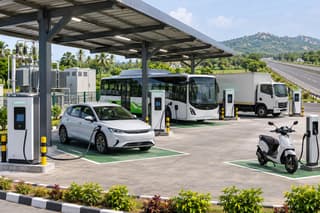
Electric four-wheeler loans get a separate treatment in the reported offer. The CIBIL-score condition is not stated to apply to those loans, but this should not be read as an automatic sanction. Income, repayment capacity, vehicle eligibility, documentation and the bank’s other lending rules continue to matter.
How much could the fee relief be worth?
The rupee value is not a single amount for every borrower. Bank of India’s official retail-loan schedule effective 1 Jan 2026 listed the processing charge for a new four-wheeler as 0.25% of the loan limit, with a minimum of ₹2,500 and a maximum of ₹10,000, excluding GST. If that schedule is the applicable basis, a ₹10,00,000 loan would produce a ₹2,500 charge before GST, while a ₹20,00,000 loan would produce ₹5,000; the ₹10,000 cap would be reached at a ₹40,00,000 loan limit.
Those figures are illustrations of the published schedule, not a promise that every applicant will save the same amount. The new offer is for the applicable processing charge, and the bank may apply different product conditions, limits or documentation charges. A borrower should ask for the written sanction terms or fee schedule showing the charge being waived before treating the difference as a saving.
What the waiver does not change
A processing-fee concession is different from a lower interest rate. A borrower could still pay more over the full tenure if the interest rate or repayment period is less competitive than another available offer. The waiver also does not by itself cover the vehicle’s down payment or margin, insurance, registration, road tax, accessories, dealer charges, GST or other loan-related costs. These items vary by vehicle, state, lender and customer profile.
That is why the useful comparison is the total amount payable, not just the first bill. Check the interest rate, whether it is fixed or floating, the tenure, the instalment schedule, foreclosure or prepayment conditions, late-payment charges and every fee shown in the written offer. The bank’s official vehicle-loan material describes the product as linked to borrower credentials and cautions that displayed calculations are preliminary, so an online estimate should not be treated as final approval.
What car and EV buyers should check now
- Confirm the vehicle category. The reported offer is for eligible new four-wheelers. Do not assume it covers used cars, two-wheelers or every commercial vehicle without written confirmation.
- Check the qualifying date. Because the stated window begins on 1 Oct 2026, ask whether the waiver depends on the date of application, sanction, disbursal or invoice.
- Separate eligibility from approval. A CIBIL score of 725 or the score-independent EV condition addresses one offer rule; it does not guarantee sanction, a particular interest rate or a particular loan amount.
- Compare the full repayment cost. Record the total interest, instalments and all one-time or recurring charges before comparing the offer with another lender.
- Budget for use after purchase. A buyer can estimate fuel spending with the fuel-cost calculator, while an EV buyer can check nearby options in the state-wise EV charging directory. A route-based view can be added through the road-trip planner.
What to watch next
The offer is time-bound and its practical value depends on how branches and partner dealers apply the eligibility date and fee waiver. The bank could also update retail-loan schedules during the offer period. Borrowers should therefore retain the written offer, check the processing-charge line before signing and confirm whether GST or any separate documentation charge remains payable.
For a qualifying borrower, removing the processing charge can lower the amount needed at the start of a car purchase. It should be treated as one input in the financing comparison, alongside the interest rate, tenure, insurance and the vehicle’s ongoing fuel or charging cost.
Sources
- Business Today — Bank of India waives processing fees on home, car loans till March 2027; check eligibility — 2 Nov 2026
- Business News Week — Bank of India Announces 100 percent Processing Charge Waiver on Eligible Home and Four-Wheeler Loans — 2 Nov 2026
- Bank of India — Retail Loans: Interest Rates / Processing Charges, effective 1 Jan 2026
- Bank of India — Star Vehicle Loan for Individuals — accessed 4 Nov 2026
This article is for general information only and is not financial, insurance or legal advice.