The Bijwasan toll plaza on Dwarka Expressway is set to move to barrier-free multi-lane free-flow (MLFF) tolling, with 16 of its 34 lanes earmarked for ANPR-RFID-based collection. For drivers, the proposed change means the FASTag-linked user fee could be deducted while a vehicle continues through the tolling zone instead of stopping at a booth; the system is not live yet.
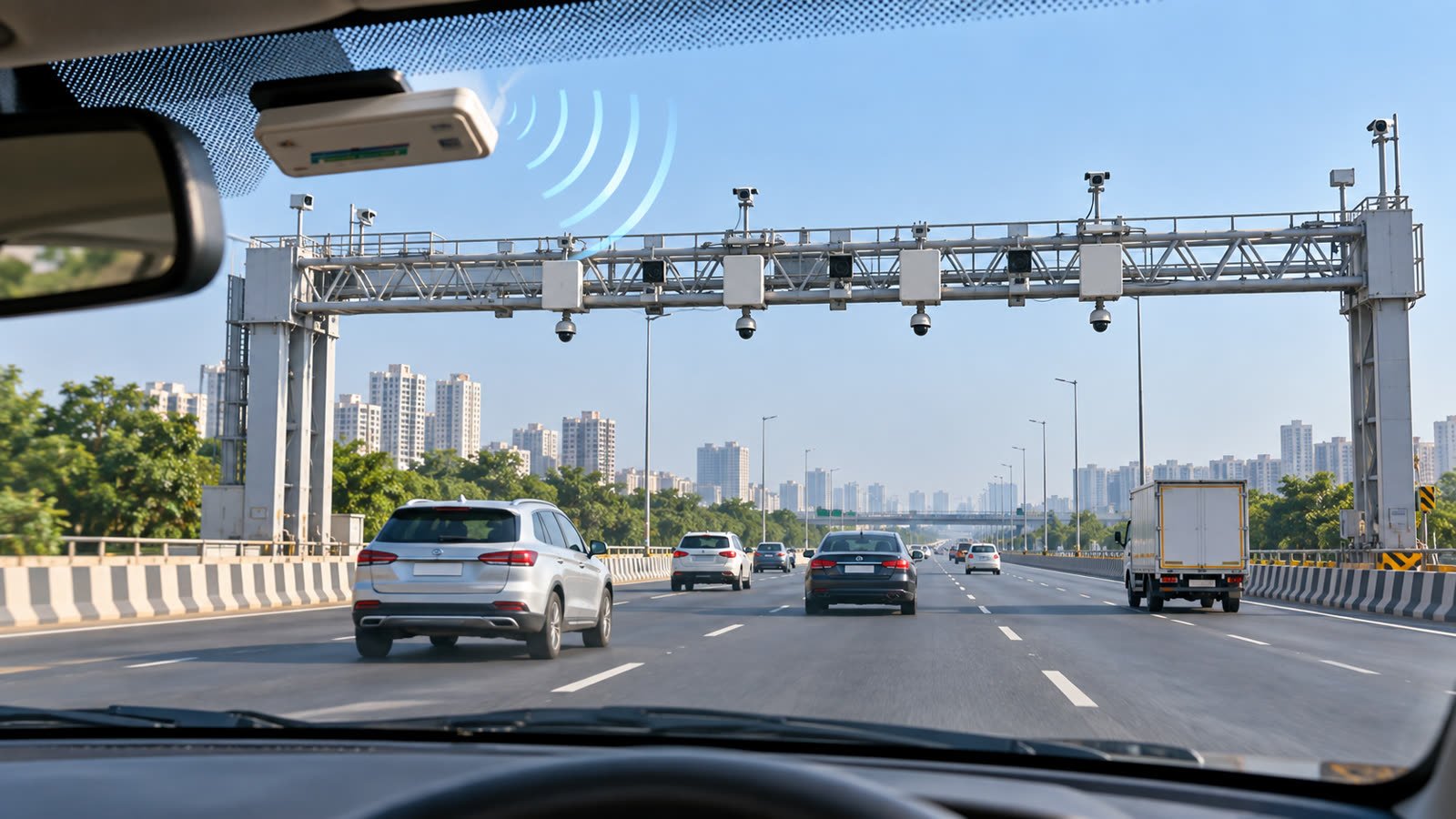
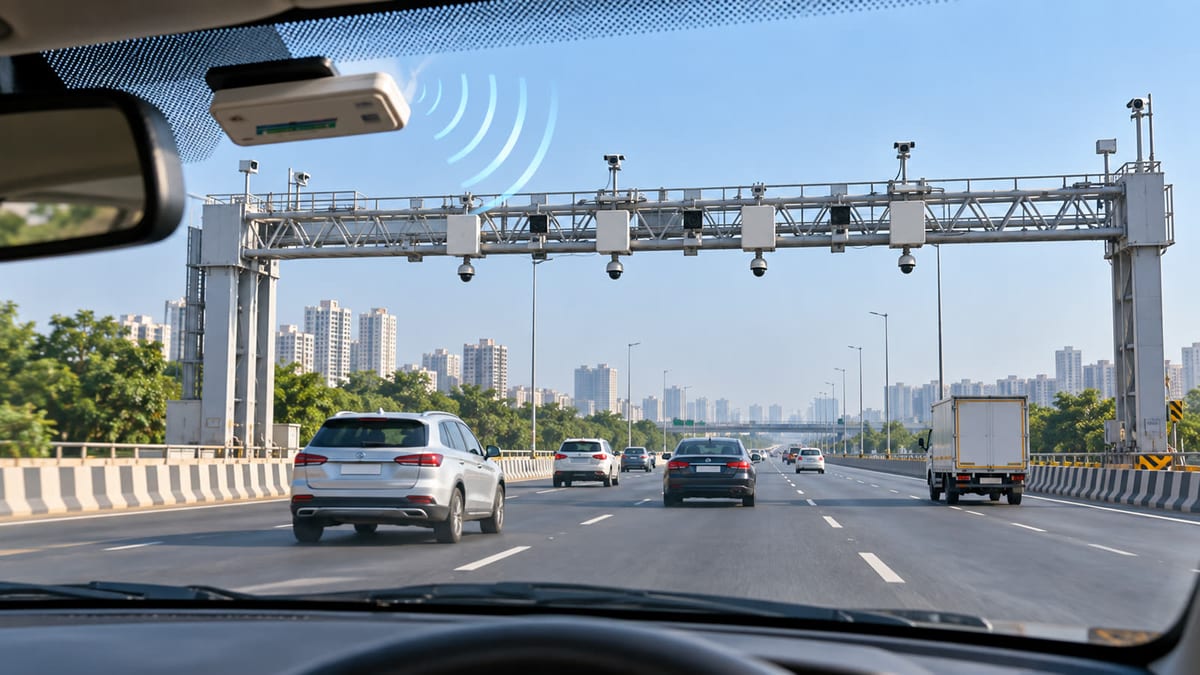 Illustrative visual of the ANPR-RFID barrier-free tolling system planned for Bijwasan Toll Plaza. Illustration: FuelPrice.
Key takeaways
- The Bijwasan plaza on Dwarka Expressway is planned for barrier-free MLFF tolling; it has not gone live yet.
- IHMCL’s September 2026 tender earmarks 16 of the plaza’s 34 lanes for MLFF, including two standby lanes.
- ANPR cameras and RFID readers will identify the vehicle and its FASTag for electronic user-fee deduction.
- The documents describe a collection-system change, not a new toll rate; the user fee remains governed by the applicable toll-fee notification.
- The current tender provides a six-month implementation window from contract signing, while an IHMCL official told The Times of India that efforts are being made to operationalise the system by early 2027.
What is changing at Bijwasan
The Times of India reported on 3 Oct 2026 that the Bijwasan toll plaza is set to shift from its existing fee-plaza arrangement to barrier-free MLFF tolling. At present, FASTag enables electronic payment, but vehicles still pass through designated toll lanes. Under the planned system, the tolling zone will use equipment installed over the highway lanes so vehicles can continue moving through without stopping at a booth or passing a physical barrier.
The official IHMCL request for proposal (RFP), dated 7 Sep 2026, identifies Bijwasan at kilometre 9+050 of NH-248 BB on the Dwarka Expressway. Its site table lists 34 plaza lanes and an indicative annual electronic toll collection figure of ₹192.97 crore for financial year 2025–26. IHMCL cautions that the collection figure is only for calculating performance security and is not a guarantee of actual revenue or traffic.
How the free-flow tolling will work
In the planned setup, automatic number-plate recognition (ANPR) cameras will capture the registration number while RFID equipment reads the vehicle’s FASTag. The systems will pair the vehicle and tag, then send the applicable user-fee transaction through the electronic tolling ecosystem. The RFP defines MLFF as a system designed to identify, classify and charge vehicles across multiple lanes without requiring them to slow down, stop or use a dedicated toll lane.
That does not mean every vehicle will be charged a new amount, or that the plaza will be toll-free. The current RFP says Bijwasan will be treated as an integrated fee plaza and that the user fee will follow the logic and provisions of the applicable toll-fee notification. The change being planned is how the vehicle is detected and charged while crossing the zone.
What it means for Dwarka Expressway drivers
Less stopping could make peak travel smoother
NHAI’s stated objective for the MLFF project is to reduce travel time, congestion and the fuel use and emissions associated with vehicles stopping or queuing at toll locations. The likely benefit for a regular commuter is a smoother passage through the tolling point, but neither the RFP nor the latest report gives a guaranteed time or fuel saving. The result will depend on traffic, enforcement, equipment uptime and how quickly the system clears exceptions.
For a trip that combines the expressway with other toll roads, drivers can check the route’s toll component in the toll-charge calculator.
To estimate fuel separately, use the fuel-cost calculator. That tool remains useful because barrier-free collection changes the crossing process, not the distance, fuel consumption or notified toll amount.
FASTag status will matter more at speed
Drivers using the corridor should keep their FASTag active, correctly linked to the vehicle and funded for the journey. The IHMCL RFP lists blacklisted, hotlisted, non-functional, closed, unregistered or low-balance cases among unsettled or violation situations in the MLFF system. That makes it important to check the tag status and vehicle details before the new system goes live, and to reconcile the deduction shown by the issuer bank or toll account after a crossing.
If a transaction does not match the vehicle or the expected route, the RFP points users towards the FASTag and NETC payment ecosystem rather than a cash booth. The operational support process, complaint channel and any e-notice procedure will need to be clear before commissioning. Until then, motorists should follow the existing signs and lane instructions at Bijwasan.
The rollout is planned, not immediate
IHMCL’s current RFP says bids can be submitted until 22 Oct 2026 and that the selected bidder must implement the solution within six months of signing the contract. That is a procurement timeline, not a confirmed go-live date. The same document requires the transition to preserve ongoing toll operations until the MLFF system goes live, after which lanes not designated for tolling may be closed and secured.
The practical next milestone is therefore the award of the implementation contract, followed by equipment installation, testing, transaction validation and an official commissioning notice. The Times of India report says efforts are being made to operationalise the system by early 2027, but drivers should treat that as an expected target until IHMCL or NHAI confirms the final date.
What to check before the change
- Confirm that the FASTag is active and linked to the correct registration number.
- Check the tag balance and issuer-bank alerts before using the Dwarka Expressway.
- Keep the transaction message or account history after crossing, especially during the transition period.
- Use the road-trip planner to compare the route and departure timing if Bijwasan congestion is part of a regular commute.
- Do not assume that a barrier-free lane changes the notified toll or removes the need for a valid FASTag.
For now, the takeaway is straightforward: Bijwasan is moving towards a faster, camera-and-FASTag-based tolling model, but the change remains a planned infrastructure rollout. The toll amount, final commissioning date and on-road operating details should be checked against the next official notice.