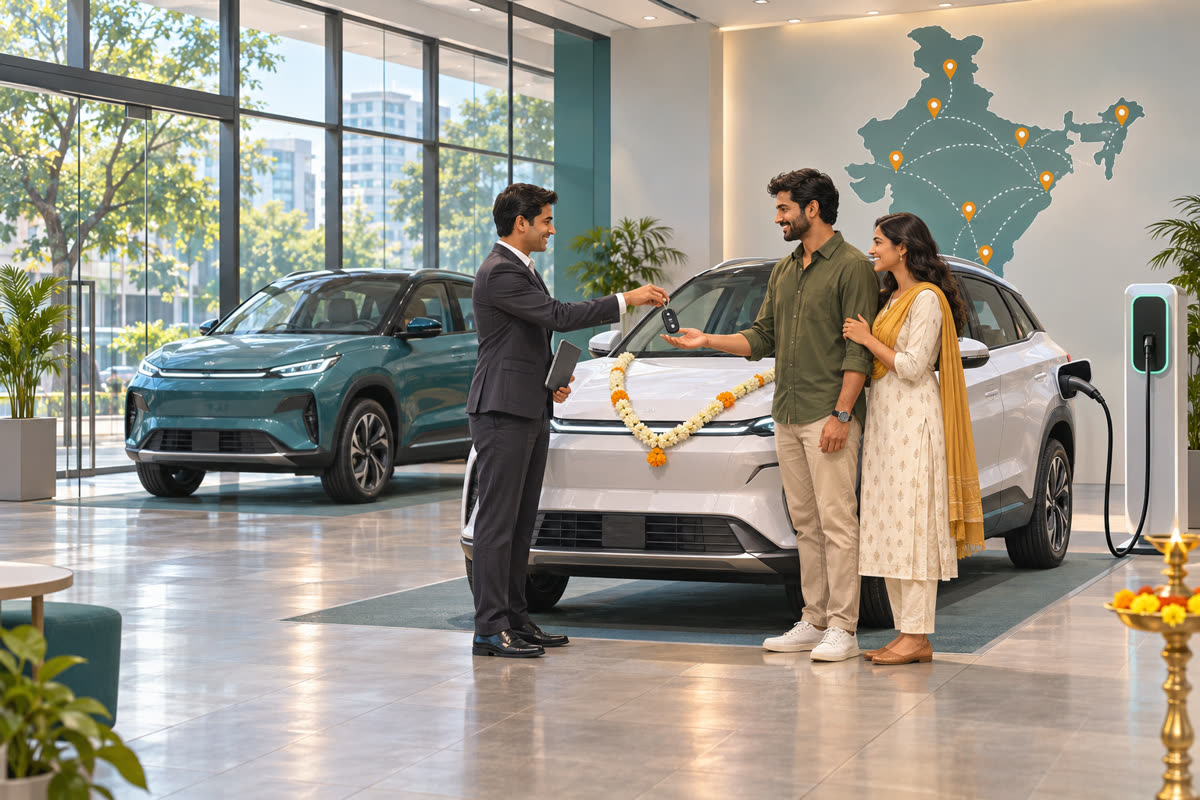
BYD India says it has crossed 20,000 cumulative customer deliveries, doubling the 10,000 mark it announced in September 2025. For Indian EV buyers, the milestone is a useful signal of a growing on-road customer base, but it is not by itself a guarantee about reliability, resale value, charging access or ownership cost.
Key takeaways
- BYD India announced its 20,000-customer delivery milestone on 20 Nov 2026, according to reports citing the company.
- The automaker says the Atto 3 has crossed 9,000 deliveries and the Sealion 7 has crossed 5,000.
- BYD says it now has 51 showrooms across 40 Indian cities.
- The reported milestone is a company delivery count, not an independent statement of national EV market share.
- For buyers, service reach, charging options, warranty terms and route-specific running cost remain separate checks.
What BYD announced
BYD India marked the handover of its 20,000th customer vehicle at a Delhi dealership on 20 Nov 2026. NDTV Auto and HT Auto both reported the milestone from a company announcement, while Autocar India separately reported that the brand had doubled its earlier 10,000-delivery mark from September 2025 in just over a year.
The pace matters because the first 10,000 deliveries took the brand considerably longer than the next 10,000. That does not establish a national market-share ranking, but it does show that BYD has built a larger installed base in India while adding more products and expanding its retail presence.
BYD India currently lists the Atto 3, Seal, Sealion 7 and eMax 7 in its passenger EV range. Autocar India reported that the cars sold by BYD in India are currently imported, a point buyers may want to keep in mind when comparing delivery timelines, service arrangements and warranty documentation across brands.
The models behind the milestone
The company says the Atto 3 is its volume leader in India, with more than 9,000 customer deliveries. The Sealion 7 has crossed 5,000 deliveries, according to the same company update reported by NDTV Auto and HT Auto. The Seal sedan and eMax 7 make up the rest of the reported passenger-EV portfolio.
Those figures are useful for understanding the shape of BYD's Indian business: the milestone is not spread evenly across every product. The two named models together account for more than 14,000 deliveries on the thresholds reported by the company, while the other models contribute to the balance. The figures should be read as cumulative customer deliveries, not as a current-month sales table.
For a buyer comparing models, the practical question is therefore not only which car has the largest delivery base. It is also whether the vehicle's battery warranty, service schedule, charging hardware, software support and parts process fit the way the vehicle will be used.
What the number means—and what it does not
A delivery milestone can indicate that more owners are gaining experience with a brand and that a manufacturer has had time to build a larger support network. It can also give prospective buyers more real-world ownership references to investigate. It cannot, on its own, prove that an EV is cheaper to own, easier to repair or more suitable for every route.
Buyers should also separate deliveries from registrations and market share. The 20,000 figure is the company's cumulative customer-delivery count reported by multiple outlets; it is not a government registration series or an audited comparison of all EV brands. That distinction is important when a single milestone is used to describe a fast-changing market.
The company has said it wants to expand its presence and ownership experience. The next test will be whether the service footprint and charging support grow at a pace that matches the customer base, especially outside the largest metros.
Why service reach matters to EV buyers
BYD says its network now covers 51 showrooms in 40 cities. A wider physical footprint can make a difference for inspection, scheduled maintenance and support, but a showroom count should not be treated as a complete service-capacity measure. Buyers should check the nearest authorised workshop, its distance from home and the support available on their regular inter-city routes.
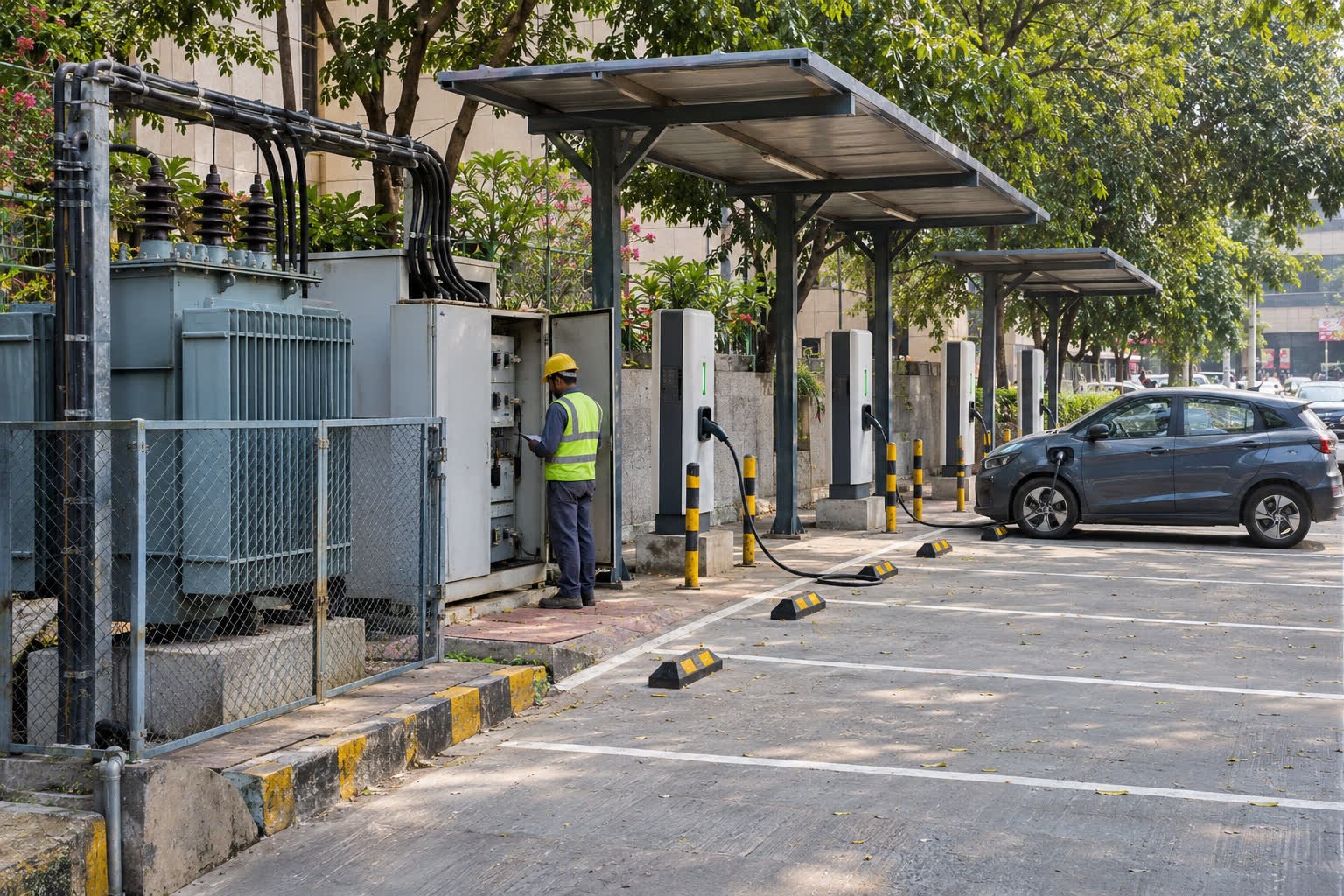
Charging is a separate part of the ownership calculation. Before comparing an EV with a petrol or diesel car, readers can review the state-wise EV charging station directory and note which locations are practical for their usual commute, highway route and overnight parking arrangement.
For a route that is still served mainly by petrol or diesel vehicles, the fuel cost calculator can provide a baseline for comparing running costs. That comparison should use the reader's actual distance, mileage, electricity tariff and charging pattern rather than a headline range or a generic monthly estimate.
Checks to make before comparing an EV
- Confirm support nearby: Check the authorised service location, working hours, roadside assistance terms and escalation channel for the city where the vehicle will be used.
- Read the warranty: Separate battery, vehicle, charger and roadside-assistance coverage, and note the conditions that apply to each.
- Plan charging: Identify home-charging feasibility and public chargers on regular routes using the actual connector and power requirements of the chosen vehicle.
- Compare total use: Include electricity, insurance, tyres, maintenance, financing and any home electrical work instead of comparing only the showroom price.
- Test the route: Use the road-trip planner to review a longer journey and identify where charging, rest stops and alternate routes may be needed.
What to watch next
BYD's 20,000-delivery milestone is an update on customer adoption, not a new subsidy, price change or charging rule. The next useful indicators will be whether the company adds more service locations, how its imported-car support develops and whether its model range broadens beyond the current four passenger EVs.
For readers, the takeaway is straightforward: a larger customer base can make ownership information easier to find, but the right comparison still depends on the vehicle's support network, charging plan and total cost for the trips that matter most.