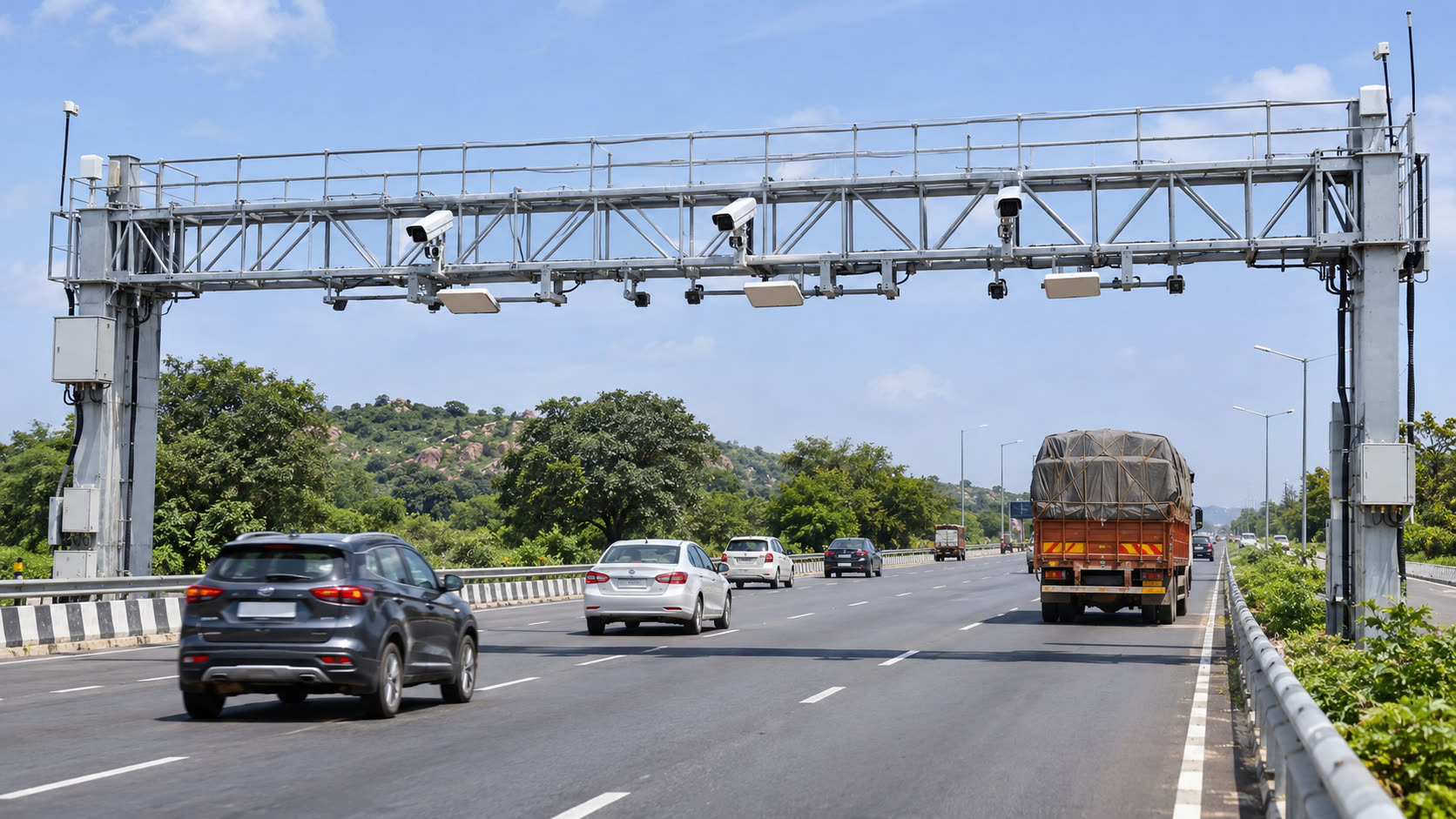
NHAI’s barrierless Multi-Lane Free Flow (MLFF) tolling is expanding across National Highway plazas, according to a 20 Nov 2026 explainer by The Times of India. Vehicles can pass under overhead gantries without stopping, but the toll is still payable electronically and a failed FASTag transaction can trigger an e-notice.
For drivers, the practical change is less time at a toll point, not a toll waiver. The important check before a trip is whether the FASTag is active, correctly linked to the vehicle and funded well enough for the applicable user fee.
Key takeaways
- MLFF combines FASTag-based electronic toll collection with Automatic Number Plate Recognition (ANPR) cameras.
- Vehicles do not stop at a barrierless MLFF gantry, but the normal toll remains due.
- An insufficient balance, inactive tag or tag-related failure can result in an electronic notice.
- Under the notified rules, paying within 72 hours keeps the charge at the normal user fee; after that, the applicable fee can become twice the normal rate.
What NHAI’s MLFF rollout changes
Conventional plazas require vehicles to slow down or stop in a lane while a FASTag is read and a physical barrier is lifted. MLFF moves the detection equipment above the road. ANPR cameras read the registration plate while FASTag equipment identifies the linked tag, allowing the system to match the vehicle and collect the user fee as traffic continues moving.
The Ministry of Road Transport and Highways has described the system as barrierless and designed to reduce queues, waiting time, repeated braking and idling at toll locations. That can make a busy corridor easier to navigate, but it does not mean every National Highway plaza has changed. The rollout remains phased, so a driver should follow the signs and operating arrangements at the specific plaza on the route.
Official updates show the expansion from the first Gujarat installation to locations in Delhi-NCR, Rajasthan, Haryana and Tamil Nadu. NHAI’s October update described Paranur on the Tambaram–Tindivanam section of NH-179B as Tamil Nadu’s first MLFF plaza. In November, NHAI said the Nemili plaza on the Sriperumbudur–Karaipettai section of NH-48 had also moved to the system; independent reporting described it as the state’s second barrierless tolling location.
What happens when a FASTag payment fails
The National Highways Fee (Determination of Rates and Collection) (Second Amendment) Rules, 2026 created the digital recovery framework for unpaid user fees. The amendment took effect on 17 March 2026 and applies to cases where an electronic toll transaction is recorded but the applicable fee is not received.
If the FASTag has insufficient balance, is invalid or is not functioning, an e-notice can be sent to the registered vehicle owner. The notice can include the vehicle details, passage date and location, and the amount payable. The system is linked with the VAHAN database so the notice can be delivered through registered electronic channels.
The normal user fee can be paid within 72 hours of the e-notice through the designated National Highways e-notice portal. If the amount is not paid within that window, the rules provide for twice the applicable user fee for the vehicle category. A vehicle owner can also file a representation through the designated portal within the same 72-hour period if the notice appears incorrect.
The rules give the authority five days to examine and dispose of a representation. If an unpaid amount remains outstanding beyond 15 days and no representation is pending, it can be recorded in VAHAN and restrictions may be imposed on some vehicle-related services until the dues are cleared. The exact response to an e-notice should therefore be checked against the official portal and the vehicle’s registered mobile number.
How this affects trip cost and travel time
MLFF changes the way a toll is collected, not the rate displayed for the vehicle category. The direct benefit for a private driver is fewer stops at an operational gantry; for a truck or bus operator, avoiding repeated queues can also make journey timing more predictable. The actual time and fuel effect will depend on traffic, the plaza and whether the vehicle would otherwise have queued.
Drivers comparing the full cost of a route can use the toll charges and trip-cost calculator for the toll component and the fuel cost calculator for the vehicle’s running cost. Keeping those figures separate helps avoid treating a smoother toll passage as a reduction in the toll itself.
Checklist before using an MLFF corridor
- Check that the FASTag is active, mapped to the correct registration number and properly fixed on the windscreen.
- Check the available balance before entering the highway and allow for the tolls on the route.
- Keep the registered mobile number current so an e-notice is less likely to be missed.
- Use a clear, compliant High Security Registration Plate because the plate is part of the vehicle-identification process.
- Check the official e-notice portal if a message arrives, and use the grievance option within the stated window if the record is wrong.
For longer journeys, the road-trip planner can help organise the route before departure. The broader takeaway is simple: an MLFF gantry removes the physical stopping point, but it makes a working FASTag, accurate vehicle records and timely notice checks more important.
What to watch next
NHAI has issued design guidance to make future and ongoing highway projects compatible with barrierless toll collection. The next phase will show how quickly more plazas move from physical barriers to gantries, how accurately vehicles are identified and whether payment failures fall as users keep their tags and registration details current.
Frequently asked questions
Does MLFF mean the toll is free?
No. MLFF removes the physical stopping process; the applicable user fee is still collected electronically.
How can a driver avoid an e-notice?
Keep the FASTag active and correctly fitted, maintain sufficient balance, ensure the vehicle details and mobile number are current, and check the official portal promptly if a notice is issued.
Sources
- The Times of India — No brakes required: How India’s highways are now charging toll without stopping you — 20 Nov 2026
- Press Information Bureau / NHAI — NHAI Implements Multi-Lane Free Flow (MLFF) Tolling System at Nemili Toll Plaza on NH-48 — 13 Nov 2026
- The Financial Express — NHAI introduces barrier-free toll collection on Tamil Nadu’s NH-48 — 14 Nov 2026
- Press Information Bureau / MoRTH — NHAI Rolls out Tamil Nadu’s First Barrierless Multi-Lane Free Flow Tolling System — 1 Oct 2026
- Press Information Bureau / MoRTH — National Highways Fee Rules, 2026 Amended to Strengthen Toll Compliance and Digital Enforcement — 18 Mar 2026
- Press Information Bureau / MoRTH — Barrier-less Tolling System to Transform Highway Travel, Reduce Pollution and Improve Efficiency — 11 May 2026