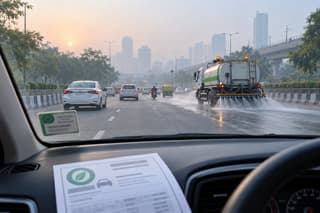
Drivers who have put far fewer kilometres on their cars than last year have a timely reason to reassess their motor-insurance renewal rather than simply carry forward the same choices. A 21 Oct 2026 PTI report says lower usage can make a usage-based option worth checking, but it does not remove the need for active cover, a suitable IDV or a valid policy.
Key takeaways
- Low annual usage can change which renewal structure fits, including usage-linked options offered by some insurers.
- Driving less does not remove exposure to theft, fire, weather damage or an accident during an occasional trip.
- Check actual use, expected use, IDV, claim history and NCB, add-ons, parking location and PUC separately.
- IRDAI says vehicle owners should approach the insurer at least 15 days before policy expiry; actual premiums vary by vehicle, location, claims record and cover.
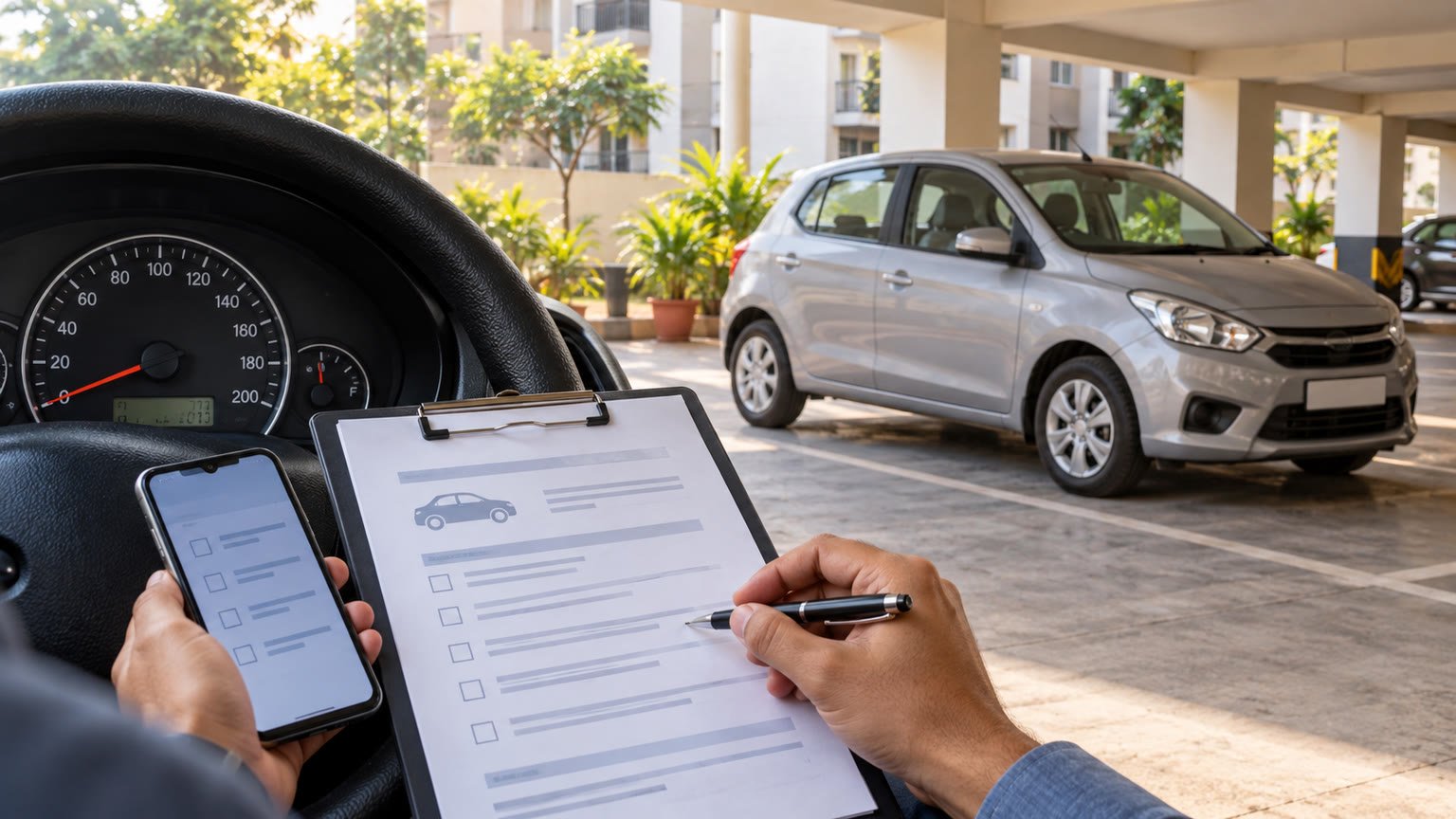
Illustrative visual: a low-use car owner reviewing a motor-insurance renewal checklist; this is not an insurer product photograph.
Why lower usage changes the renewal conversation
A car that has shifted from a daily commute to occasional weekend or local use may not need the same renewal review as last year. The relevant question is not whether the vehicle is used less in the abstract; it is whether the policy still matches how, where and how often it is driven. That is the practical point in the PTI report published on 21 Oct 2026.
Some insurers offer Pay As You Drive or similar usage-based products. These may use declared or recorded kilometres and can carry their own distance slabs, top-up rules, measurement method and claim conditions. That makes them a comparison point, not a universal replacement for a standard policy. The policy schedule and wording determine what is covered and what happens if the declared usage changes.
Lower use can also change the value of optional covers. A car parked at home most of the time still faces theft, fire, weather-related damage and accidental impact. A vehicle that is driven less may have fewer road exposures, but the risk does not fall to zero and an occasional long trip can still create a meaningful claim exposure.
Checklist for renewal after a quieter driving year
Record actual and expected use
Start with the odometer and the way the car was actually used during the expiring policy period. Then consider the next policy period separately: a change in job, a second vehicle, more public transport or a move to remote work may reduce routine kilometres, while a planned relocation or more frequent inter-city travel may increase them.
The useful comparison is between actual past use and a realistic forward estimate. A low figure selected only to reduce a quote can create problems if the policy has a mileage limit or a specific disclosure condition. Read how kilometres are recorded, whether a top-up is available and what the insurer says about claims after the selected limit is crossed.
Keep IDV separate from mileage
Insured Declared Value, or IDV, is the value assigned to the vehicle for the own-damage portion of the policy. PTI's renewal guidance makes an important distinction: driving fewer kilometres is not, by itself, a reason to choose an unusually low IDV. Review the IDV against the car's age, condition and current policy details instead of linking it mechanically to the odometer.
For a clearer side-by-side view of IDV, NCB and add-ons, use FuelPrice's car-insurance renewal quote comparison guide. It can help separate the parts of a renewal offer that relate to insured value from those that relate to optional protection.
Check claims and NCB separately
The Insurance Regulatory and Development Authority of India describes No Claim Bonus as a benefit for a claim-free previous policy period. Driving less does not create an NCB by itself; the relevant check is whether the claim record and the renewal documents correctly show the vehicle's eligible history under the policy terms.
Confirm the claim status before comparing quotes and retain the renewal notice or other proof needed to establish the entitlement. The NCB belongs to the insured person under the applicable rules, so a vehicle transfer or a change of insurer can require a separate document check.
Review add-ons and parking risk
Do not carry every add-on forward automatically, but do not remove cover merely because the car has spent more time parked. Review each add-on against the vehicle's age, condition, repair costs, parking location and likely trip pattern. A cover that was useful during daily commuting may be less relevant now, while protection connected to theft, roadside assistance or a long-standing repair risk may still deserve attention.
Read the policy document before accepting a changed selection. FuelPrice's guide on how to read a car insurance policy document explains where to check exclusions, deductibles, insured value and add-on conditions in the wording rather than relying on a short quote summary.
Check renewal timing and documents
IRDAI's motor-insurance policy-holder guidance says an owner should approach the insurer at least 15 days before the existing policy expires. The same guidance says a valid Pollution Under Control certificate is mandatory on the date of renewal. These are process checks, not a reason to wait until the last day or assume that a parked car can remain uninsured.
Before the expiry date, compare the renewal notice with the current registration details, policy period, IDV, claim record, NCB, selected add-ons and vehicle use. FuelPrice's vehicle-insurance validity and fraud-check guide is a useful follow-up when the policy document, registration record or online status does not match.
What the cost comparison should show
A lower kilometre estimate may affect a usage-linked part of the quote, but it does not guarantee a lower total premium. The final price can also reflect the vehicle's make and age, location, IDV, claims history, selected add-ons, taxes and the insurer's underwriting terms. Actual offers vary by driver and vehicle profile, so a headline discount or a low starting quote is not a substitute for reading the policy conditions.
Compare the renewal offer in two layers. First, check whether the same core protection is being compared: own-damage cover, third-party cover and the same IDV. Second, isolate the effect of optional covers and any usage-linked condition. That makes it easier to see whether a lower price comes from a changed cover, a changed IDV or a genuinely different usage structure.
What lower driving does not change
A vehicle that is rarely used still needs an active policy if it is to remain legally and financially protected for the risks covered by that policy. Parking reduces some road exposure, but it does not remove theft, fire, weather or accidental-damage risk. It also does not change the need to keep the policy information accurate if the car is later used more than expected.
Low usage is therefore a renewal trigger, not a cancellation trigger. The decision is about whether the present cover matches the actual risk and whether the terms of a usage-based option are understood. It should not be treated as a promise of savings, approval or a universally better policy.
Frequently asked questions
Does driving less mean the car insurance can be skipped?
No. Lower use can change the comparison at renewal, but a parked car can still face covered risks and the policy must remain valid for the protection it provides. IRDAI's guidance also sets out renewal timing and documentation requirements.
Is usage-based insurance the same as third-party insurance?
No. A usage-based product is a policy or add-on structure whose terms may depend on declared or recorded kilometres. It does not automatically remove the need to understand the third-party and own-damage sections that appear in the policy schedule.
What should be checked before accepting the renewal quote?
Check the expiry date, actual and expected use, IDV, claim record, NCB, add-ons, PUC status, deductibles, exclusions and any kilometre measurement or top-up condition. Compare like-for-like cover before focusing on the final price.
Sources
- The Tribune (PTI) — “Driving Much Less Than Last Year? What to Review at Car Insurance Renewal” — 21 Oct 2026
- Insurance Regulatory and Development Authority of India — “Motor Insurance - Policy Holder” — accessed 22 Oct 2026
- ICICI Lombard — “Pay As You Drive Insurance in India” — accessed 22 Oct 2026
This article is for general information only and is not financial, insurance or legal advice.